Matsuzaka Yasunari, Uesawa Yoshihiro
Department of Medical Molecular Informatics, Meiji Pharmaceutical University, Tokyo, Japan.
Front Bioeng Biotechnol. 2019 Mar 28;7:65. doi: 10.3389/fbioe.2019.00065. eCollection 2019.
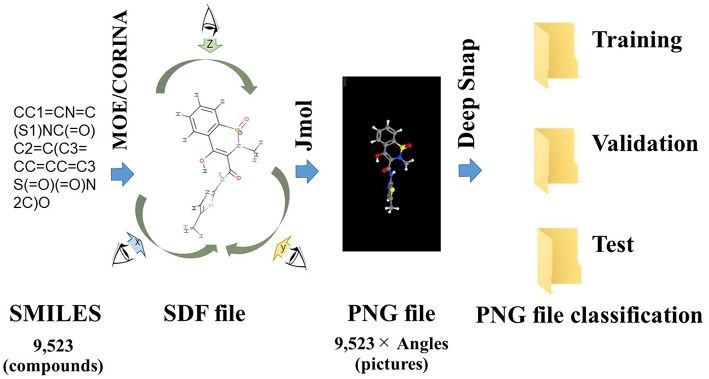
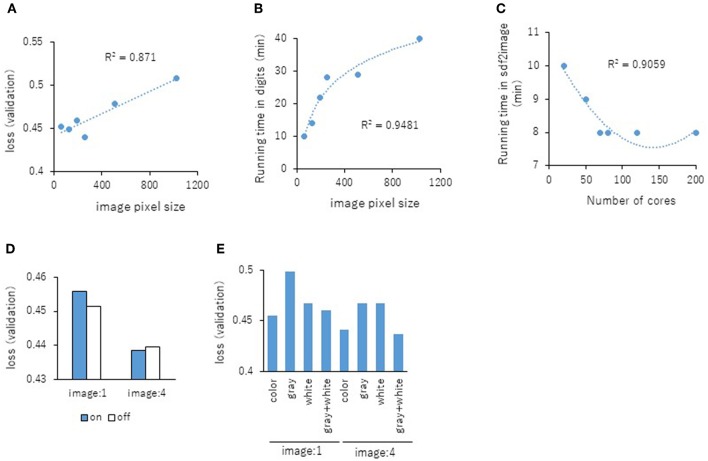
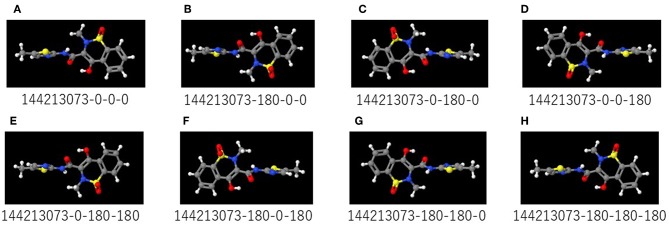
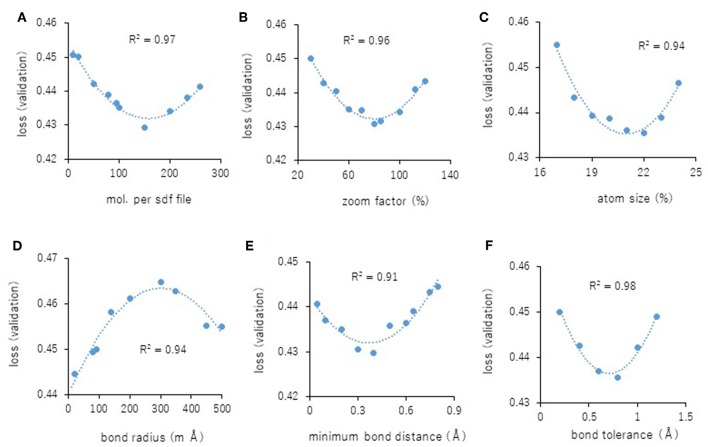
Numerous chemical compounds are distributed around the world and may affect the homeostasis of the endocrine system by disrupting the normal functions of hormone receptors. Although the risks associated with these compounds have been evaluated by acute toxicity testing in mammalian models, the chronic toxicity of many chemicals remains due to high cost of the compounds and the testing, etc. However, computational approaches may be promising alternatives and reduce these evaluations. Recently, deep learning (DL) has been shown to be promising prediction models with high accuracy for recognition of images, speech, signals, and videos since it greatly benefits from large datasets. Recently, a novel DL-based technique called DeepSnap was developed to conduct QSAR analysis using three-dimensional images of chemical structures. It can be used to predict the potential toxicity of many different chemicals to various receptors without extraction of descriptors. DeepSnap has been shown to have a very high capacity in tests using Tox21 quantitative qHTP datasets. Numerous parameters must be adjusted to use the DeepSnap method but they have not been optimized. In this study, the effects of these parameters on the performance of the DL prediction model were evaluated in terms of the loss in validation as an indicator for evaluating the performance of the DL using the toxicity information in the Tox21 qHTP database. The relations of the parameters of DeepSnap such as (1) number of molecules per SDF split into (2) zoom factor percentage, (3) atom size for van der waals percentage, (4) bond radius, (5) minimum bond distance, and (6) bond tolerance, with the validation loss following quadratic function curves, which suggests that optimal thresholds exist to attain the best performance with these prediction models. Using the parameter values set with the best performance, the prediction model of chemical compounds for CAR agonist was built using 64 images, at 105° angle, with AUC of 0.791. Thus, based on these parameters, the proposed DeepSnap-DL approach will be highly reliable and beneficial to establish models to assess the risk associated with various chemicals.
世界各地分布着众多化合物,它们可能通过干扰激素受体的正常功能来影响内分泌系统的稳态。尽管已通过哺乳动物模型的急性毒性试验评估了与这些化合物相关的风险,但由于化合物及测试成本高昂等原因,许多化学物质的慢性毒性仍未可知。然而,计算方法可能是很有前景的替代方案,并能减少这些评估。最近,深度学习(DL)已被证明是具有高精度的有前景的预测模型,可用于识别图像、语音、信号和视频,因为它从大型数据集中受益匪浅。最近,一种名为DeepSnap的基于深度学习的新技术被开发出来,用于使用化学结构的三维图像进行定量构效关系(QSAR)分析。它可用于预测许多不同化学物质对各种受体的潜在毒性,而无需提取描述符。在使用Tox21定量高通量毒性预测(qHTP)数据集的测试中,DeepSnap已被证明具有非常高的能力。使用DeepSnap方法必须调整许多参数,但尚未对其进行优化。在本研究中,以验证损失作为评估使用Tox21 qHTP数据库中的毒性信息进行深度学习性能的指标,评估了这些参数对深度学习预测模型性能的影响。DeepSnap的参数关系,如(1)每个SDF分子的数量,分为(2)缩放因子百分比,(3)范德华半径的原子大小百分比,(4)键半径,(5)最小键距,以及(6)键容差,与验证损失遵循二次函数曲线,这表明存在最佳阈值以实现这些预测模型的最佳性能。使用设置为最佳性能的参数值,使用64张角度为105°的图像构建了CAR激动剂化合物的预测模型,曲线下面积(AUC)为0.791。因此,基于这些参数,所提出的DeepSnap-DL方法将高度可靠且有助于建立模型来评估与各种化学物质相关的风险。