Knapczyk-Stwora Katarzyna, Nynca Anna, Ciereszko Renata E, Paukszto Lukasz, Jastrzebski Jan P, Czaja Elzbieta, Witek Patrycja, Koziorowski Marek, Slomczynska Maria
1Department of Endocrinology, Institute of Zoology and Biomedical Research, Jagiellonian University in Krakow, Gronostajowa 9 Street, 30-387 Krakow, Poland.
2Laboratory of Molecular Diagnostics, Faculty of Biology and Biotechnology, University of Warmia and Mazury in Olsztyn, Olsztyn, Poland.
J Anim Sci Biotechnol. 2019 Apr 3;10:35. doi: 10.1186/s40104-019-0340-y. eCollection 2019.
Androgens are involved in the regulation of ovarian development during fetal/neonatal life. Environmental chemicals displaying anti-androgenic activities may affect multiple signal transduction pathways by blocking endogenous androgen action. The aim of the current study was to examine effects of the anti-androgen flutamide on the expression of coding transcripts and long non-coding RNAs (lncRNAs) in neonatal porcine ovaries. By employing RNA-Seq technology we aimed to extend our understanding of the role of androgens in neonatal folliculogenesis and examine the impact of the anti-androgen flutamide on ovarian function.
Piglets were subcutaneously injected with flutamide (50 mg/kg BW) or corn oil (controls) between postnatal days 1 and 10 ( = 3/group). Ovaries were excised from the 11-day-old piglets and total cellular RNAs were isolated and sequenced.
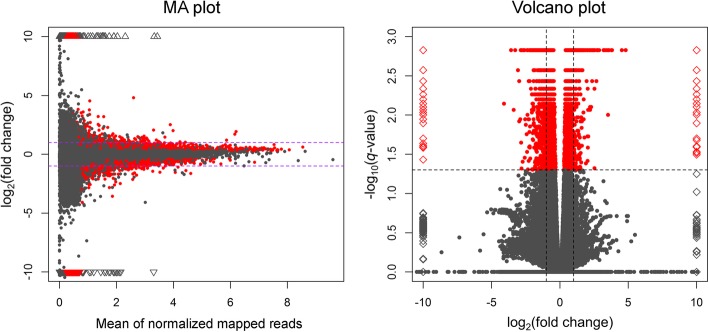
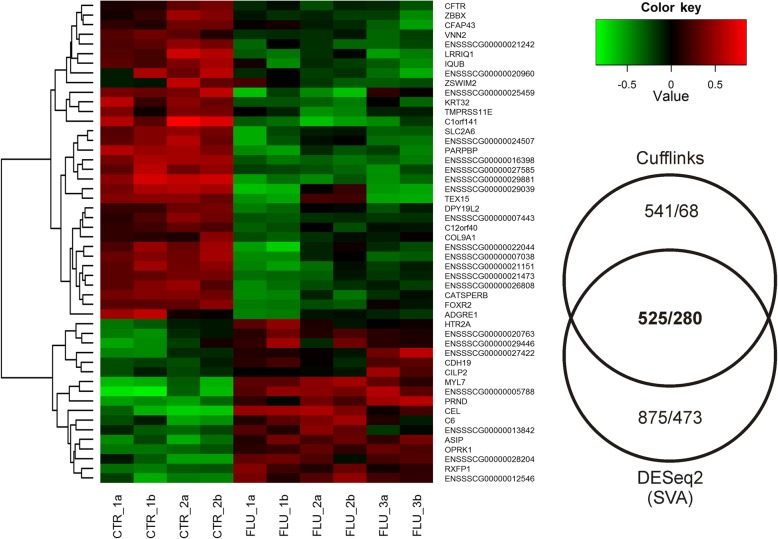
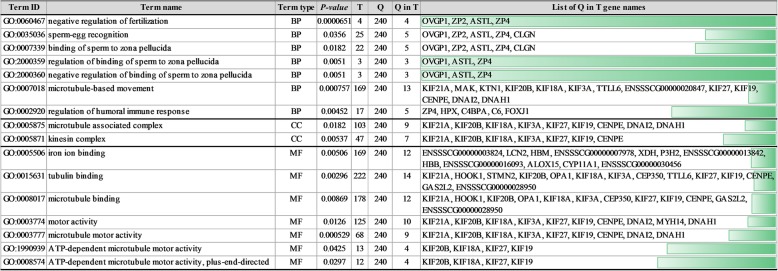
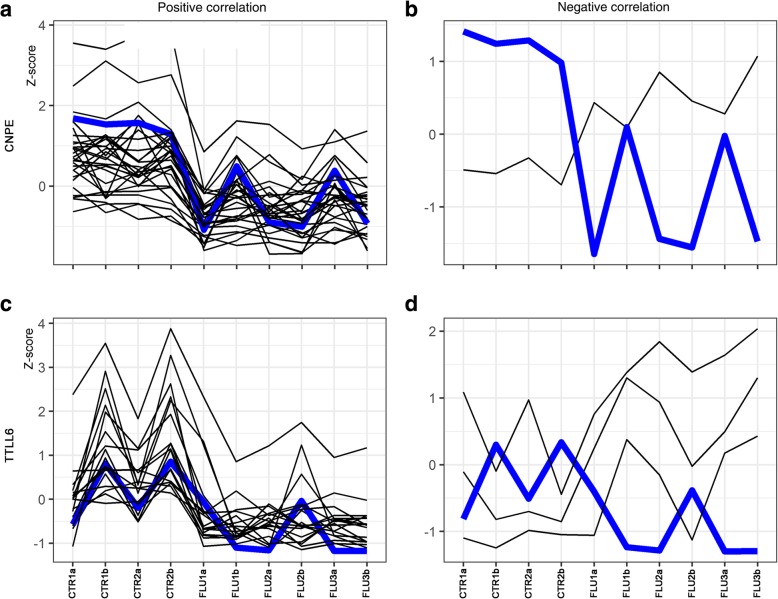
Flutamide-treated piglet ovaries showed 280 differentially expressed genes (DEGs; -adjusted < 0.05 and log fold change ≥1.0) and 98 differentially expressed lncRNAs (DELs; -adjusted < 0.05 and logFC ≥ 1.0). The DEGs were assigned to GO term, covering biological processes, molecular functions and cellular components, which linked the DEGs to functions associated with cellular transport, cell divisions and cytoskeleton. In addition, STRING software demonstrated strongest interactions between genes related to cell proliferation. Correlations between DEGs and DELs were also found, revealing that a majority of the genes targeted by the flutamide-affected lncRNAs were associated with intracellular transport and cell division.
Our results suggest that neonatal exposure of pigs to flutamide alters the expression of genes involved in ovarian cell proliferation, ovarian steroidogenesis and oocyte fertilization, which in turn may affect female reproduction in adult life.
雄激素参与胎儿/新生儿期卵巢发育的调节。具有抗雄激素活性的环境化学物质可能通过阻断内源性雄激素作用来影响多种信号转导途径。本研究的目的是检测抗雄激素氟他胺对新生仔猪卵巢中编码转录本和长链非编码RNA(lncRNA)表达的影响。通过采用RNA测序技术,我们旨在加深对雄激素在新生卵泡发生中的作用的理解,并检测抗雄激素氟他胺对卵巢功能的影响。
在出生后第1天至第10天,给仔猪皮下注射氟他胺(50mg/kg体重)或玉米油(对照组)(每组n = 3)。从11日龄仔猪中切除卵巢,分离并测序总细胞RNA。
氟他胺处理的仔猪卵巢显示出280个差异表达基因(DEG;P调整后<0.05且log倍数变化≥1.0)和98个差异表达lncRNA(DEL;P调整后<0.05且logFC≥1.0)。这些DEG被归类到GO术语中,涵盖生物过程、分子功能和细胞成分,这将DEG与细胞运输、细胞分裂和细胞骨架相关的功能联系起来。此外,STRING软件显示与细胞增殖相关的基因之间的相互作用最强。还发现了DEG和DEL之间的相关性,表明受氟他胺影响的lncRNA靶向的大多数基因与细胞内运输和细胞分裂有关。
我们的结果表明,新生仔猪暴露于氟他胺会改变参与卵巢细胞增殖、卵巢类固醇生成和卵母细胞受精的基因表达,这反过来可能会影响成年后的雌性生殖。