Alshammari Thamir M, Yusuff Kazeem B, Aziz Muhammad Majid, Subaie Gehad M
College of Pharmacy, University of Hail, P.O. Box 6166, Hail City, zip code 81442, Saudi Arabia.
Saudi Food and Drug Authority, Riyadh, Saudi Arabia.
BMC Health Serv Res. 2019 Apr 15;19(1):229. doi: 10.1186/s12913-019-4054-9.
All healthcare professionals (HCPs) are at high risk of influenza infection. Therefore, immunization is recommended for all HCPs. Due to safety and effectiveness concerns, HCPs have a low vaccination rate. This study was designed to explore the attitude, awareness and knowledge of HCPs toward vaccination for influenza.
A cross-sectional study was performed during October-November 2016. A total of 405 questionnaires were distributed in 8 major hospitals in Saudi Arabia. A validated questionnaire consisting of 31 questions and 5 sections was administered. Statistical Analysis Software (SAS®) version 9.2 was used to analyze the data.
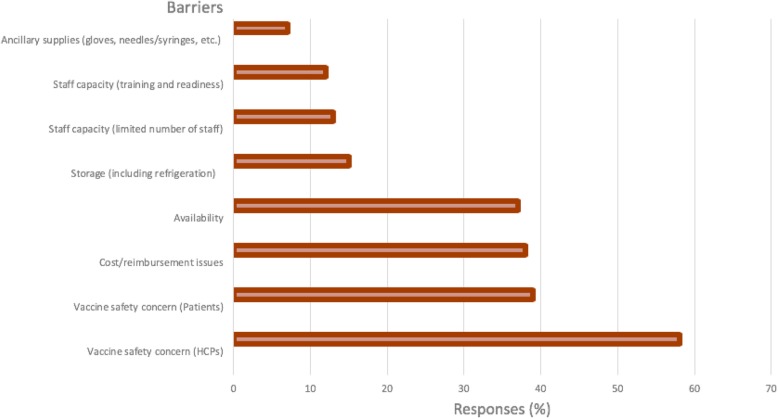
A total of 364 HCPs responded to the study survey, which is a response rate of 90%. A large proportion (61.8%) of participants were female. The majority of the participants were nurses (60.4%). More than half of the respondents (57.7%) were working in government-run hospitals. Among all the participants, approximately 67.6% of HCPs were vaccinated. The majority (84.1%) of HCPs believed that influenza vaccine prevents the flu. Furthermore, approximately 75% of participants believed that HCPs can be more susceptible to influenza infections than other people. The majority of participants (89.6%) knew the proper signs and symptoms of influenza. HCPs' belief that vaccination prevents influenza infection (OR = 3.93, 95% CI = 1.97-7.82), their awareness of the Scientific Committee for Influenza and Pneumococcal Vaccination (SCIPV)'s guidelines (OR = 2. 13, 95% CI = 1.16-3.90) and the presence of the standing orders regarding influenza vaccine (OR = 1.57, 95% CI = 1.01-3.21), were the predictors for receipt of influenza vaccine by HCPs. Many (58.0%) respondents believed that vaccine safety concerns is a major barrier to the vaccination of HCPs. Some misconceptions, such as influenza infection due to vaccination (42.3%) and incorrect perceptions about the symptoms of influenza in adults (50.5%), were found.
The acceptance of and participation in influenza vaccination by HCPs in Saudi Arabia appears to have markedly increased in the 2016 season. Continuing evaluation of vaccination practices is necessary, and more training programs are needed in the future.
所有医护人员(HCPs)都面临着较高的流感感染风险。因此,建议所有医护人员接种疫苗。由于对安全性和有效性的担忧,医护人员的疫苗接种率较低。本研究旨在探讨医护人员对流感疫苗接种的态度、意识和知识。
于2016年10月至11月进行了一项横断面研究。在沙特阿拉伯的8家主要医院共发放了405份问卷。采用了一份经过验证的问卷,该问卷由31个问题和5个部分组成。使用统计分析软件(SAS®)9.2版对数据进行分析。
共有364名医护人员回复了研究调查,回复率为90%。很大一部分(61.8%)参与者为女性。大多数参与者是护士(60.4%)。超过一半的受访者(57.7%)在政府运营的医院工作。在所有参与者中,约67.6%的医护人员接种了疫苗。大多数(84.1%)医护人员认为流感疫苗可预防流感。此外,约75%的参与者认为医护人员比其他人更容易感染流感。大多数参与者(89.6%)了解流感的正确体征和症状。医护人员认为接种疫苗可预防流感感染(比值比[OR]=3.93,95%置信区间[CI]=1.97 - 7.82)、他们对流感和肺炎球菌疫苗接种科学委员会(SCIPV)指南的知晓情况(OR = 2.13,95% CI = 1.16 - 3.90)以及存在关于流感疫苗的常规医嘱(OR = 1.57,95% CI = 1.01 - 3.21),是医护人员接种流感疫苗的预测因素。许多(58.0%)受访者认为对疫苗安全性的担忧是医护人员接种疫苗的主要障碍。发现了一些误解,如因接种疫苗而感染流感(42.3%)以及对成人流感症状的错误认知(50.5%)。
2016年季节,沙特阿拉伯医护人员对流感疫苗接种的接受度和参与度似乎有了显著提高。有必要持续评估疫苗接种实践,未来还需要更多的培训项目。