Loderer Christoph, Holmfeldt Karin, Lundin Daniel
Institute for Microbiology, Technische Universität Dresden, Dresden, Saxony, Germany.
Centre for Ecology and Evolution in Microbial model Systems-EEMiS, Linnaeus University, Kalmar, Sweden.
PeerJ. 2019 Apr 8;7:e6700. doi: 10.7717/peerj.6700. eCollection 2019.
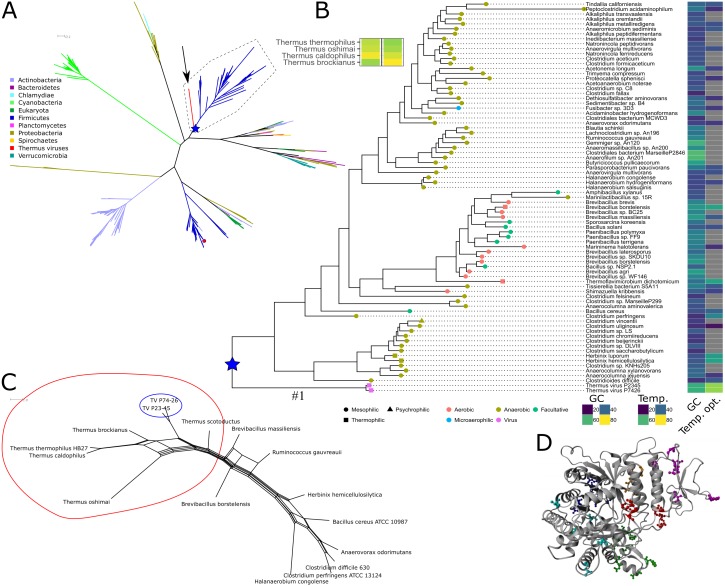
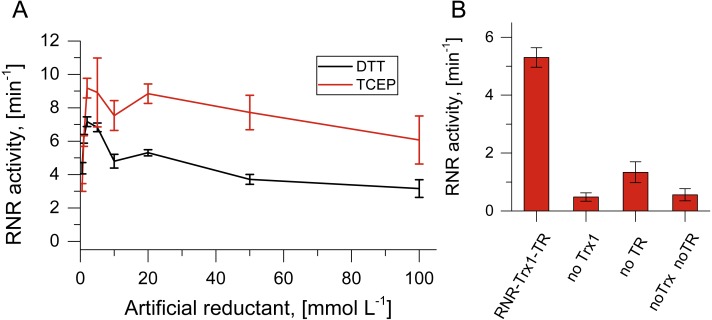
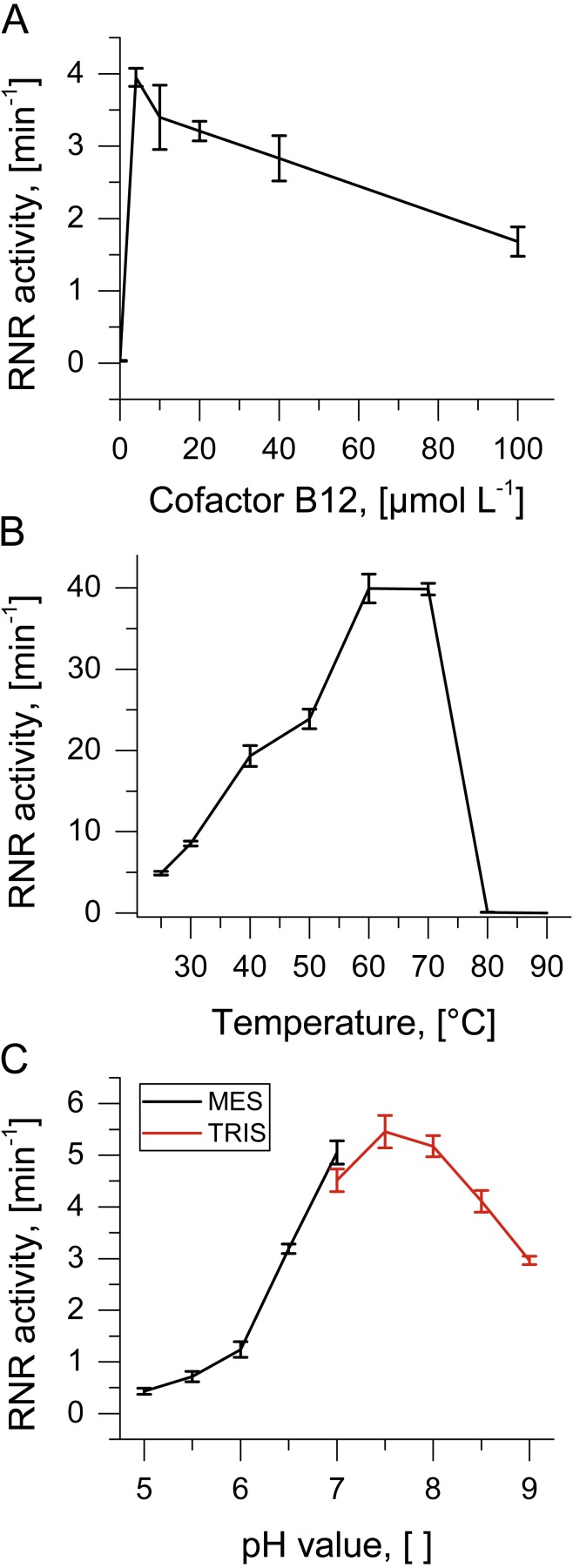
Ribonucleotide reductases (RNR) are essential enzymes for all known life forms. Their current taxonomic distribution suggests extensive horizontal gene transfer e.g., by processes involving viruses. To improve our understanding of the underlying processes, we characterized a monomeric class II RNR (NrdJm) enzyme from a Thermus virus, a subclass not present in any sequenced spp. genome. Phylogenetic analysis revealed a distant origin of the gene with the most closely related sequences found in mesophiles or moderate thermophiles from the Firmicutes phylum. GC-content, codon usage and the ratio of coding to non-coding substitutions (dN/dS) suggest extensive adaptation of the gene in the virus in terms of nucleotide composition and amino acid sequence. The NrdJm enzyme is a monomeric B-dependent RNR with nucleoside triphosphate specificity. It exhibits a temperature optimum at 60-70 °C, which is in the range of the growth optimum of spp. Experiments in combination with the thioredoxin system show that the enzyme is able to retrieve electrons from the host NADPH pool via host thioredoxin and thioredoxin reductases. This is different from other characterized viral RNRs such as T4 phage RNR, where a viral thioredoxin is present. We hence show that the monomeric class II RNR, present in Thermus viruses, was likely transferred from an organism phylogenetically distant from the one they were isolated from, and adapted to the new host in genetic signature and amino acids sequence.
核糖核苷酸还原酶(RNR)是所有已知生命形式所必需的酶。它们目前的分类分布表明存在广泛的水平基因转移,例如通过涉及病毒的过程。为了增进我们对潜在过程的理解,我们对一种来自嗜热栖热菌病毒的单体II类RNR(NrdJm)酶进行了表征,该亚类在任何已测序的物种基因组中均不存在。系统发育分析揭示了该基因的起源较远,在厚壁菌门的嗜温菌或中度嗜热菌中发现了与其最密切相关的序列。GC含量、密码子使用情况以及编码与非编码替换的比率(dN/dS)表明该基因在病毒中在核苷酸组成和氨基酸序列方面有广泛的适应性。NrdJm酶是一种具有核苷三磷酸特异性的单体B依赖性RNR。它在60 - 70°C表现出最佳温度,这在嗜热栖热菌生长的最佳温度范围内。与硫氧还蛋白系统结合的实验表明,该酶能够通过宿主硫氧还蛋白和硫氧还蛋白还原酶从宿主NADPH池中获取电子。这与其他已表征的病毒RNR如T4噬菌体RNR不同,T4噬菌体RNR存在一种病毒硫氧还蛋白。因此,我们表明存在于嗜热栖热菌病毒中的单体II类RNR可能是从与其分离的生物体在系统发育上距离较远的生物体转移而来,并在遗传特征和氨基酸序列上适应了新宿主。