THINKMD, Inc., Burlington, Vermont.
University of Vermont Robert Larner College of Medicine, Vermont Children's Hospital, Burlington, Vermont.
Am J Trop Med Hyg. 2019 Jun;100(6):1556-1565. doi: 10.4269/ajtmh.18-0869.
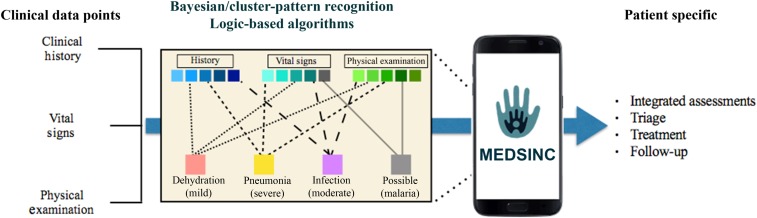
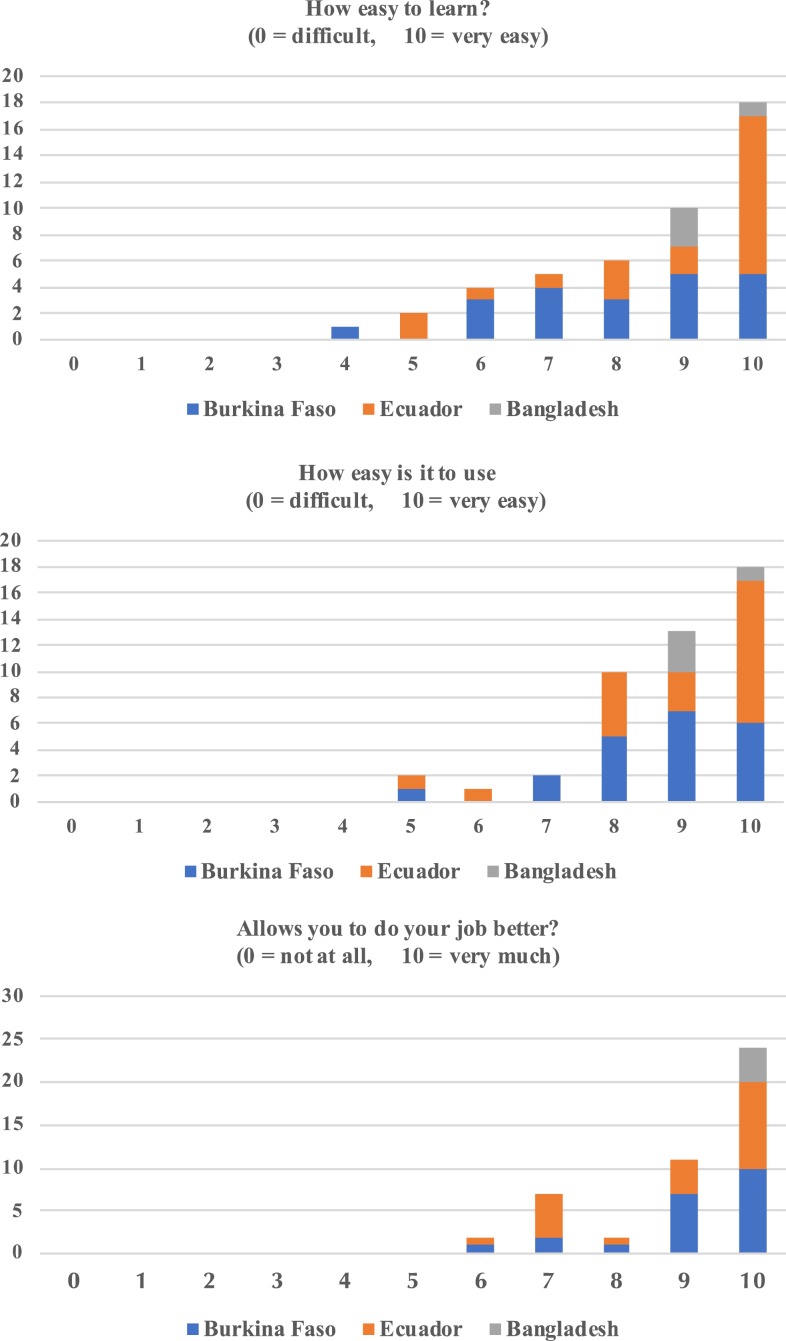
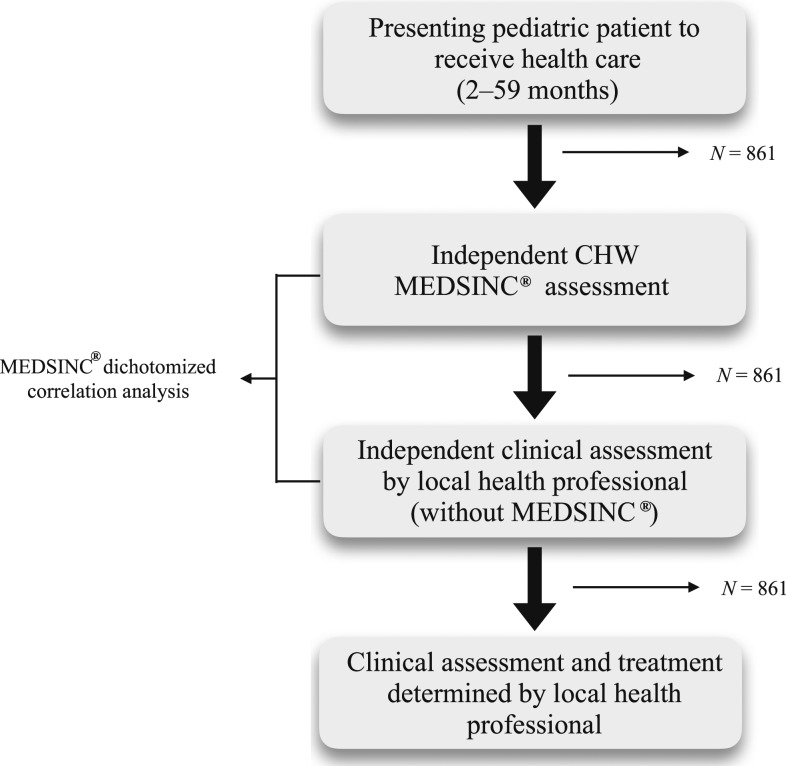
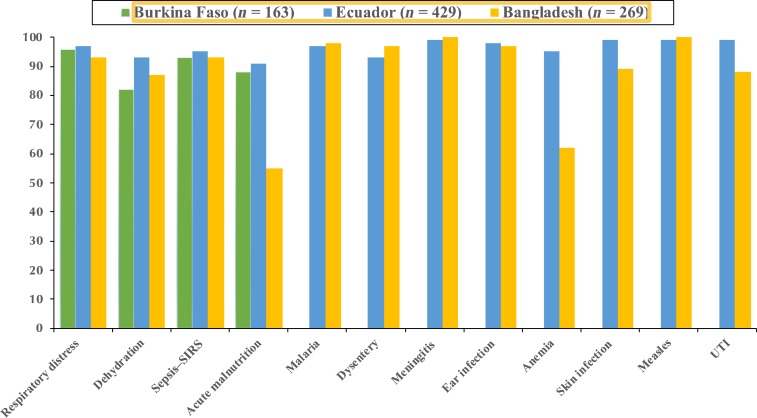
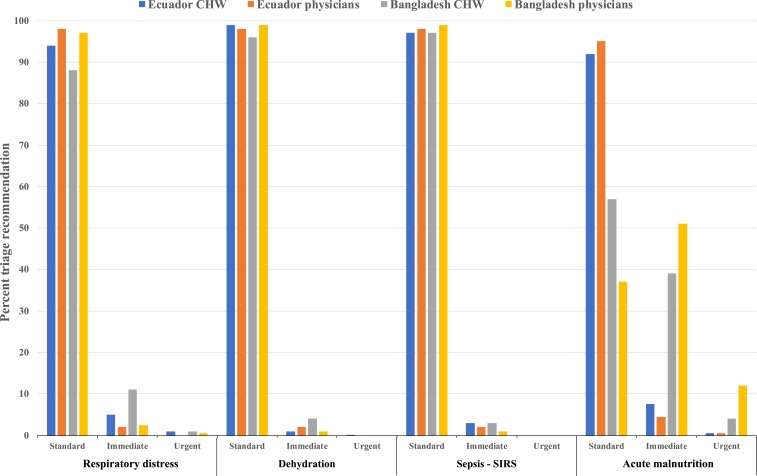
Approximately 3 million children younger than 5 years living in low- and middle-income countries (LMICs) die each year from treatable clinical conditions such as pneumonia, dehydration secondary to diarrhea, and malaria. A majority of these deaths could be prevented with early clinical assessments and appropriate therapeutic intervention. In this study, we describe the development and initial validation testing of a mobile health (mHealth) platform, MEDSINC, designed for frontline health workers (FLWs) to perform clinical risk assessments of children aged 2-60 months. MEDSINC is a web browser-based clinical severity assessment, triage, treatment, and follow-up recommendation platform developed with physician-based Bayesian pattern recognition logic. Initial validation, usability, and acceptability testing were performed on 861 children aged between 2 and 60 months by 49 FLWs in Burkina Faso, Ecuador, and Bangladesh. MEDSINC-based clinical assessments by FLWs were independently and blindly correlated with clinical assessments by 22 local health-care professionals (LHPs). Results demonstrate that clinical assessments by FLWs using MEDSINC had a specificity correlation between 84% and 99% to LHPs, except for two outlier assessments (63% and 75%) at one study site, in which local survey prevalence data indicated that MEDSINC outperformed LHPs. In addition, MEDSINC triage recommendation distributions were highly correlated with those of LHPs, whereas usability and feasibility responses from LHP/FLW were collectively positive for ease of use, learning, and job performance. These results indicate that the MEDSINC platform could significantly increase pediatric health-care capacity in LMICs by improving FLWs' ability to accurately assess health status and triage of children, facilitating early life-saving therapeutic interventions.
每年约有 300 万生活在中低收入国家(LMICs)的 5 岁以下儿童死于肺炎、腹泻引起的脱水和疟疾等可治疗的临床疾病。这些死亡病例中的大多数都可以通过早期临床评估和适当的治疗干预来预防。在这项研究中,我们描述了一个移动医疗(mHealth)平台 MEDSINC 的开发和初步验证测试,该平台旨在为一线卫生工作者(FLWs)提供 2-60 个月儿童的临床风险评估。MEDSINC 是一个基于网络浏览器的临床严重程度评估、分诊、治疗和随访建议平台,由基于医生的贝叶斯模式识别逻辑开发。在布基纳法索、厄瓜多尔和孟加拉国,49 名一线卫生工作者对 861 名年龄在 2 至 60 个月之间的儿童进行了初始验证、可用性和可接受性测试。FLWs 使用 MEDSINC 进行的临床评估与 22 名当地卫生保健专业人员(LHPs)进行的临床评估独立且盲目相关。结果表明,FLWs 使用 MEDSINC 进行的临床评估与 LHPs 的特异性相关性在 84%至 99%之间,但在一个研究地点的两项异常评估(63%和 75%)除外,当地调查流行率数据表明 MEDSINC 表现优于 LHPs。此外,MEDSINC 分诊建议的分布与 LHPs 的高度相关,而 LHPs/FLW 的可用性和可行性反馈则对易用性、学习和工作表现表示一致肯定。这些结果表明,MEDSINC 平台可以通过提高 FLWs 准确评估儿童健康状况和分诊的能力,显著增加 LMICs 的儿科医疗保健能力,促进早期救生治疗干预。