The Roslin Institute and Royal (Dick) School of Veterinary Studies, The University of Edinburgh, Midlothian, EH25 9RG, Scotland, UK.
Department of Animal Breeding and Genetics, Swedish University of Agricultural Sciences, Box 7023, 750 07, Uppsala, Sweden.
Genet Sel Evol. 2019 Apr 17;51(1):14. doi: 10.1186/s12711-019-0456-8.
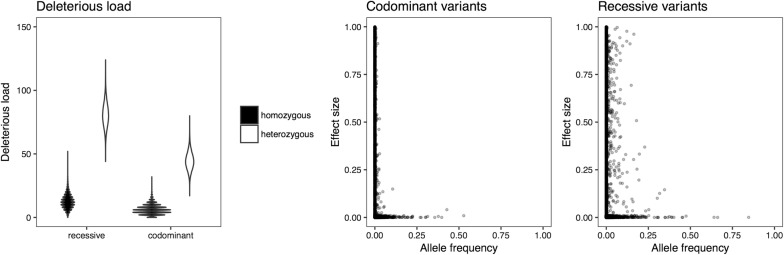
In this paper, we simulate deleterious load in an animal breeding program, and compare the efficiency of genome editing and selection for decreasing it. Deleterious variants can be identified by bioinformatics screening methods that use sequence conservation and biological prior information about protein function. However, once deleterious variants have been identified, how can they be used in breeding?
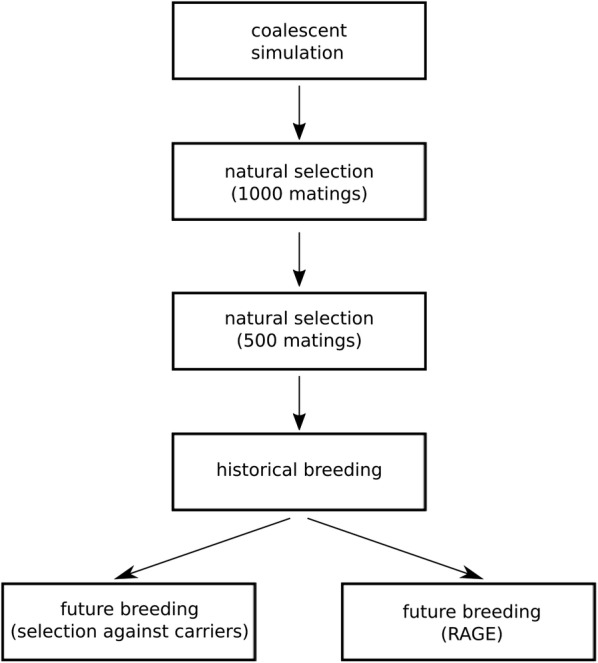
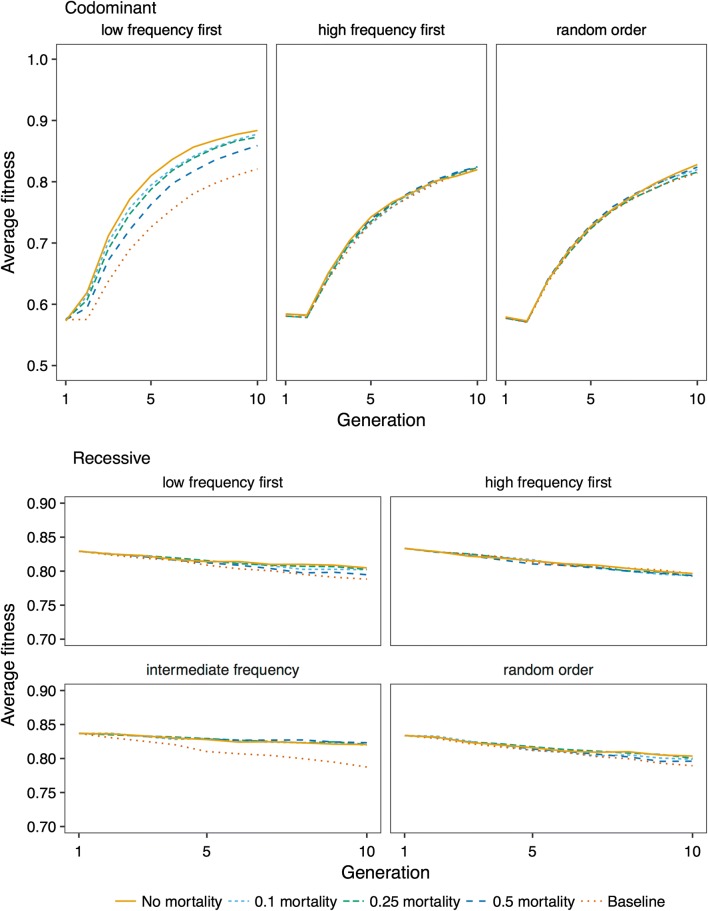
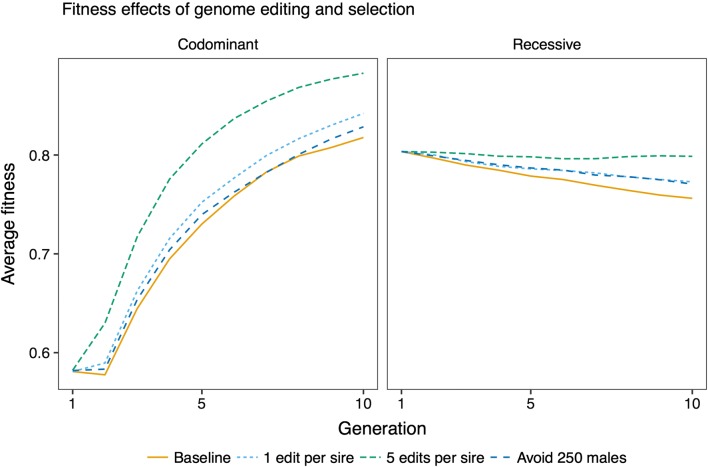
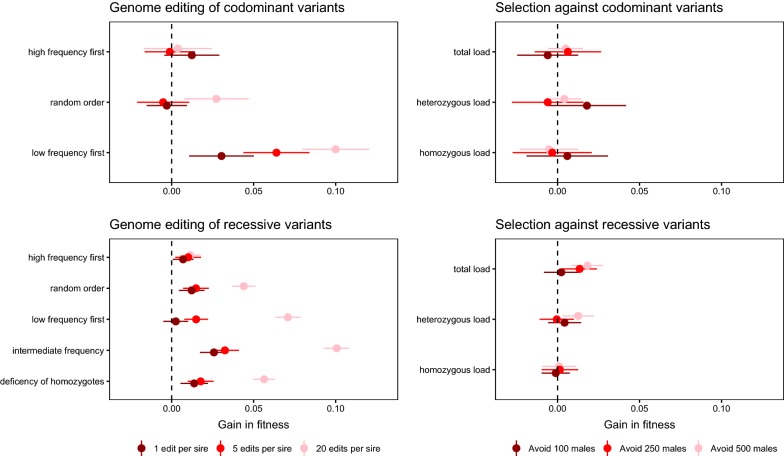
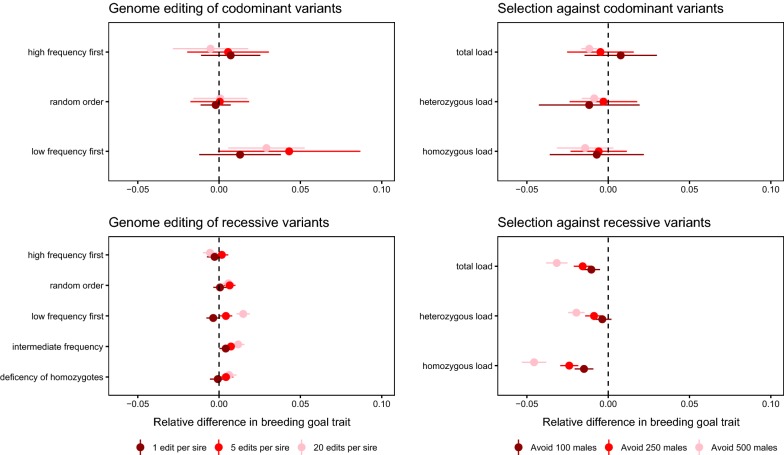
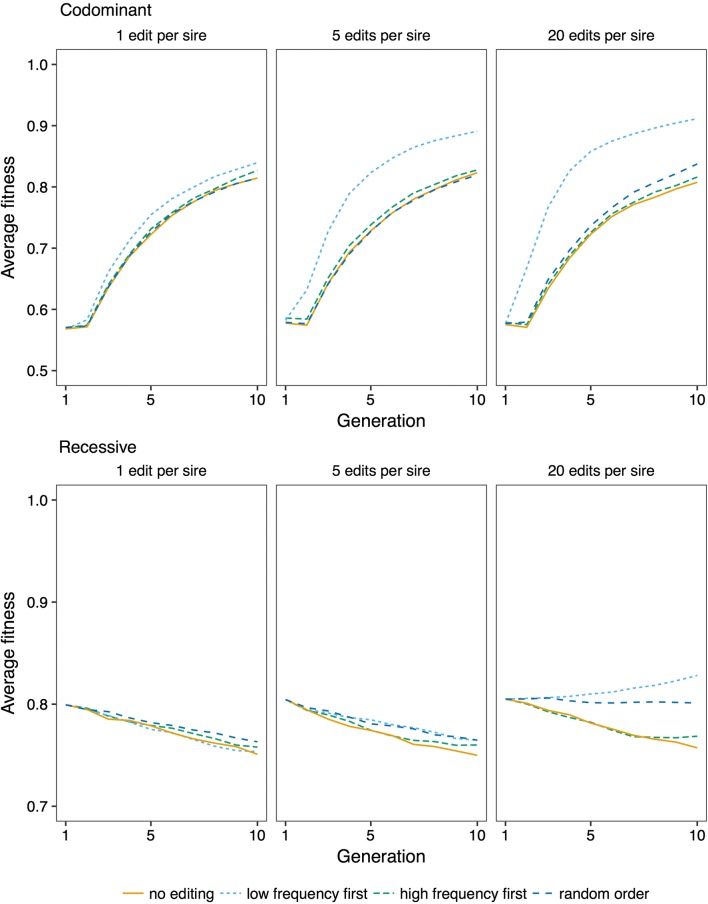
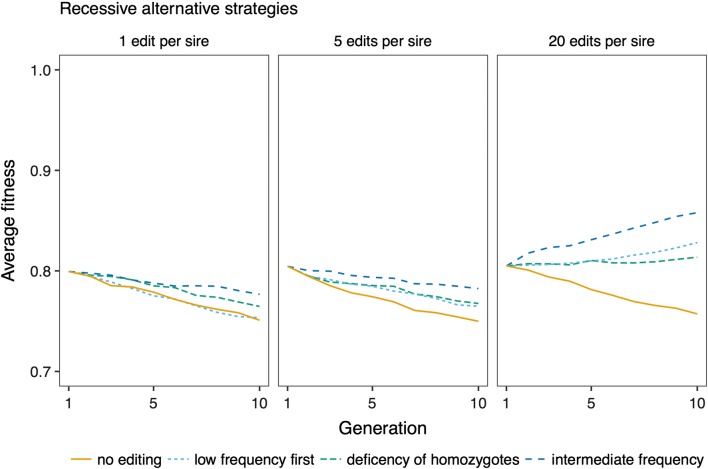
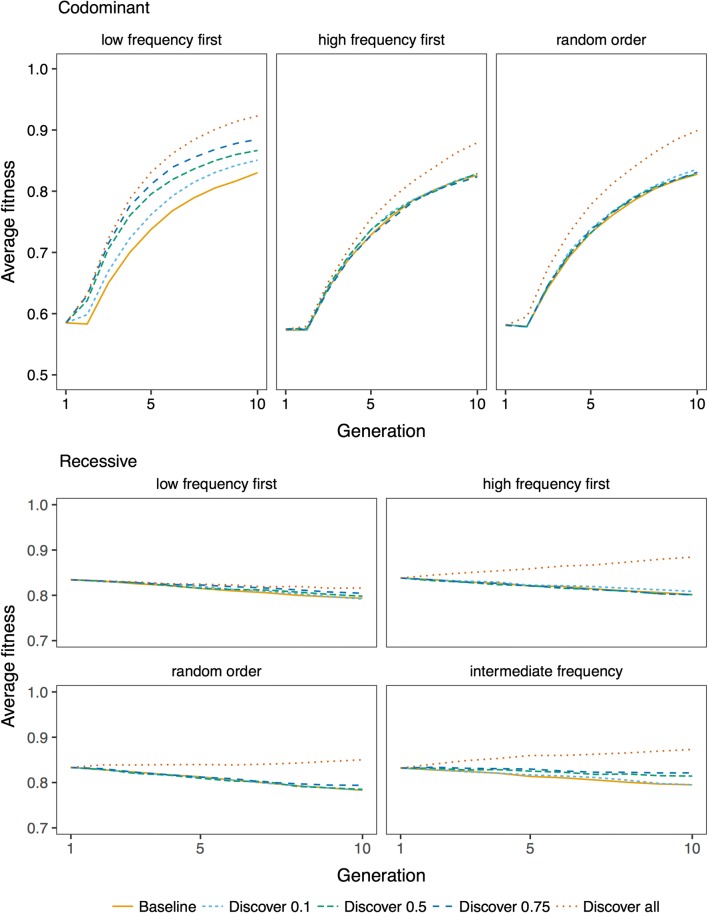
We simulated a closed animal breeding population that is subject to both natural selection against deleterious load and artificial selection for a quantitative trait representing the breeding goal. Deleterious load was polygenic and was due to either codominant or recessive variants. We compared strategies for removal of deleterious alleles by genome editing (RAGE) to selection against carriers. When deleterious variants were codominant, the best strategy for prioritizing variants was to prioritize low-frequency variants. When deleterious variants were recessive, the best strategy was to prioritize variants with an intermediate frequency. Selection against carriers was inefficient when variants were codominant, but comparable to editing one variant per sire when variants were recessive.
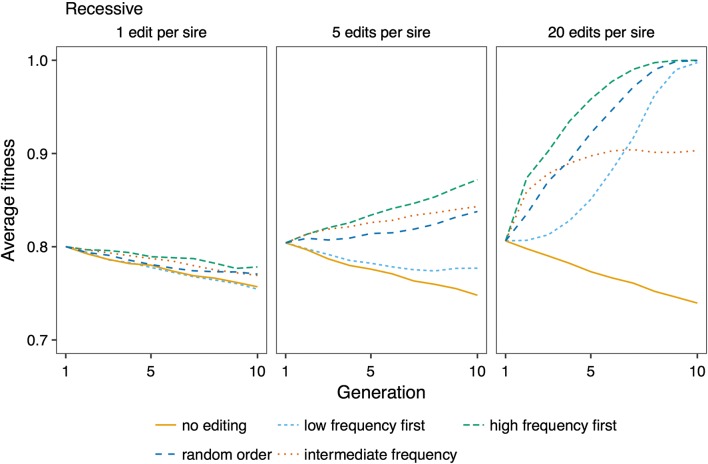
Genome editing of deleterious alleles reduces deleterious load, but requires the simultaneous editing of multiple deleterious variants in the same sire to be effective when deleterious variants are recessive. In the short term, selection against carriers is a possible alternative to genome editing when variants are recessive. Our results suggest that, in the future, there is the potential to use RAGE against deleterious load in animal breeding.
在本文中,我们模拟了动物育种计划中的有害负荷,并比较了基因组编辑和选择降低有害负荷的效率。有害变异可以通过生物信息学筛选方法来识别,这些方法利用序列保守性和蛋白质功能的生物学先验信息。然而,一旦确定了有害变异,如何在育种中使用它们呢?
我们模拟了一个封闭的动物育种群体,该群体既受到自然选择对有害负荷的压力,又受到代表育种目标的数量性状的人工选择。有害负荷是多基因的,由显性或隐性变异引起。我们比较了通过基因组编辑(RAGE)去除有害等位基因的策略与选择携带有害等位基因的个体的策略。当有害变异为显性时,优先考虑低频率变异的策略是最好的策略。当有害变异为隐性时,最好的策略是优先考虑具有中间频率的变异。当变异为显性时,选择携带有害等位基因的个体效率不高,但当变异为隐性时,与编辑每个父本的一个变异相当。
编辑有害等位基因可以降低有害负荷,但当有害变异为隐性时,需要同时编辑同一父本中的多个有害变异才能有效。在短期内,当变异为隐性时,选择携带有害等位基因的个体是基因组编辑的一种可行替代方法。我们的结果表明,在未来,有可能在动物育种中使用 RAGE 来对抗有害负荷。