Fujimoto Ai, Saito Yutaka, Abe Seiirhicro, Hoteya Shu, Nomura Kosuke, Yasuda Hiroshi, Matsuo Yasumasa, Uraoka Toshio, Kuribayashi Shiko, Saito Itaru, Tsuji Yosuke, Maehata Tadateru, Ochiai Yasutoshi, Nishizawa Toshihiro, Yahagi Naohisa
Division of Research and Development for Minimally Invasive Treatment, Cancer Center, Keio University School of Medicine, Tokyo, Japan.
Department of Gastroenterology and Hepatology, National Hospital Organization Tokyo Medical Center, Tokyo, Japan.
BMJ Open Gastroenterol. 2019 Mar 30;6(1):e000275. doi: 10.1136/bmjgast-2019-000275. eCollection 2019.
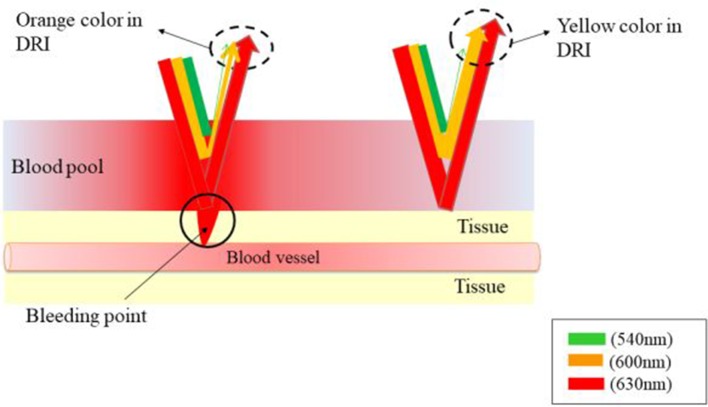
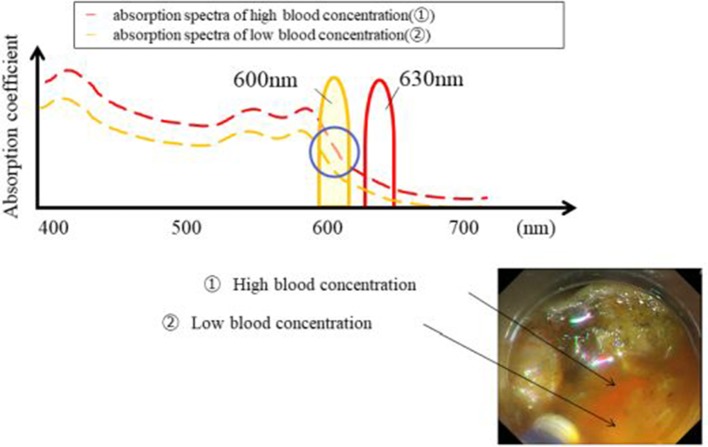
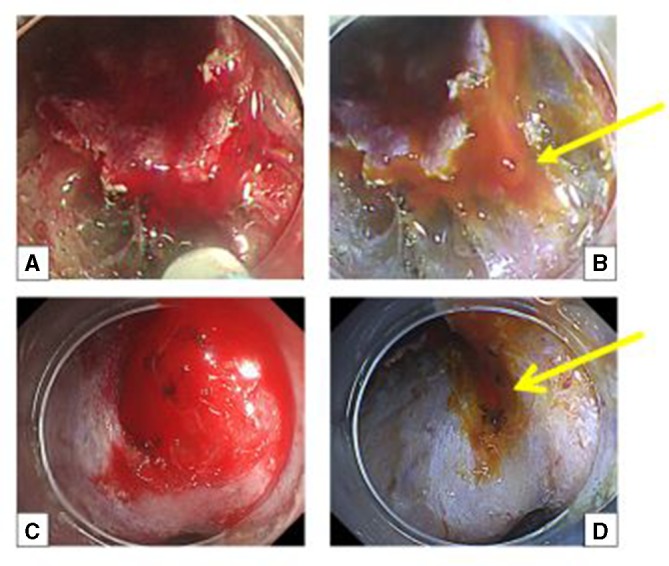
Patients scheduled to undergo oesophageal, gastric and colorectal endoscopic submucosal dissection (ESD) are to be investigated to verify the efficacy of dual red imaging (DRI) for establishing haemostasis during ESD.
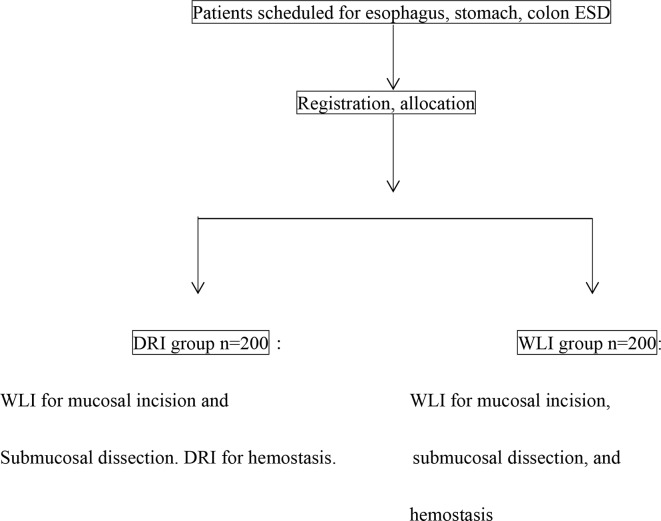
The trial is designed as a multicentre, open-label randomised, parallel-group, controlled intervention study. Registered patients will be randomly assigned to DRI and white light imaging (WLI) groups. In the DRI group, the mucosal incision and submucosal dissection will be performed by WLI, and haemostasis will be managed by DRI when bleeding occurs. In the WLI group, the mucosal incision and submucosal dissection are to be performed by WLI and the haemostasis management is to be performed by WLI. The primary endpoint is the time from the recognition of bleeding up to the achievement of complete haemostasis (haemostasis time). The secondary endpoints are the operation time, the proportion of cases in which perforation occurs, and the psychological stress experienced by the endoscopist during haemostasis treatment.
This trial was approved by the Keio University Review Board for Clinical Trials (5 December 2016).
This will be the first multicentre collaborative research using DRI for haemostasis treatment during ESD. When the safety and simplicity of DRI as a treatment for haemostasis during ESD can be proven, the ESD procedure can be simplified and disseminated more widely in clinical practice.
UMIN000025134.
计划接受食管、胃和结肠内镜黏膜下剥离术(ESD)的患者将接受调查,以验证双波长成像(DRI)在ESD期间建立止血效果方面的作用。
该试验设计为一项多中心、开放标签、随机、平行组对照干预研究。登记的患者将被随机分配至DRI组和白光成像(WLI)组。在DRI组中,黏膜切开和黏膜下剥离将通过WLI进行,出血时通过DRI进行止血处理。在WLI组中,黏膜切开和黏膜下剥离通过WLI进行,止血处理也通过WLI进行。主要终点是从识别出血到实现完全止血的时间(止血时间)。次要终点是手术时间、穿孔发生病例的比例以及内镜医师在止血治疗期间所经历的心理压力。
本试验已获得庆应义塾大学临床试验审查委员会批准(2016年12月5日)。
这将是第一项使用DRI进行ESD期间止血治疗的多中心合作研究。当DRI作为ESD期间止血治疗的安全性和简便性得到证实时,ESD操作可以简化并在临床实践中更广泛地推广。
UMIN000025134。