Department of Radiation Oncology, Aichi Cancer Center Hospital, Nagoya, Aichi, Japan.
Graduate School of Radiological Technology, Gunma Prefectural College of Health Sciences, Maebashi, Gunma, Japan.
J Appl Clin Med Phys. 2019 May;20(5):75-83. doi: 10.1002/acm2.12582. Epub 2019 Apr 17.
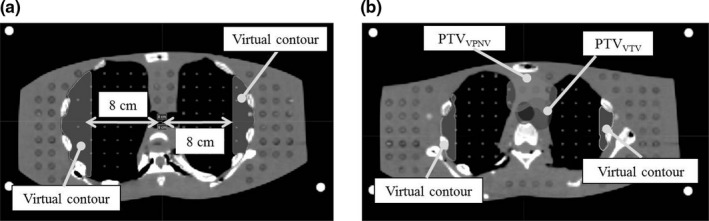
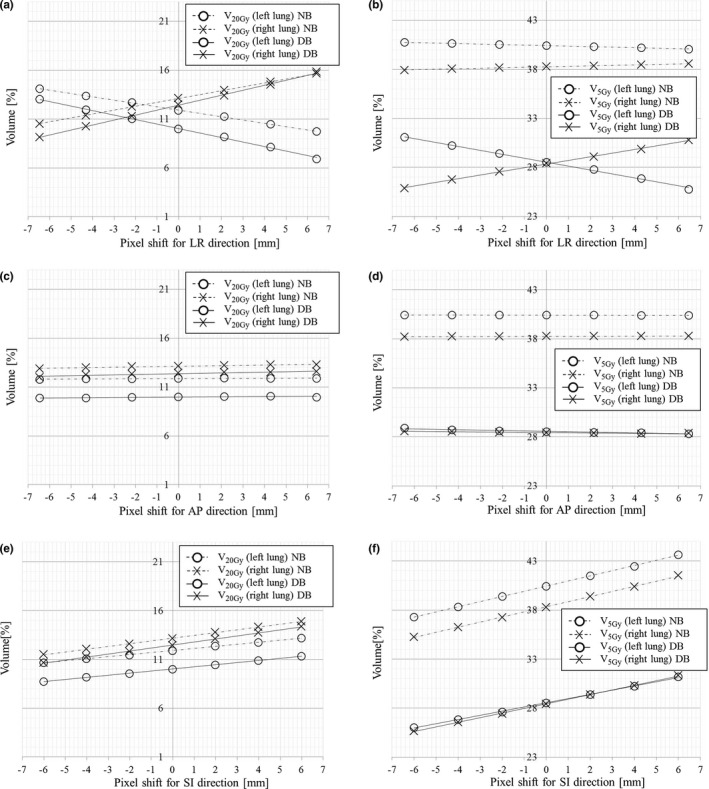
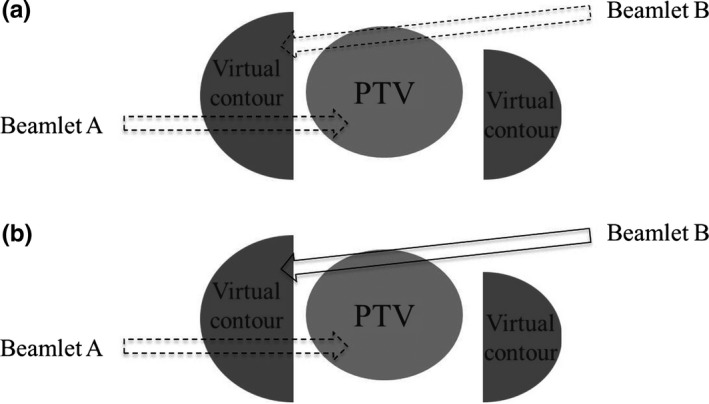
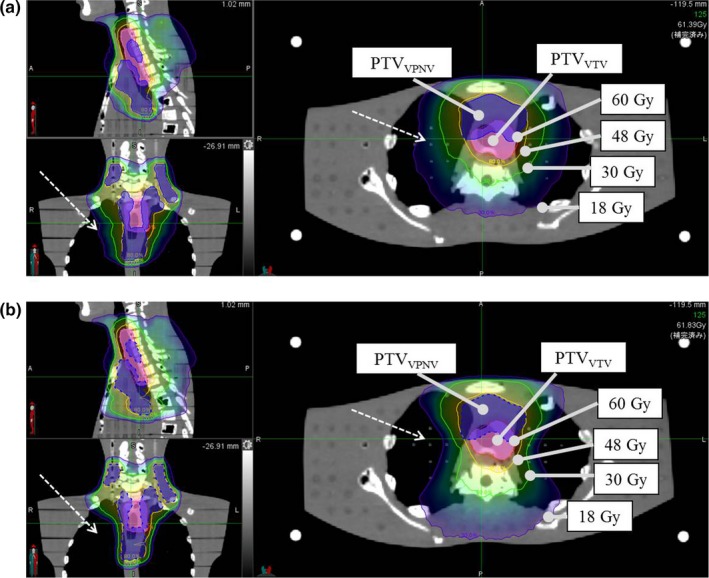
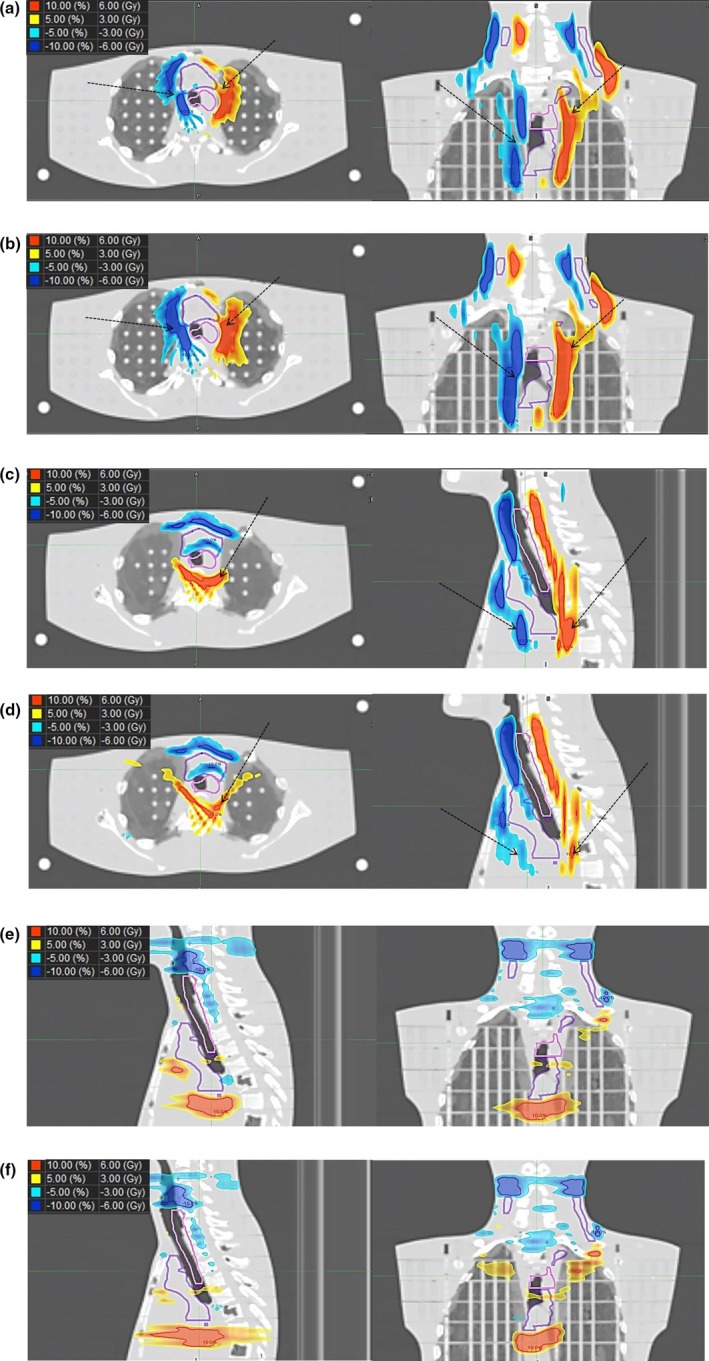
Helical tomotherapy (HT) can restrict beamlets passing through the virtual contour on computed tomography (CT) image in dose optimization, reducing the dose to organs at risk (OARs). Beamlet restriction limits the incident beamlet angles; thus, the proper planning target volume (PTV) margin may differ from that of the standard treatment plan without beamlet restriction, depending on the patient's movement during dose delivery. Dose distribution changes resulting from patient movement have not been described for treatment plans with beamlet restriction. This study quantified changes in dose distribution to the target and OARs when beamlet restriction is applied to cervical esophageal cancer treatment plan using HT by systematically shifting a phantom. Treatment plans for cervical esophageal cancers with and without beamlet restriction modes [directional block (DB) and nonblock (NB), respectively] were designed for CT images of the RANDO phantom. The PTV margin for the DB mode was set to be the same as that for the NB mode (5 mm). The CT image was intentionally shifted by ±1, ±2, and ±3 voxels in the left-right, anterior-posterior, and superior-inferior directions, and the dose distribution was recalculated for each position using the fluence for the NB or DB mode. When the phantom shift was within the same PTV margin as the NB mode, changes in doses to the targets, lungs, heart, and spinal cord in the DB mode were small as those in the NB mode. In conclusion, the virtual contour shape used in this study would provide safe delivery even with patient movement within the same PTV margin as for the NB mode.
螺旋断层放疗(HT)可以在剂量优化中限制通过 CT 图像上虚拟轮廓的射束子,从而降低危及器官(OAR)的剂量。射束子限制限制了入射射束子的角度;因此,适当的计划靶区(PTV)边界可能与没有射束子限制的标准治疗计划不同,这取决于患者在剂量输送过程中的运动。由于患者运动导致的剂量分布变化尚未描述具有射束子限制的治疗计划。本研究通过系统地移动体模,量化了在对宫颈癌治疗计划应用 HT 时,当应用射束子限制时,靶区和 OAR 剂量分布的变化。为 RANDO 体模的 CT 图像设计了具有和不具有射束子限制模式(分别为定向阻挡(DB)和非阻挡(NB))的宫颈癌治疗计划。DB 模式的 PTV 边界设置为与 NB 模式相同(5 毫米)。将 CT 图像在左右、前后和上下方向上有意移动±1、±2 和±3 个体素,并使用 NB 或 DB 模式的通量为每个位置重新计算剂量分布。当体模移动在与 NB 模式相同的 PTV 边界内时,DB 模式下靶区、肺、心脏和脊髓的剂量变化与 NB 模式相似。总之,在这项研究中使用的虚拟轮廓形状即使在患者运动与 NB 模式的 PTV 边界内时也能提供安全的治疗。