School of Engineering & Physics, University of the South Pacific, Suva, Fiji.
Laboratory for Medical Science Mathematics, RIKEN Center for Integrative Medical Sciences, Yokohama, Japan.
BMC Genomics. 2019 Apr 18;19(Suppl 9):984. doi: 10.1186/s12864-018-5383-5.
Post-translational modification (PTM), which is a biological process, tends to modify proteome that leads to changes in normal cell biology and pathogenesis. In the recent times, there has been many reported PTMs. Out of the many modifications, phosphoglycerylation has become particularly the subject of interest. The experimental procedure for identification of phosphoglycerylated residues continues to be an expensive, inefficient and time-consuming effort, even with a large number of proteins that are sequenced in the post-genomic period. Computational methods are therefore being anticipated in order to effectively predict phosphoglycerylated lysines. Even though there are predictors available, the ability to detect phosphoglycerylated lysine residues still remains inadequate.
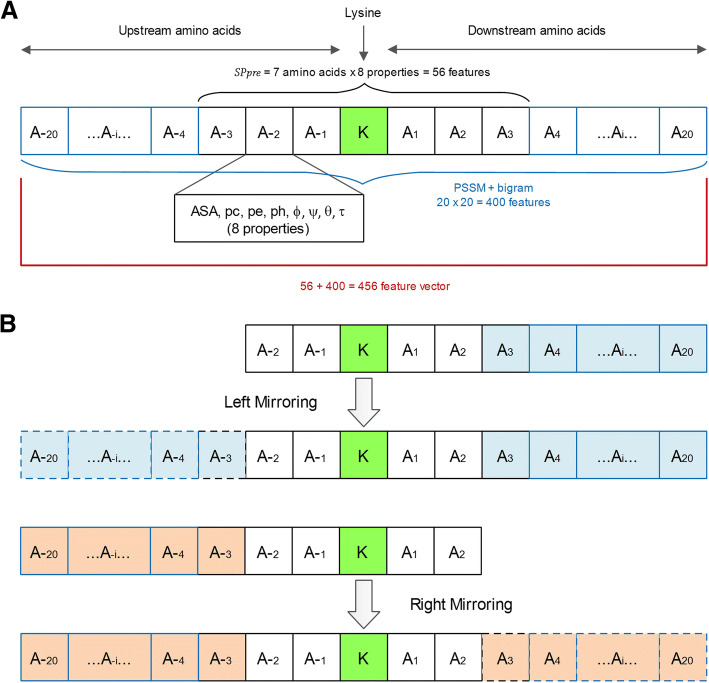
We have introduced a new predictor in this paper named EvolStruct-Phogly that uses structural and evolutionary information relating to amino acids to predict phosphoglycerylated lysine residues. Benchmarked data is employed containing experimentally identified phosphoglycerylated and non-phosphoglycerylated lysines. We have then extracted the three structural information which are accessible surface area of amino acids, backbone torsion angles, amino acid's local structure conformations and profile bigrams of position-specific scoring matrices.
EvolStruct-Phogly showed a noteworthy improvement in regards to the performance when compared with the previous predictors. The performance metrics obtained are as follows: sensitivity 0.7744, specificity 0.8533, precision 0.7368, accuracy 0.8275, and Mathews correlation coefficient of 0.6242. The software package and data of this work can be obtained from https://github.com/abelavit/EvolStruct-Phogly or www.alok-ai-lab.com.
翻译后修饰(PTM)是一种生物过程,往往会修饰蛋白质组,导致正常细胞生物学和发病机制的变化。在最近的时间里,已经有许多报道的 PTMs。在许多修饰中,磷酸甘油化已成为特别感兴趣的主题。鉴定磷酸甘油化残基的实验程序仍然是昂贵、低效和耗时的,即使在后基因组时代有大量的蛋白质被测序。因此,人们期望使用计算方法来有效地预测磷酸甘油化赖氨酸。尽管有可用的预测器,但检测磷酸甘油化赖氨酸残基的能力仍然不足。
我们在本文中引入了一种新的预测器,名为 EvolStruct-Phogly,它使用与氨基酸相关的结构和进化信息来预测磷酸甘油化赖氨酸残基。使用包含实验鉴定的磷酸甘油化和非磷酸甘油化赖氨酸的基准数据。然后,我们提取了三个结构信息,即氨基酸的可及表面积、骨架扭转角、氨基酸的局部结构构象和位置特异性评分矩阵的轮廓双元组。
与以前的预测器相比,EvolStruct-Phogly 在性能方面有了显著的提高。获得的性能指标如下:敏感性 0.7744、特异性 0.8533、精度 0.7368、准确性 0.8275 和马修斯相关系数 0.6242。该工作的软件包和数据可从 https://github.com/abelavit/EvolStruct-Phogly 或 www.alok-ai-lab.com 获得。