Kewcharoen Jakrin, Trongtorsak Angkawipa, Kanitsoraphan Chanavuth, Prasitlumkum Narut, Mekritthikrai Raktham, Techorueangwiwat Chol, Limpruttidham Nath, Rattanawong Pattara
University of Hawaii Internal Medicine Residency Program, Honolulu, HI, USA; Division of Cardiovascular Medicine, Department of Medicine, Faculty of Medicine, Chulalongkorn University, Bangkok, Thailand.
Division of Cardiovascular Medicine, Department of Medicine, Faculty of Medicine, Chulalongkorn University, Bangkok, Thailand.
Indian Heart J. 2019 Jan-Feb;71(1):52-59. doi: 10.1016/j.ihj.2018.12.006. Epub 2019 Jan 3.
Heart failure (HF) is one of the world leading causes of hospitalization and rehospitalization. Cognitive impairment has been identified as a risk factor for rehospitalization in patients with heart failure. However, previous studies reported mixed results. Therefore, we conducted a systematic review and meta-analysis to assess the association between cognitive impairment and 30-day rehospitalization in patients with HF.
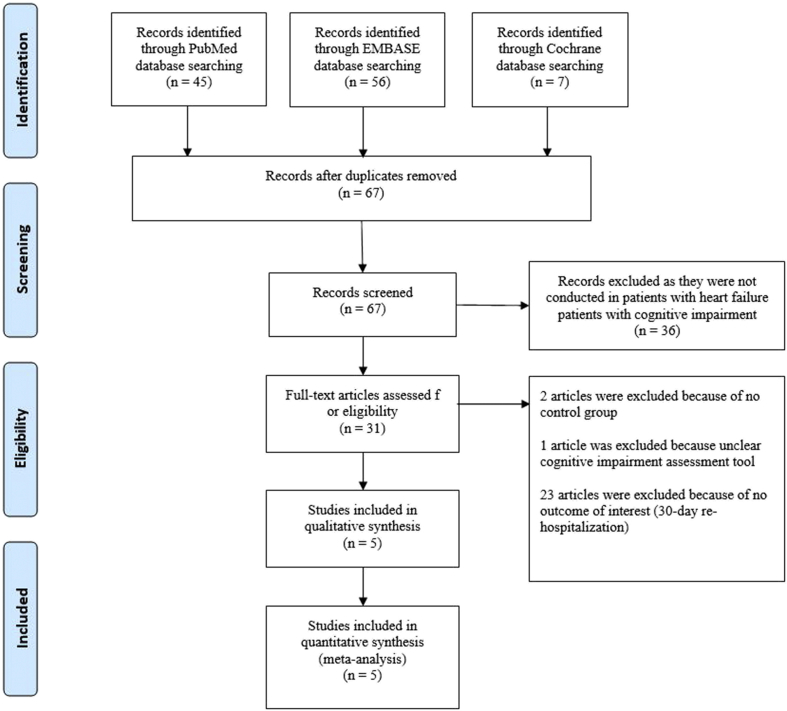
We performed a comprehensive literature search through July 2018 in the databases of MEDLINE and EMBASE. Included studies were cohort studies, case-control studies, cross-sectional studies or randomized controlled trials that compared the risk of 30-day rehospitalization in HF patients with cognitive impairment and those without. We calculated pooled relative risk (RR) with 95% confidence intervals (CI) and I statistic using the random-effects model.
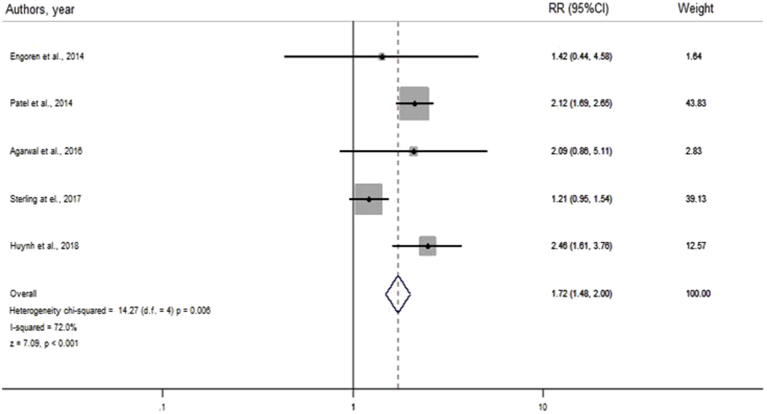
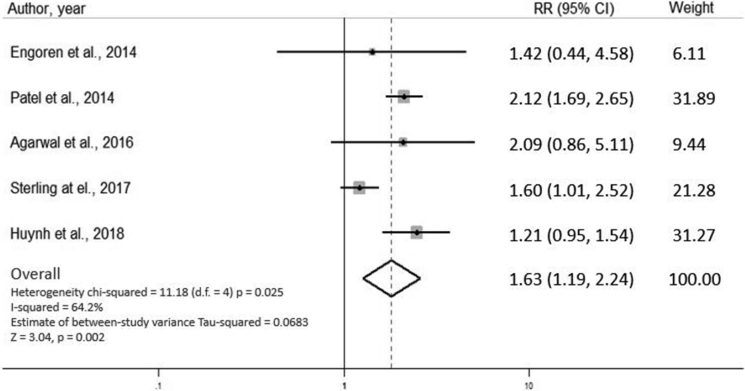
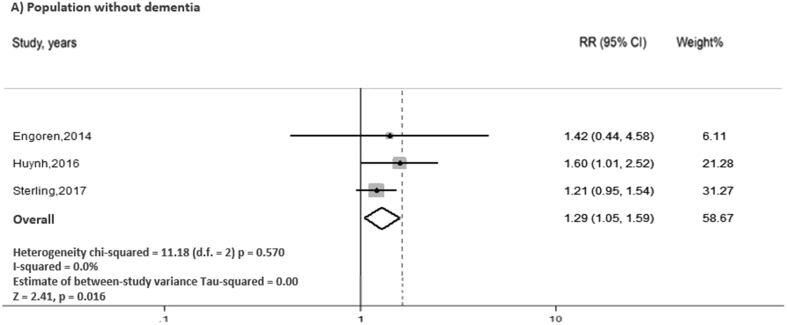
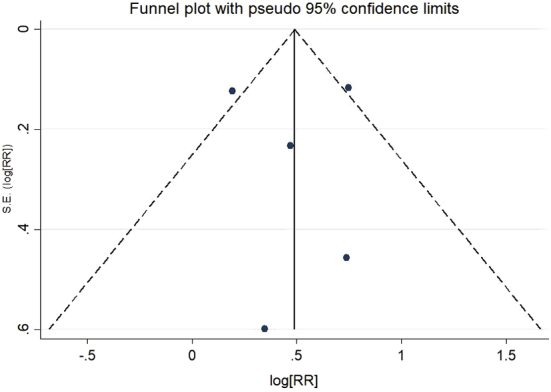
Five studies with a total of 2,342 participants (1,004 participants had cognitive impairment) were included for meta-analysis. In random-effect model, cognitive impairment significantly increased the risk of 30-day rehospitalization in HF participants (pooled RR=1.63, 95%CI: 1.19-2.24], I=64.2%, p=0.002). Subgroup analysis was performed on the studies that excluded patients with dementia. The results also showed that cognitive impairment significantly increased the risk of 30-day rehospitalization in participants with HF (pooled RR=1.29, 95%CI: 1.05-1.59, I=0.0%, p=0.016), which was consistent with our overall analysis.
Our meta-analysis demonstrated that the presence of cognitive impairment is associated with 30-day rehospitalization in patients with HF.
心力衰竭(HF)是全球住院和再次住院的主要原因之一。认知障碍已被确定为心力衰竭患者再次住院的危险因素。然而,先前的研究结果不一。因此,我们进行了一项系统评价和荟萃分析,以评估认知障碍与心力衰竭患者30天再次住院之间的关联。
我们在MEDLINE和EMBASE数据库中进行了截至2018年7月的全面文献检索。纳入的研究为队列研究、病例对照研究、横断面研究或随机对照试验,比较了有认知障碍和无认知障碍的心力衰竭患者30天再次住院的风险。我们使用随机效应模型计算合并相对风险(RR)及95%置信区间(CI)和I统计量。
五项研究共纳入2342名参与者(1004名参与者有认知障碍)进行荟萃分析。在随机效应模型中,认知障碍显著增加了心力衰竭参与者30天再次住院的风险(合并RR = 1.63,95%CI:1.19 - 2.24,I = 64.2%,p = 0.002)。对排除痴呆患者的研究进行了亚组分析。结果还显示,认知障碍显著增加了心力衰竭参与者30天再次住院的风险(合并RR = 1.29,95%CI:1.05 - 1.59,I = 0.0%,p = 0.016),这与我们的总体分析一致。
我们的荟萃分析表明,认知障碍与心力衰竭患者30天再次住院有关。