Mohd Nor Nurul Huda, Othman Fauziah, Mohd Tohit Eusni Rahayu, Md Noor Sabariah, Razali Rosniza, Ahmad Hassali Hazlina, Hassan Hadijah
Department of Human Anatomy, Faculty of Medicine and Health Sciences, Universiti Putra Malaysia, Selangor, Malaysia.
Department of Pathology, Faculty of Medicine and Health Sciences, Universiti Putra Malaysia, Selangor, Malaysia.
Evid Based Complement Alternat Med. 2019 Mar 14;2019:3245836. doi: 10.1155/2019/3245836. eCollection 2019.
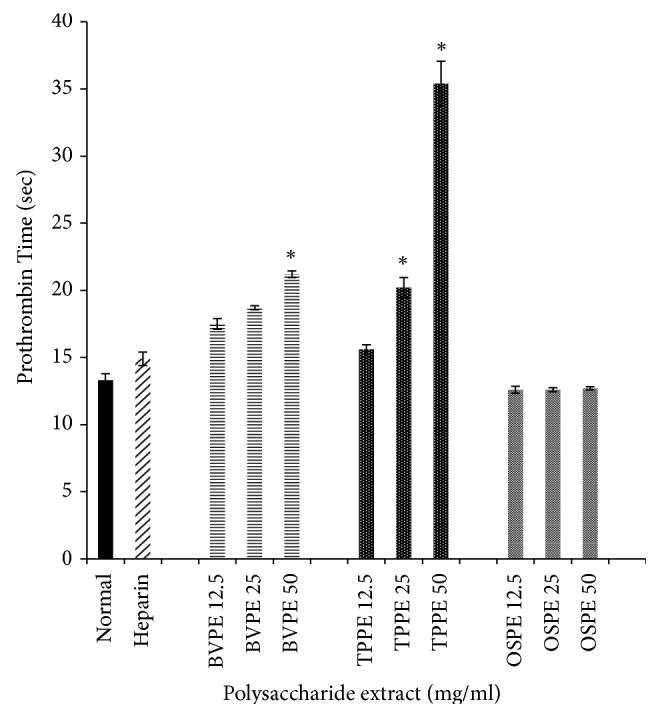
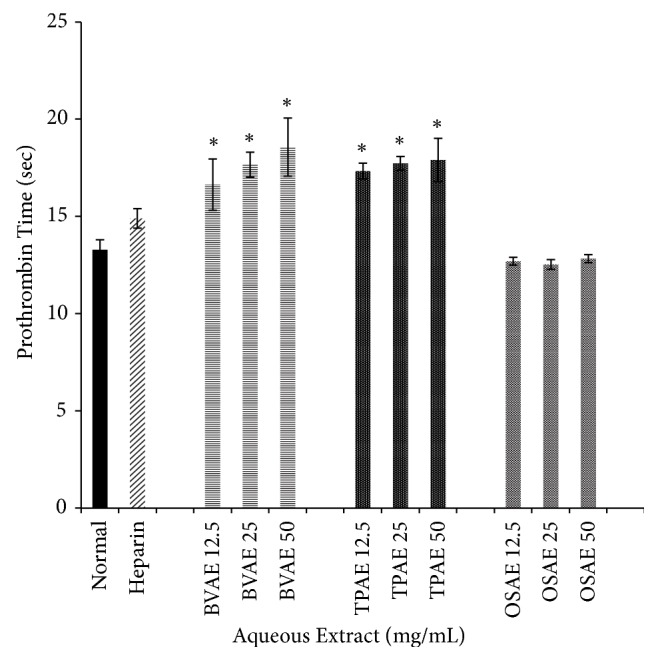
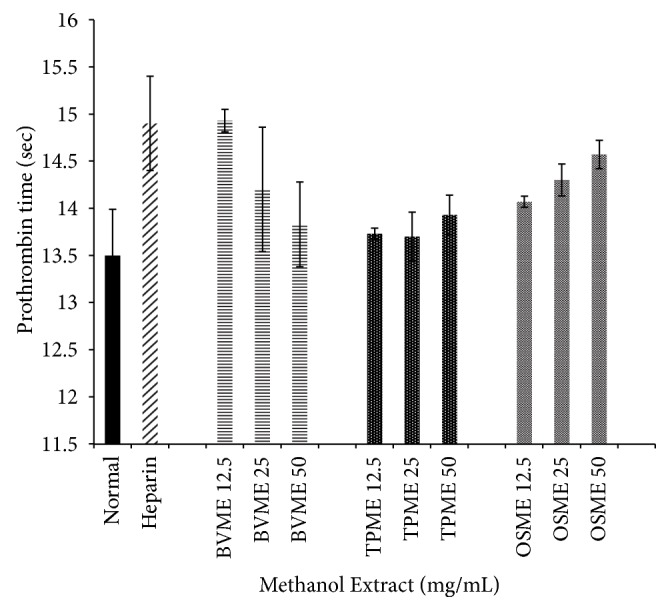
Coronary artery disease is the leading cause of mortality and morbidity worldwide. The pathogenesis is mainly due to atherosclerosis, plaque rupture, and platelet thrombus formation. The main risk factors for coronary artery disease include obesity, hypercholesterolemia, smoking, diabetes, and high blood pressure. As a part of disease management, treatment options using anticoagulant and antiplatelet drugs can be applied with addition to lipid-lowering medication. However, medicinal plants comprising antiatherothrombotic effects can be used as options to combat the disease rather than drug therapies with lesser adverse effects. Therefore, the haematological effect of L. L., and Benth extracts was studied using in vitro model to prevent and to treat coronary atherothrombotic disease. The aqueous, methanol, and polysaccharide extracts of and respectively, were studied for their anticoagulant and antiplatelet effect on human whole blood. Extracts were subjected to the prothrombin time (PT) and activated partial thromboplastin time (APTT) test for anticoagulant activity. The antiplatelet activity was investigated using an electrical impedance method. aqueous extract (BVAE), polysaccharide extract (BVPE), aqueous extract (TPAE), and polysaccharide extract (TPPE) significantly prolonged the coagulation time in a concentration-dependent manner (<0.05). The administration of BVAE demonstrated the most effective antiplatelet activity against platelet aggregation caused by arachidonic acid (AA) and collagen. These antiplatelet activities may correspond to the presence of higher total phenolic compound, which thus inhibit the platelet aggregation activity. In conclusion, these findings provide strong evidence on the antiatherothrombotic effect of BVAE and TPAE.
冠状动脉疾病是全球范围内导致死亡和发病的主要原因。其发病机制主要归因于动脉粥样硬化、斑块破裂和血小板血栓形成。冠状动脉疾病的主要危险因素包括肥胖、高胆固醇血症、吸烟、糖尿病和高血压。作为疾病管理的一部分,除降脂药物外,还可应用抗凝和抗血小板药物进行治疗。然而,具有抗动脉粥样硬化血栓形成作用的药用植物可作为对抗该疾病的选择,而非使用不良反应较小的药物疗法。因此,利用体外模型研究了L. L.和Benth提取物对血液学的影响,以预防和治疗冠状动脉粥样硬化血栓形成疾病。分别对L. L.和Benth的水提取物、甲醇提取物和多糖提取物对人全血的抗凝和抗血小板作用进行了研究。提取物进行凝血酶原时间(PT)和活化部分凝血活酶时间(APTT)测试以检测抗凝活性。使用电阻抗法研究抗血小板活性。L. L.水提取物(BVAE)、L. L.多糖提取物(BVPE)、Benth水提取物(TPAE)和Benth多糖提取物(TPPE)均以浓度依赖性方式显著延长凝血时间(P<0.05)。BVAE给药对花生四烯酸(AA)和胶原引起的血小板聚集表现出最有效的抗血小板活性。这些抗血小板活性可能与较高的总酚类化合物的存在有关,从而抑制血小板聚集活性。总之,这些发现为BVAE和TPAE的抗动脉粥样硬化血栓形成作用提供了有力证据。