Unidad de Investigación y Desarrollo en Tecnología Farmacéutica (UNITEFA), CONICET y Departamento de Ciencias Farmacéuticas, Facultad de Ciencias Químicas, Universidad Nacional de Córdoba, Ciudad Universitaria, X5000-Córdoba, Argentina.
Instituto Multidisciplinario de Biología Vegetal (IMBIV), CONICET y Departamento de Ciencias Farmacéuticas, Facultad de Ciencias Químicas, Universidad Nacional de Córdoba, Ciudad Universitaria, X5000-Córdoba, Argentina.
J Healthc Eng. 2019 Mar 13;2019:6367919. doi: 10.1155/2019/6367919. eCollection 2019.
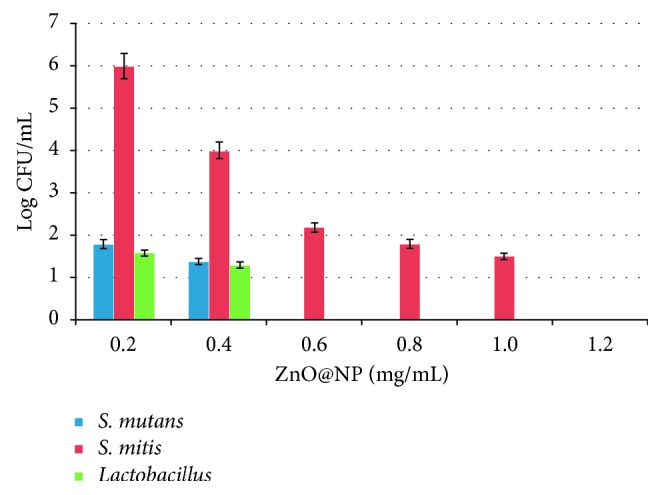
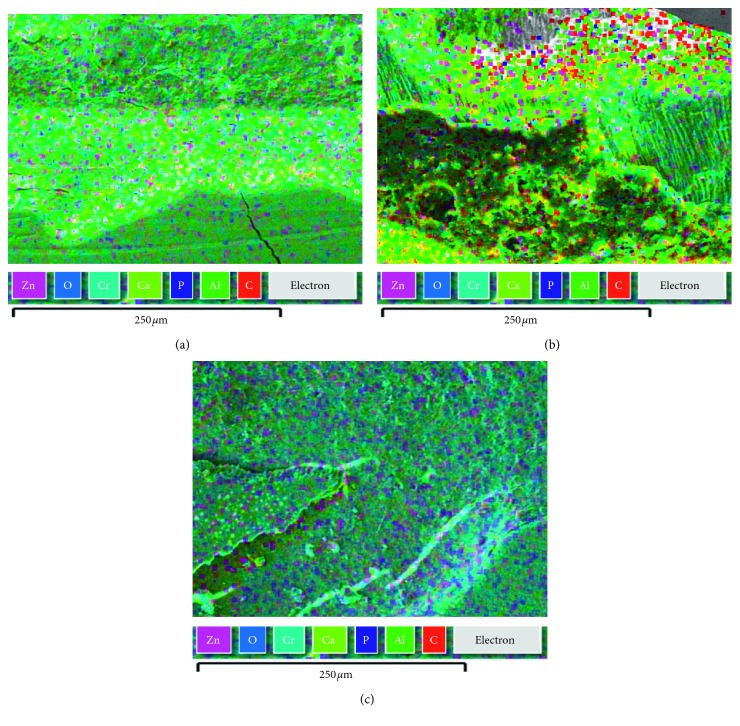
The aim of this work was to study the application of resin filling containing nanomaterials for the potential treatment of caries. Zinc nanoparticles (ZnO@NP, 50 nm) were chosen for their antimicrobial capacity against aerobic bacteria, and here, they have proved to be bactericidal against anaerobic bacterial strains (, , and spp.). Potential mechanism of action is proposed based on microbiological assays and seems to be independent of oxidative stress because the nanoparticles are effective in microaerophilic conditions. The loading of nanoparticles on the demineralized dental surface and their infiltration power were significantly improved when ZnO@NP were carried by the resin. Overall, this material seems to have a high potential to become a one-step treatment for caries lesions.
本研究旨在探讨含纳米材料的树脂填充在龋齿潜在治疗中的应用。选择锌纳米粒子(ZnO@NP,50nm)作为其对需氧菌的抗菌能力,并且已证明其对厌氧菌(、和 spp.)具有杀菌作用。基于微生物检测,提出了潜在的作用机制,且似乎与氧化应激无关,因为纳米粒子在微需氧条件下也有效。当 ZnO@NP 由树脂携带时,纳米粒子在脱矿牙表面的负载和渗透能力显著提高。总的来说,这种材料似乎有很大的潜力成为龋齿病变的一步治疗方法。