Department of Health Services Research, CAPHRI Care and Public Health Research Institute, Maastricht University, Maastricht, The Netherlands.
Department of Internal Medicine, Maastricht University Medical Centre, Maastricht, The Netherlands.
Diabet Med. 2020 Nov;37(11):1807-1815. doi: 10.1111/dme.13969. Epub 2019 May 6.
Limited knowledge exists on the preferences of people with Type 2 diabetes towards diabetes care. Consequently, these care preferences cannot yet be considered in the development of tailored diabetes care approaches. Therefore, this study aimed to assess care preferences and their determinants in people with Type 2 diabetes.
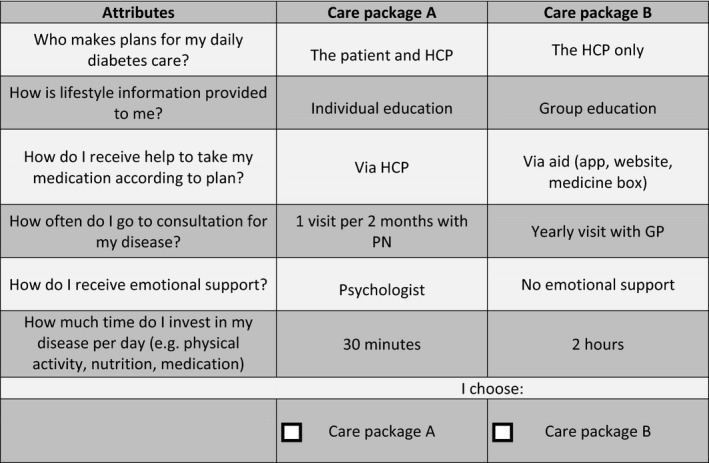
A discrete choice experiment was conducted to elicit people's preferences. People with Type 2 diabetes, treated in 30 Dutch primary care practices, were asked to choose repeatedly between two hypothetical diabetes care packages, which differed in six attributes: role division in daily diabetes care planning, lifestyle education method, type of medication management support, consultation frequency, emotional support and time spend on self-management. A mixed-logit model was used to estimate the relative importance of the included attributes. Preference heterogeneity among people with different person- and disease-related characteristics was investigated.
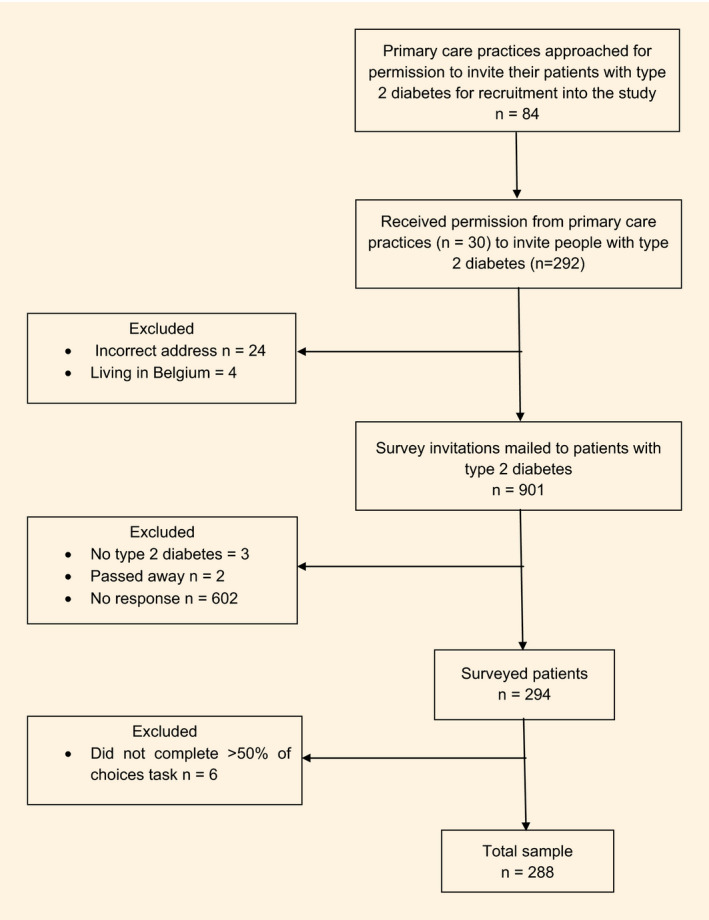
In total, 288 participants completed the experiment. They preferred to plan their daily diabetes care together with a healthcare provider, to receive individual lifestyle education, medication and emotional support from a healthcare provider, one consultation visit every 3 months and to spend less time on self-management. Participants did not prefer to receive emotional support from a psychologist. Heterogeneity in preferences could partly be explained by differences in sex, education level and glucose-lowering drug use.
People with Type 2 diabetes show a preference for traditional care models. Emotional support was identified by participants as the most important attribute. It is therefore important to adequately guide them when changes in diabetes care organization are implemented.
关于 2 型糖尿病患者对糖尿病护理的偏好,目前相关知识有限。因此,在制定量身定制的糖尿病护理方法时,还不能考虑这些护理偏好。因此,本研究旨在评估 2 型糖尿病患者的护理偏好及其决定因素。
采用离散选择实验来评估患者的偏好。在 30 家荷兰初级保健诊所接受治疗的 2 型糖尿病患者被要求在两种假设的糖尿病护理方案之间反复选择,这两种方案在六个属性上有所不同:日常糖尿病护理计划中的角色分工、生活方式教育方法、药物管理支持类型、咨询频率、情感支持和自我管理时间。采用混合 logit 模型来估计纳入属性的相对重要性。研究了不同个体和疾病相关特征人群之间的偏好异质性。
共有 288 名参与者完成了实验。他们更喜欢与医疗保健提供者共同规划日常糖尿病护理,接受个体化的生活方式教育,接受医疗保健提供者提供的药物和情感支持,每 3 个月就诊一次,并减少自我管理的时间。参与者不喜欢从心理学家那里获得情感支持。偏好的异质性部分可以用性别、教育程度和降糖药物使用的差异来解释。
2 型糖尿病患者表现出对传统护理模式的偏好。参与者认为情感支持是最重要的属性。因此,在实施糖尿病护理组织变革时,有必要对他们进行适当的引导。