Vanderbilt Brain Institute, Vanderbilt University School of Medicine, Nashville, TN, USA.
Department of Hearing and Speech Sciences, Vanderbilt University Medical Center, Nashville, TN, USA.
Neurochem Int. 2019 Sep;128:94-105. doi: 10.1016/j.neuint.2019.04.010. Epub 2019 Apr 17.
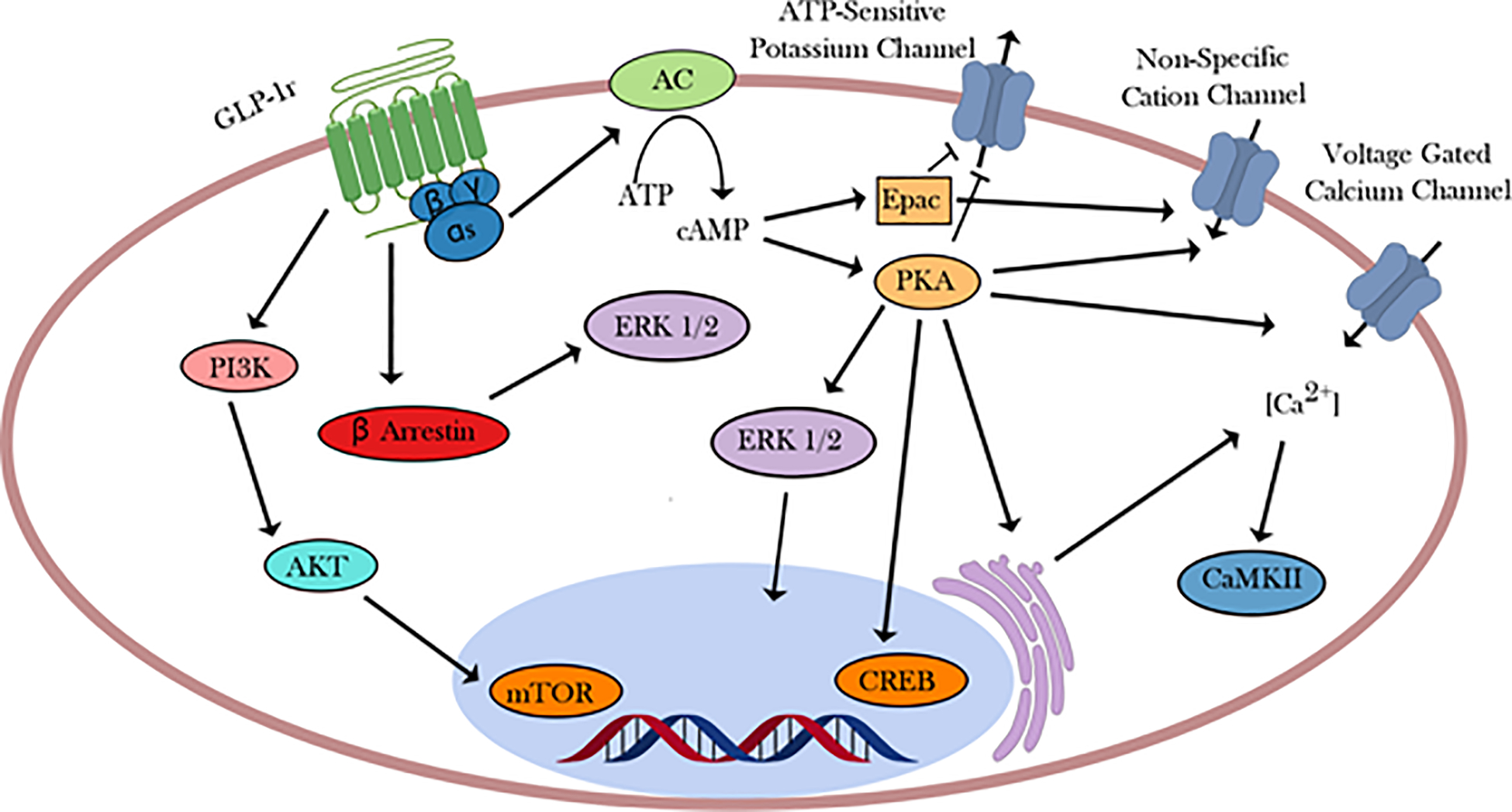
Meal ingestion provokes the release of hormones and transmitters, which in turn regulate energy homeostasis and feeding behavior. One such hormone, glucagon-like peptide-1 (GLP-1), has received significant attention in the treatment of obesity and diabetes due to its potent incretin effect. In addition to the peripheral actions of GLP-1, this hormone is able to alter behavior through the modulation of multiple neural circuits. Recent work that focused on elucidating the mechanisms and outcomes of GLP-1 neuromodulation led to the discovery of an impressive array of GLP-1 actions. Here, we summarize the many levels at which the GLP-1 signal adapts to different systems, with the goal being to provide a background against which to guide future research.
进食会引发激素和神经递质的释放,而这些物质反过来又调节能量平衡和进食行为。胰高血糖素样肽-1(GLP-1)就是这样一种激素,由于其强大的肠促胰岛素作用,它在肥胖和糖尿病的治疗中受到了广泛关注。除了 GLP-1 的外周作用外,这种激素还能够通过调节多个神经回路来改变行为。最近的研究工作集中在阐明 GLP-1 神经调节的机制和结果,这导致了对 GLP-1 作用的一系列令人印象深刻的发现。在这里,我们总结了 GLP-1 信号适应不同系统的多个层面,目的是提供一个背景,以指导未来的研究。