College of Horticulture and Landscape Architecture, Northeast Agricultural University, Harbin 150030, China.
Key Laboratory of Saline-Alkali Vegetation Ecology Restoration in Oil Field (SAVER), Ministry of Education, Alkali Soil Natural Environmental Science Center (ASNESC), Northeast Forestry University, Harbin 150040, China.
Genes (Basel). 2019 Apr 18;10(4):305. doi: 10.3390/genes10040305.
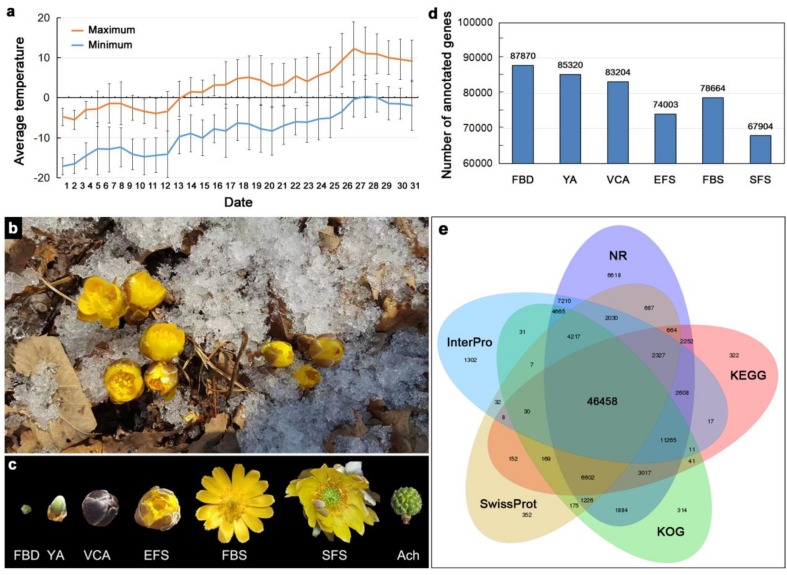
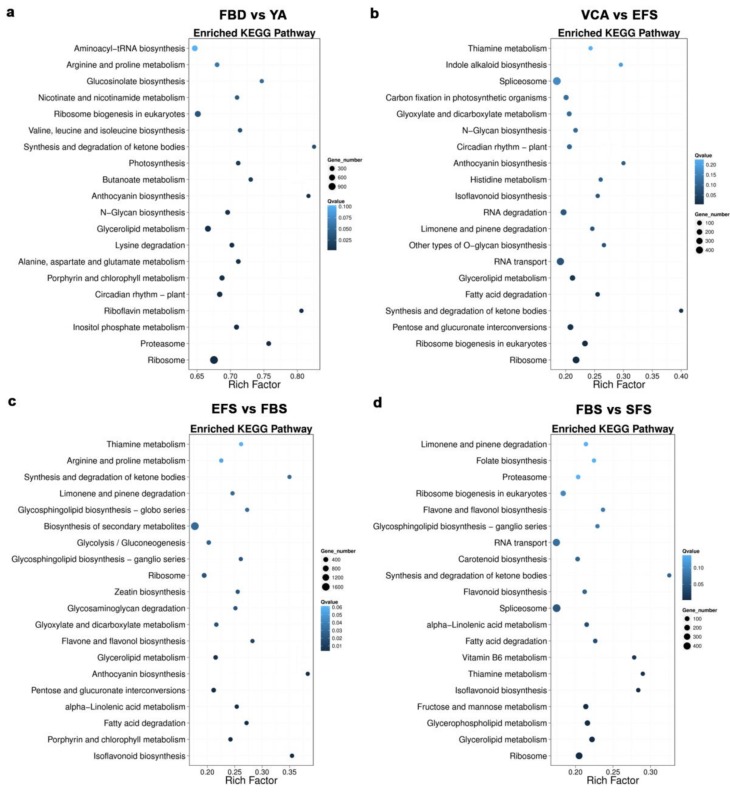
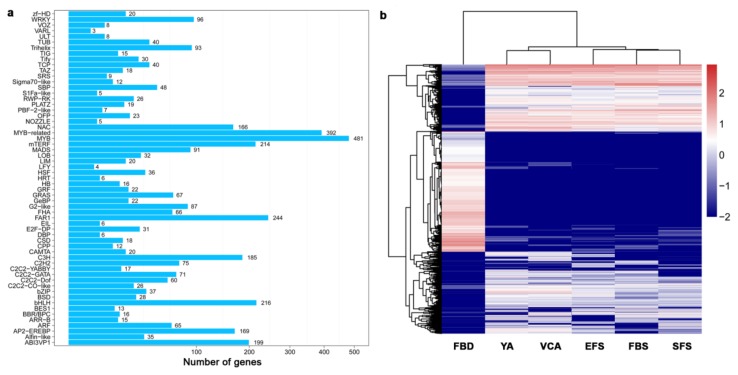
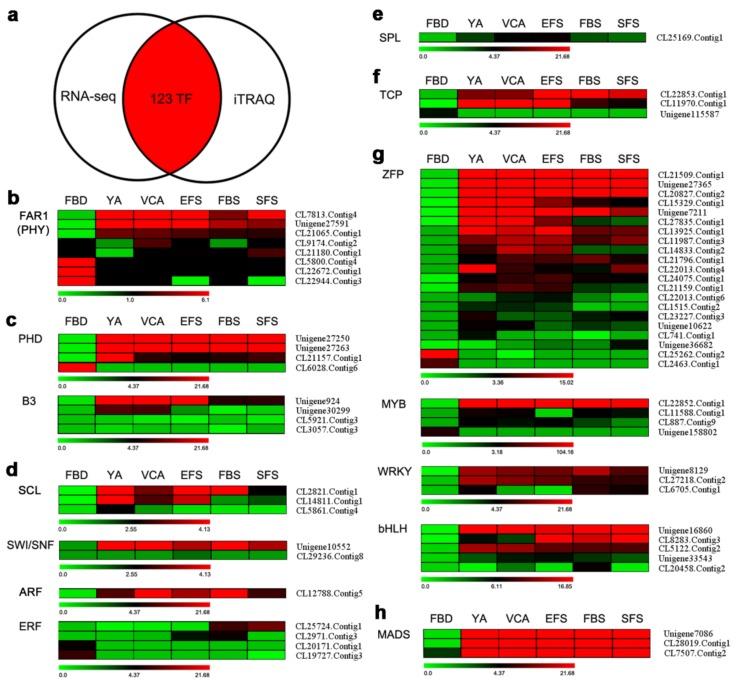
Temperature is one of the most important environmental factors affecting flowering in plants. , a perennial herbaceous flower that blooms in early spring in northeast China where the temperature can drop to -15 °C, is an ideal model for studying the molecular mechanisms of flowering at extremely low temperatures. This study first investigated global gene expression profiles at different developmental stages of flowering in by RNA-seq transcriptome and iTRAQ proteomics. Finally, 123 transcription factors (TFs) were detected in both the transcriptome and the proteome. Of these, 66 TFs belonging to 14 families may play a key role in multiple signaling pathways of flowering in . The TFs FAR1, PHD, and B3 may be involved in responses to light and temperature, while SCL, SWI/SNF, ARF, and ERF may be involved in the regulation of hormone balance. SPL may regulate the age pathway. Some members of the TCP, ZFP, MYB, WRKY, and bHLH families may be involved in the transcriptional regulation of flowering genes. The MADS-box TFs are the key regulators of flowering in . Our results provide a direction for understanding the molecular mechanisms of flowering in at low temperatures.
温度是影响植物开花的最重要环境因素之一。作为中国东北早春开花的多年生草本花卉,在那里温度可能会降至-15°C,是研究极低温开花分子机制的理想模式植物。本研究首先通过 RNA-seq 转录组和 iTRAQ 蛋白质组学研究了不同发育阶段开花过程中的基因表达谱。最终,在转录组和蛋白质组中检测到 123 个转录因子(TFs)。其中,属于 14 个家族的 66 个 TF 可能在 开花的多个信号通路中发挥关键作用。TFs FAR1、PHD 和 B3 可能参与对光和温度的响应,而 SCL、SWI/SNF、ARF 和 ERF 可能参与激素平衡的调节。SPL 可能调节年龄途径。TCP、ZFP、MYB、WRKY 和 bHLH 家族的一些成员可能参与开花基因的转录调控。MADS-box TFs 是 开花的关键调控因子。我们的研究结果为理解低温下开花的分子机制提供了方向。