Departments of Physiology and Pharmacology (G.H., K.L.F., V.K.P.V., L.A., S.A.H.), Biochemistry and Molecular Biology (C.F.S., J.A.M.), Medicine (D.A.M.), and Immunology, Microbiology, and Infectious Diseases (S.A.H.), University of Calgary, Calgary, Alberta, Canada; Faculty of Pharmaceutical Sciences, University of British Columbia, Vancouver, British Columbia, Canada (T.K.H.C.); and Department of Medicine, Albert Einstein College of Medicine, Bronx, New York (S.M.).
Departments of Physiology and Pharmacology (G.H., K.L.F., V.K.P.V., L.A., S.A.H.), Biochemistry and Molecular Biology (C.F.S., J.A.M.), Medicine (D.A.M.), and Immunology, Microbiology, and Infectious Diseases (S.A.H.), University of Calgary, Calgary, Alberta, Canada; Faculty of Pharmaceutical Sciences, University of British Columbia, Vancouver, British Columbia, Canada (T.K.H.C.); and Department of Medicine, Albert Einstein College of Medicine, Bronx, New York (S.M.)
J Pharmacol Exp Ther. 2019 Jul;370(1):44-53. doi: 10.1124/jpet.118.255679. Epub 2019 Apr 19.
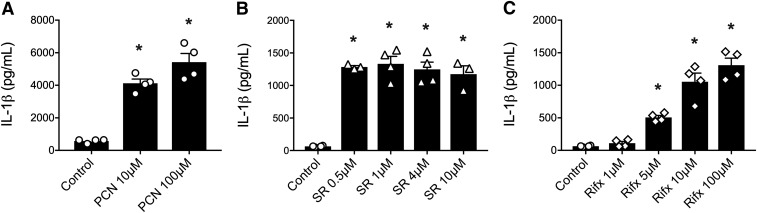
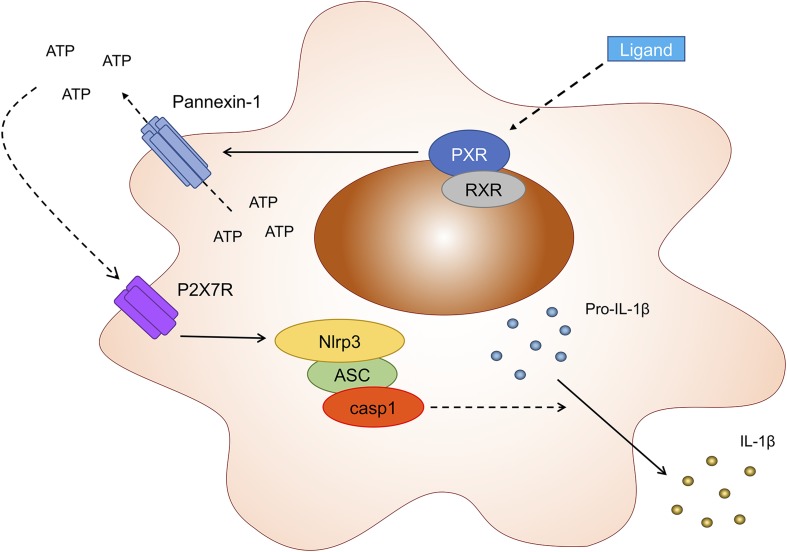
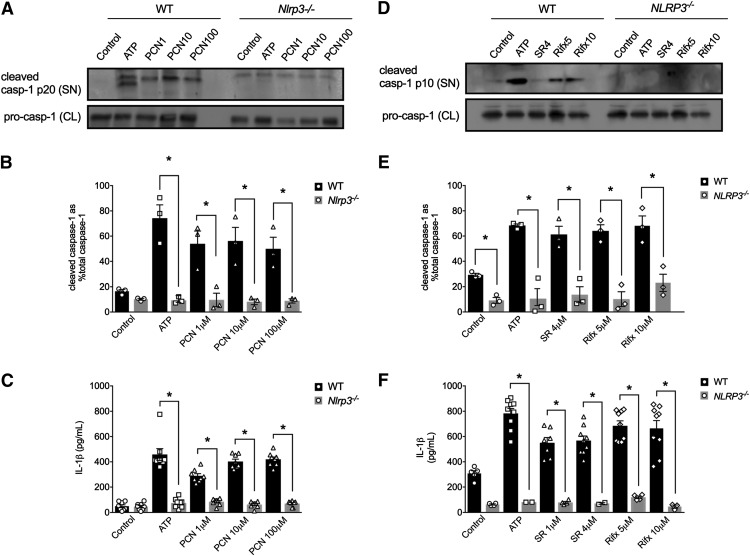
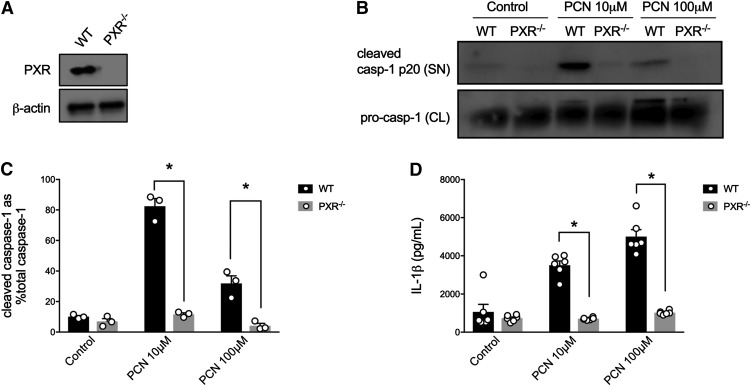
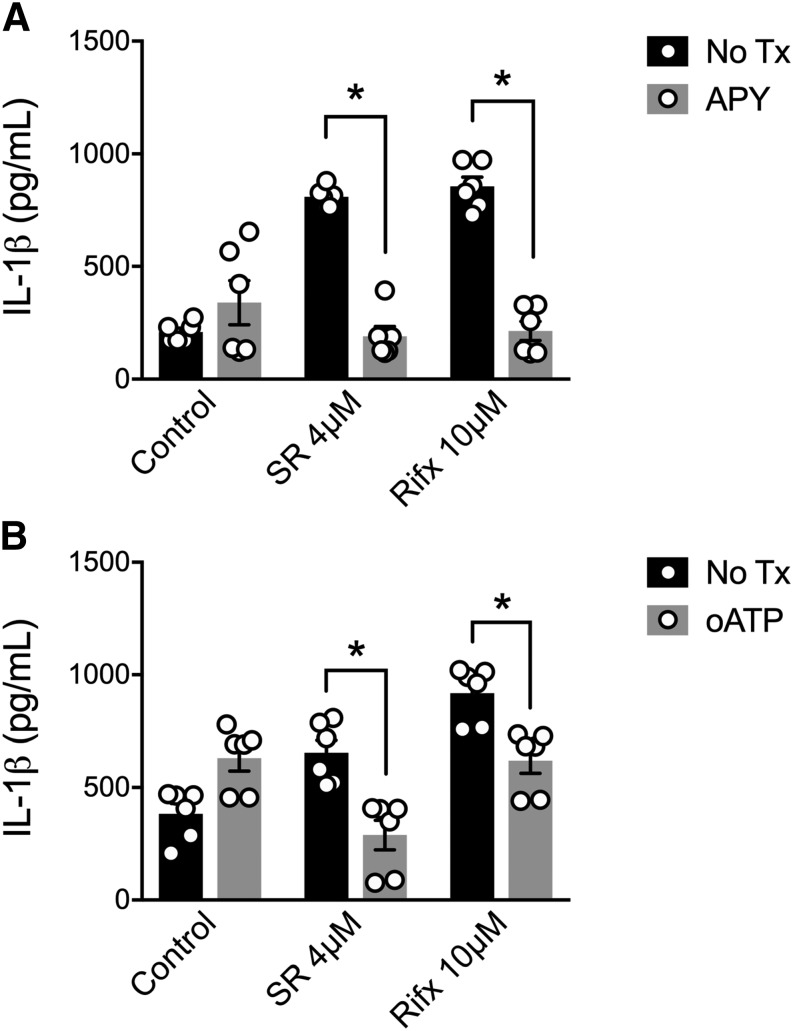
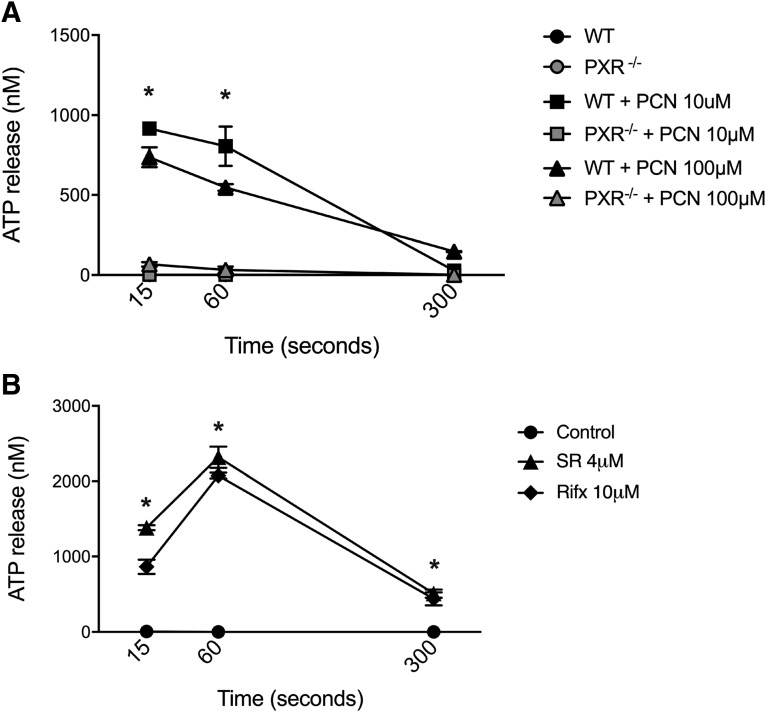
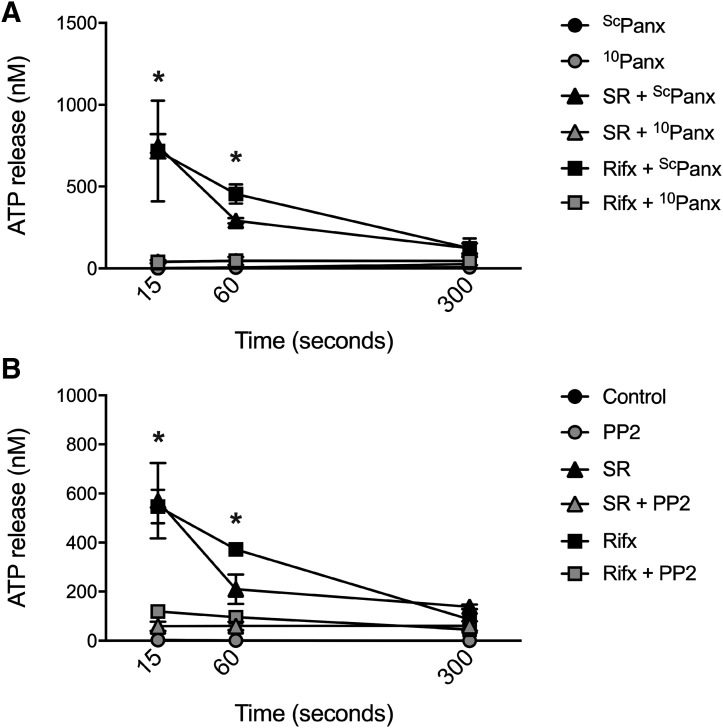
The pregnane X receptor (PXR) is a ligand-activated nuclear receptor that acts as a xenobiotic sensor, responding to compounds of foreign origin, including pharmaceutical compounds, environmental contaminants, and natural products, to induce transcriptional events that regulate drug detoxification and efflux pathways. As such, the PXR is thought to play a key role in protecting the host from xenobiotic exposure. More recently, the PXR has been reported to regulate the expression of innate immune receptors in the intestine and modulate inflammasome activation in the vasculature. In the current study, we report that activation of the PXR in primed macrophages triggers caspase-1 activation and interleukin-1 release. Mechanistically, we show that this response is nucleotide-binding oligomerization domain, leucine-rich repeat, and pyrin domain-containing 3-dependent and is driven by the rapid efflux of ATP and P2X purinoceptor 7 activation following PXR stimulation, an event that involves pannexin-1 gating, and is sensitive to inhibition of Src-family kinases. Our findings identify a mechanism whereby the PXR drives innate immune signaling, providing a potential link between xenobiotic exposure and the induction of innate inflammatory responses.
孕烷 X 受体 (PXR) 是一种配体激活的核受体,作为一种外源性物质传感器,对来自外部的化合物(包括药物化合物、环境污染物和天然产物)作出反应,诱导转录事件,从而调节药物解毒和外排途径。因此,PXR 被认为在保护宿主免受外源性物质暴露方面发挥着关键作用。最近,有报道称 PXR 可调节肠道中先天免疫受体的表达,并调节血管中的炎症小体激活。在本研究中,我们报告说,在被激活的巨噬细胞中激活 PXR 可触发半胱天冬酶-1 的激活和白细胞介素-1 的释放。从机制上讲,我们表明这种反应是核苷酸结合寡聚结构域、富含亮氨酸重复序列和pyrin 结构域包含 3 依赖的,并且是由 PXR 刺激后 ATP 的快速外排和 P2X 嘌呤能受体 7 的激活驱动的,这一事件涉及连接蛋白-1 门控,并对Src 家族激酶的抑制敏感。我们的发现确定了 PXR 驱动先天免疫信号的机制,为外源性物质暴露与先天炎症反应的诱导之间提供了潜在的联系。