Department of Molecular Biology and Biochemistry, Francisco J. AyalaSchool of Biological Sciences, University of California, Irvine, CA 92697, USA.
Department of Developmental and Cell Biology, University of California, Irvine, CA 92697, USA.
Int J Mol Sci. 2019 Apr 21;20(8):1955. doi: 10.3390/ijms20081955.
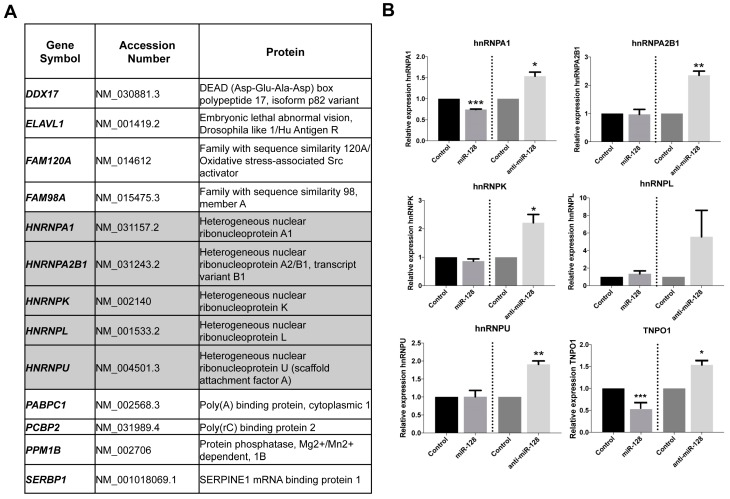
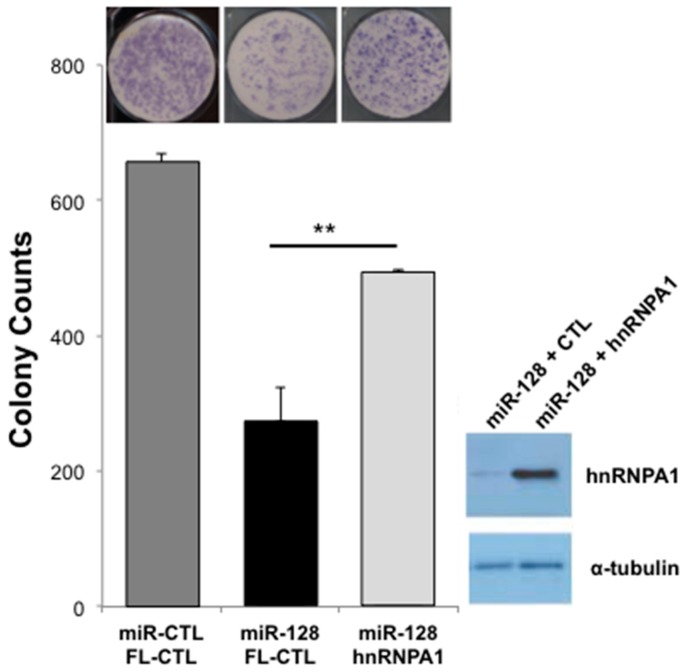
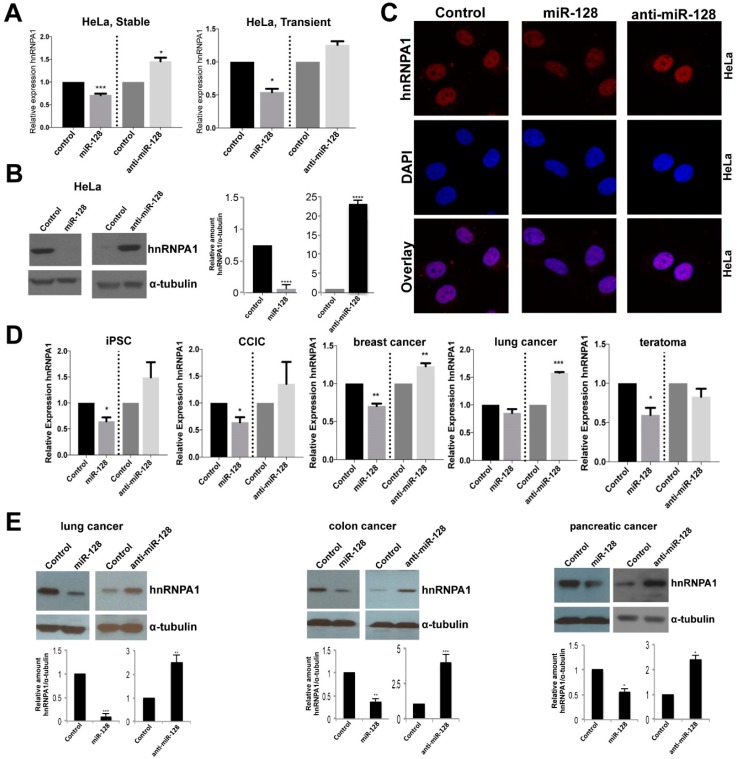
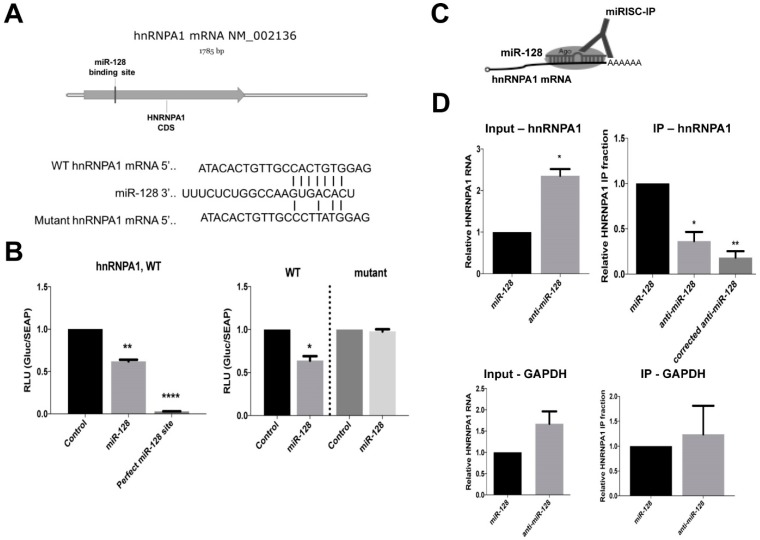
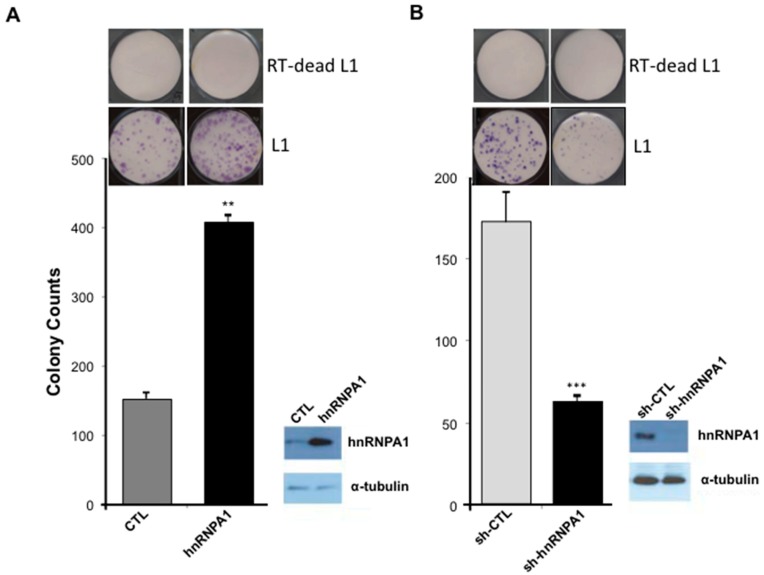
The majority of the human genome is made of transposable elements, giving rise to interspaced repeats, including Long INterspersed Element-1s (LINE-1s or L1s). L1s are active human transposable elements involved in genomic diversity and evolution; however, they can also contribute to genomic instability and diseases. L1s require host factors to complete their life cycles, whereas the host has evolved numerous mechanisms to restrict L1-induced mutagenesis. Restriction mechanisms in somatic cells include methylation of the L1 promoter, anti-viral factors and RNA-mediated processes such as small RNAs. microRNAs (miRNAs or miRs) are small non-coding RNAs that post-transcriptionally repress multiple target genes often found in the same cellular pathways. We have recently established that miR-128 functions as a novel restriction factor inhibiting L1 mobilization in somatic cells. We have further demonstrated that miR-128 functions through a dual mechanism; by directly targeting L1 RNA for degradation and indirectly by inhibiting a cellular co-factor which L1 is dependent on to transpose to new genomic locations (TNPO1). Here, we add another piece to the puzzle of the enigmatic L1 lifecycle. We show that miR-128 also inhibits another key cellular factor, hnRNPA1 (heterogeneous nuclear ribonucleoprotein A1), by significantly reducing mRNA and protein levels through direct interaction with the coding sequence (CDS) of hnRNPA1 mRNA. In addition, we demonstrate that repression of hnRNPA1 using hnRNPA1-shRNA significantly decreases de novo L1 retro-transposition and that induced hnRNPA1 expression enhances L1 mobilization. Furthermore, we establish that hnRNPA1 is a functional target of miR-128. Finally, we determine that induced hnRNPA1 expression in miR-128-overexpressing cells can partly rescue the miR-128-induced repression of L1's ability to transpose to different genomic locations. Thus, we have identified an additional mechanism by which miR-128 represses L1 retro-transposition and mediates genomic stability.
人类基因组的大部分是由可移动元件组成的,这些元件产生了间隔重复序列,包括长散布元件-1(LINE-1s 或 L1s)。L1 是活跃的人类可移动元件,参与基因组多样性和进化;然而,它们也可能导致基因组不稳定和疾病。L1 需要宿主因子来完成其生命周期,而宿主已经进化出许多机制来限制 L1 诱导的突变。体细胞中的限制机制包括 L1 启动子的甲基化、抗病毒因子和 RNA 介导的过程,如小 RNA。microRNAs(miRNAs 或 miRs)是小的非编码 RNA,可在后转录水平抑制多个靶基因,这些靶基因通常存在于相同的细胞途径中。我们最近发现,miR-128 作为一种新的限制因子,抑制体细胞中 L1 的动员。我们进一步证明,miR-128 通过双重机制发挥作用;通过直接靶向 L1 RNA 进行降解,以及间接抑制 L1 依赖的细胞共因子来转移到新的基因组位置(TNPO1)。在这里,我们为神秘的 L1 生命周期之谜增添了另一个谜题。我们表明,miR-128 还通过与 hnRNPA1 mRNA 的编码序列(CDS)直接相互作用,显著降低 mRNA 和蛋白质水平,从而抑制另一个关键细胞因子 hnRNPA1。此外,我们证明使用 hnRNPA1-shRNA 抑制 hnRNPA1 可显著降低从头 L1 反转录转座,并且诱导 hnRNPA1 表达增强 L1 动员。此外,我们确定 hnRNPA1 是 miR-128 的功能靶标。最后,我们确定在 miR-128 过表达细胞中诱导 hnRNPA1 表达可以部分挽救 miR-128 诱导的对 L1 转移到不同基因组位置的能力的抑制。因此,我们已经确定了 miR-128 抑制 L1 反转录转座和介导基因组稳定性的另一种机制。