Department of Occupational and Environmental Health, School of Public Health, Jilin University, Changchun 130000, China.
Clinical Teaching and Research Laboratory, Medical School, Xilingol Vocational College, Inner Mongolia 026000, China.
Int J Environ Res Public Health. 2019 Apr 19;16(8):1408. doi: 10.3390/ijerph16081408.
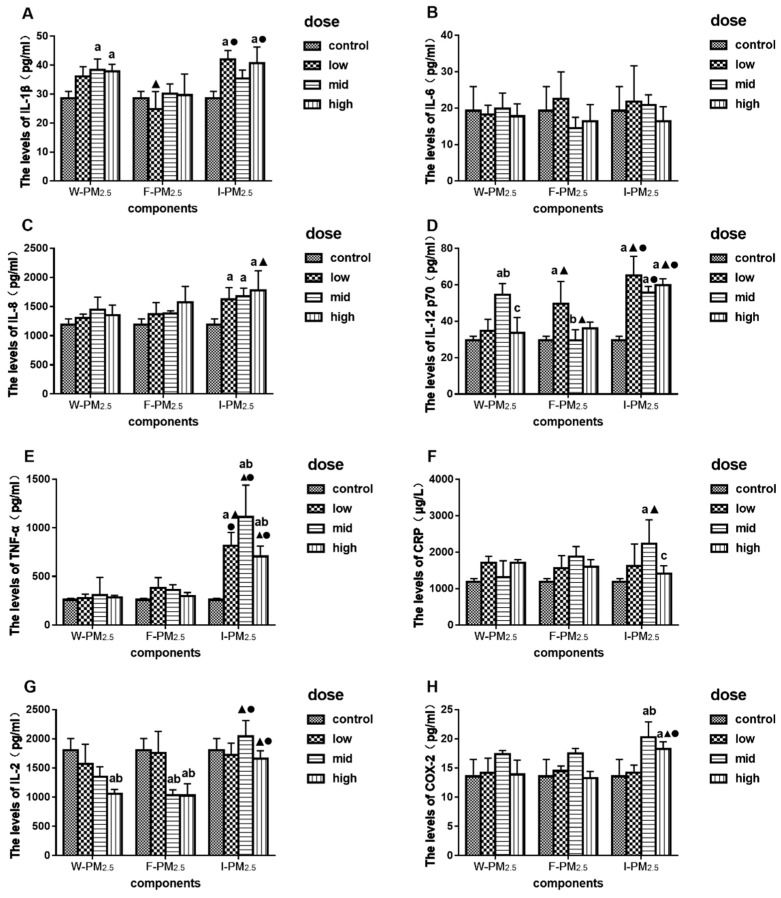
Studies have found that exposure to fine particulate matter with sizes below 2.5 µm (PM) might cause inflammation response via the NF-B pathway. To date, only a few studies have focused on the toxicity of different components of PM. We aimed to explore the effects of PM with different components on the expression levels of NF-B family gene mRNA and inflammatory molecules in human macrophages. Human monocytic cell line THP-1-derived macrophages were exposed to water-soluble (W-PM), fat-soluble (F-PM), and insoluble (I-PM) PM. The cell survival rate was measured by 3-(4,5-dimethylthiazol-2-yl)-2,5-diphenyltetrazolium bromide (MTT) assay. The levels of inflammatory molecules were determined by enzyme-linked immunosorbent assay (ELISA), and the relative mRNA levels of the NF-B family gene were determined by real time PCR. PM could decrease the cell viability. After exposure to W-PM, the levels of interleukins (IL)-1β and IL-12 p70 significantly increased. After exposure to F-PM, the levels of IL-12 p70 significantly increased. The levels of IL-12 p70 and TNF-α after exposure to I-PM were significantly higher than that in W- and F-PM treatment groups. The levels of IL-8, C reactive protein (CRP), and cyclooxygenase (COX)-2 increased only after exposure to I-PM. F-PM increased the mRNA levels of NF-B genes, especially - and . PM can decrease the cell survival rate and up-regulate the expression of NF-B family gene mRNA and inflammatory molecules. The main toxic components of PM related to inflammatory response in macrophages were the I-PM.
研究发现,细颗粒物(PM)小于 2.5 µm 时可能会通过 NF-B 途径引起炎症反应。迄今为止,仅有少数研究关注 PM 不同成分的毒性。我们旨在探讨不同成分的 PM 对人巨噬细胞中 NF-B 家族基因 mRNA 和炎症分子表达水平的影响。
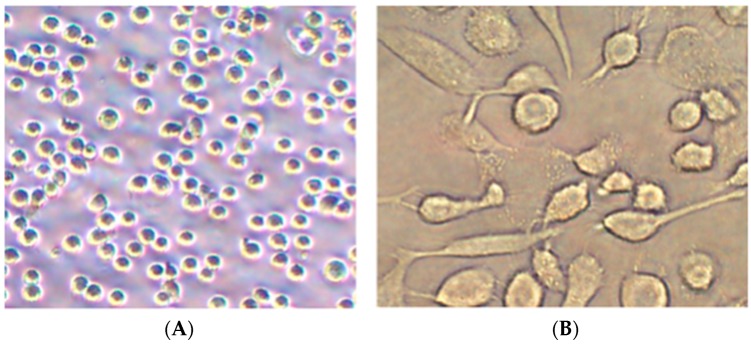
人单核细胞系 THP-1 衍生的巨噬细胞暴露于水溶性(W-PM)、脂溶性(F-PM)和不溶性(I-PM)PM 中。通过 3-(4,5-二甲基噻唑-2-基)-2,5-二苯基四氮唑溴盐(MTT)测定法测量细胞存活率。通过酶联免疫吸附测定法(ELISA)测定炎症分子的水平,并通过实时 PCR 测定 NF-B 家族基因的相对 mRNA 水平。
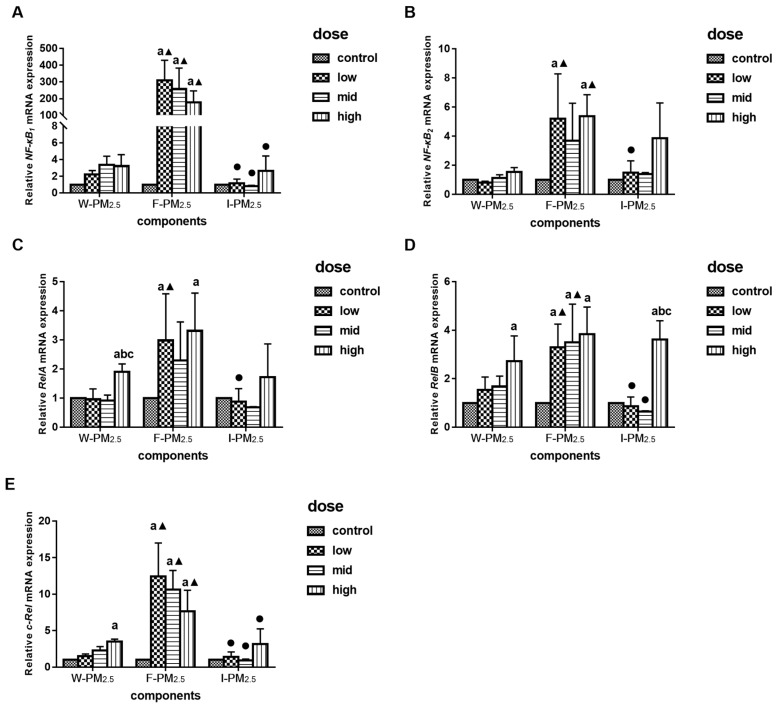
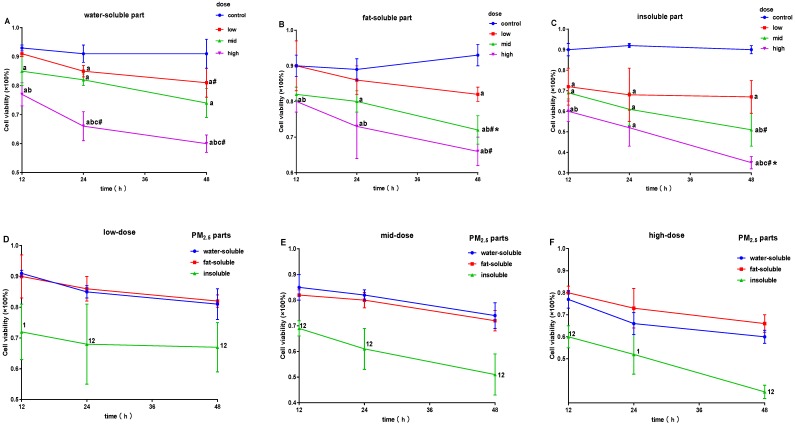
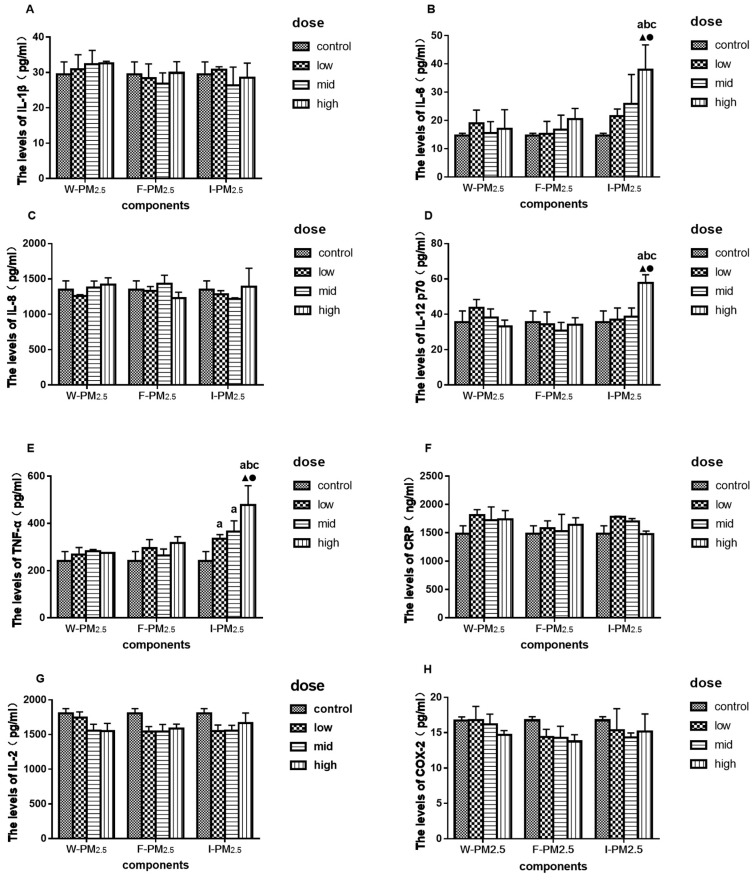
PM 可降低细胞活力。暴露于 W-PM 后,白细胞介素(IL)-1β 和 IL-12 p70 的水平显著增加。暴露于 F-PM 后,IL-12 p70 的水平显著增加。暴露于 I-PM 后,IL-12 p70 和 TNF-α 的水平明显高于 W-PM 和 F-PM 处理组。仅在暴露于 I-PM 后,IL-8、C 反应蛋白(CRP)和环氧化酶(COX)-2 的水平增加。F-PM 增加了 NF-B 基因的 mRNA 水平,特别是 - 和 -。
PM 可降低细胞存活率,并上调 NF-B 家族基因 mRNA 和炎症分子的表达。与巨噬细胞中炎症反应相关的 PM 的主要毒性成分是 I-PM。