Stowers Institute for Medical Research, Kansas City, United States.
Elife. 2019 Apr 23;8:e45396. doi: 10.7554/eLife.45396.
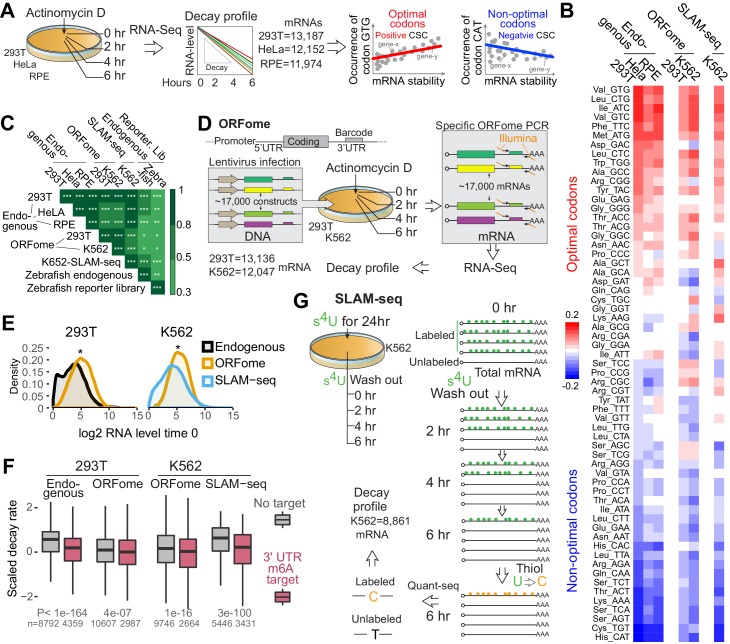
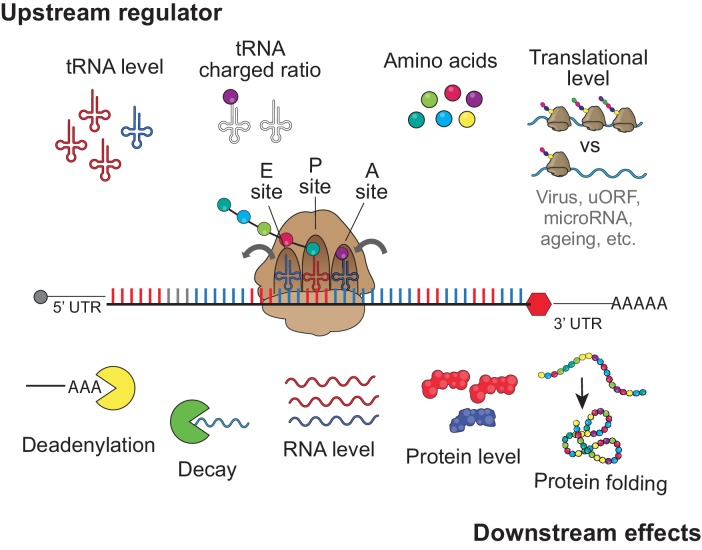
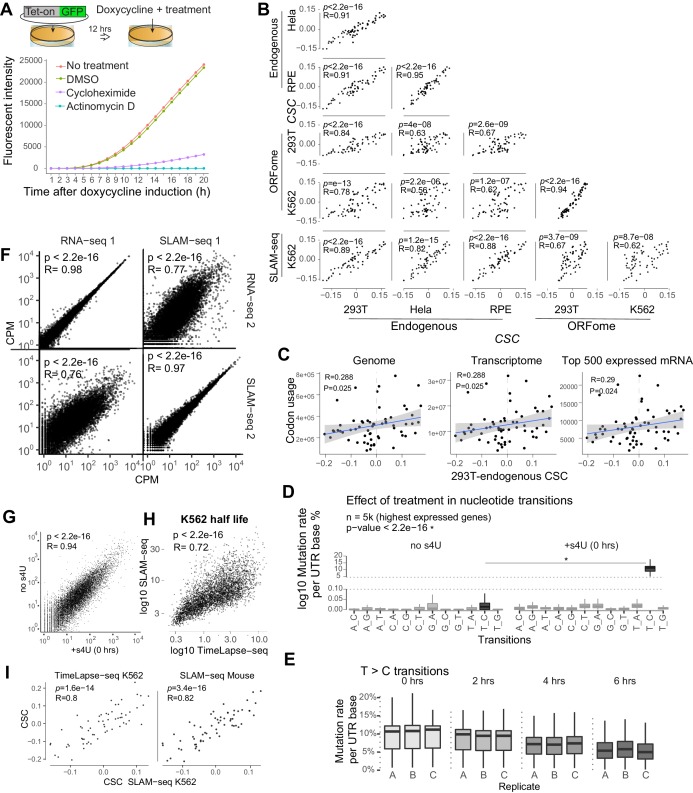
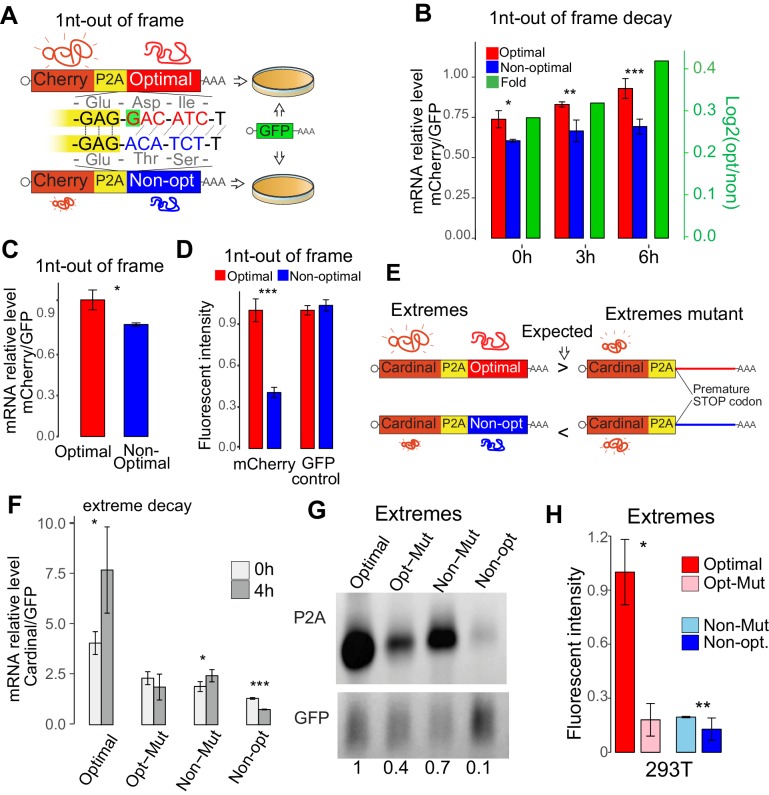
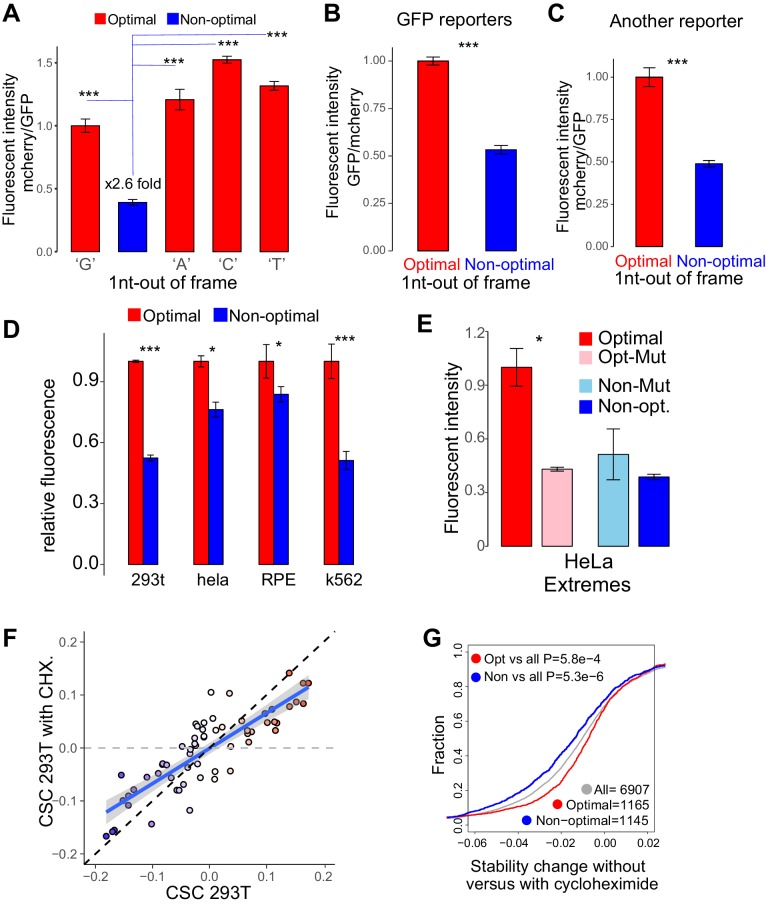
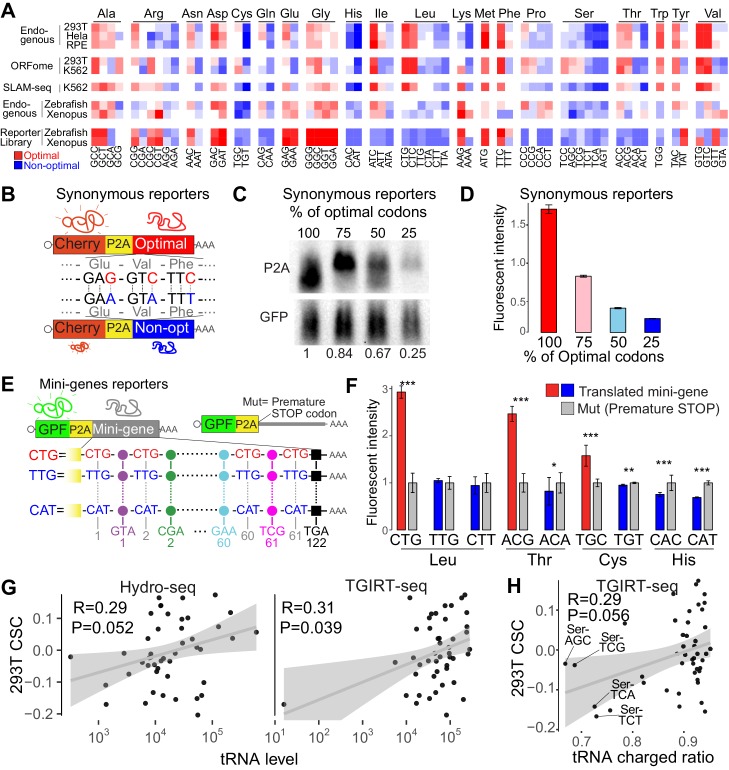
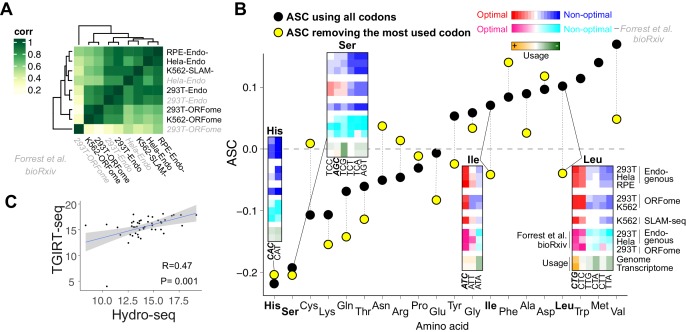
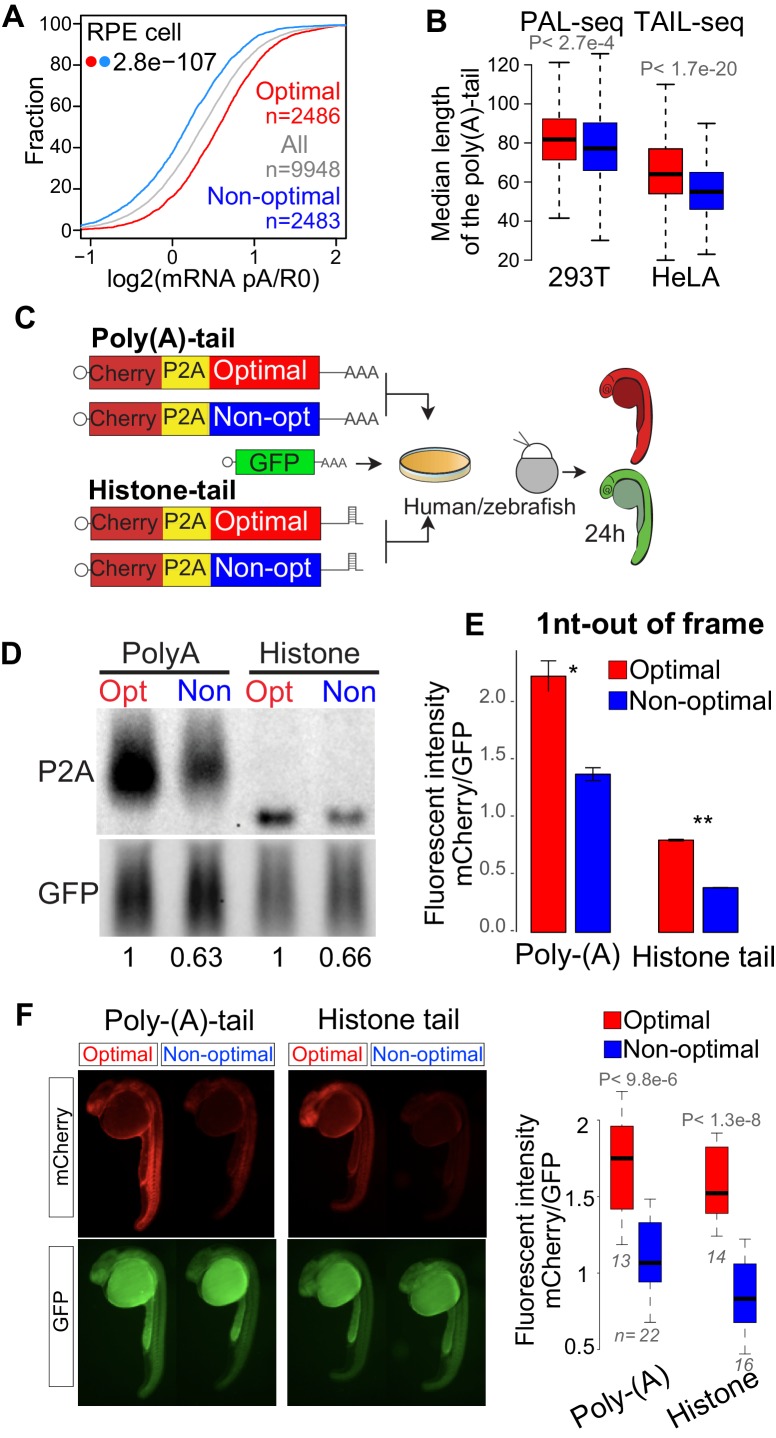
mRNA translation decodes nucleotide into amino acid sequences. However, translation has also been shown to affect mRNA stability depending on codon composition in model organisms, although universality of this mechanism remains unclear. Here, using three independent approaches to measure exogenous and endogenous mRNA decay, we define which codons are associated with stable or unstable mRNAs in human cells. We demonstrate that the regulatory information affecting mRNA stability is encoded in codons and not in nucleotides. Stabilizing codons tend to be associated with higher tRNA levels and higher charged/total tRNA ratios. While mRNAs enriched in destabilizing codons tend to possess shorter poly(A)-tails, the poly(A)-tail is not required for the codon-mediated mRNA stability. This mechanism depends on translation; however, the number of ribosome loads into a mRNA modulates the codon-mediated effects on gene expression. This work provides definitive evidence that translation strongly affects mRNA stability in a codon-dependent manner in human cells.
mRNA 翻译将核苷酸解码为氨基酸序列。然而,在模式生物中,已有研究表明翻译也会影响 mRNA 的稳定性,取决于密码子组成,尽管该机制的普遍性尚不清楚。在这里,我们使用三种独立的方法来测量外源性和内源性 mRNA 的降解,以确定哪些密码子与人细胞中稳定或不稳定的 mRNA 相关。我们证明,影响 mRNA 稳定性的调节信息编码在密码子中,而不是在核苷酸中。稳定的密码子往往与更高的 tRNA 水平和更高的电荷/总 tRNA 比值相关。虽然富含不稳定密码子的 mRNA 往往具有较短的 poly(A)-尾,但 poly(A)-尾不是密码子介导的 mRNA 稳定性所必需的。该机制依赖于翻译;然而,核糖体进入 mRNA 的数量调节了密码子对基因表达的影响。这项工作提供了确凿的证据,证明在人类细胞中,翻译以依赖于密码子的方式强烈影响 mRNA 的稳定性。