A.I.Virtanen Institute for Molecular Sciences, University of Eastern Finland, 70210, Kuopio, Finland.
Neuroscience Center, Helsinki Institute of Life Science, University of Helsinki, PO. Box 63, 00290, Helsinki, Finland.
Cell Mol Life Sci. 2019 Jul;76(14):2739-2760. doi: 10.1007/s00018-019-03111-7. Epub 2019 Apr 23.
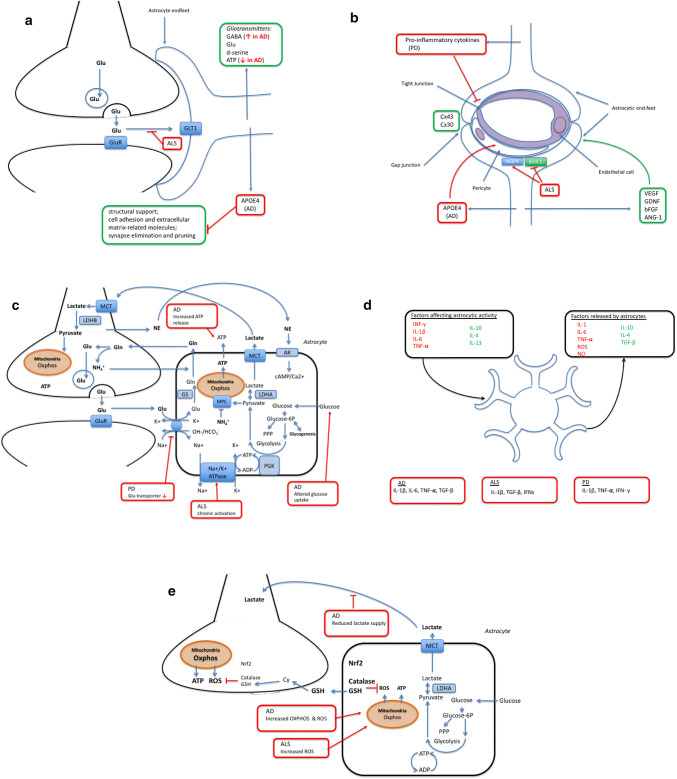
Astrocytes are the most abundant cell type in the brain. They were long considered only as passive support for neuronal cells. However, recent data have revealed many active roles for these cells both in maintenance of the normal physiological homeostasis in the brain as well as in neurodegeneration and disease. Moreover, human astrocytes have been found to be much more complex than their rodent counterparts, and to date, astrocytes are known to actively participate in a multitude of processes such as neurotransmitter uptake and recycling, gliotransmitter release, neuroenergetics, inflammation, modulation of synaptic activity, ionic balance, maintenance of the blood-brain barrier, and many other crucial functions of the brain. This review focuses on the role of astrocytes in human neurodegenerative disease and the potential of the novel stem cell-based platforms in modeling astrocytic functions in health and in disease.
星形胶质细胞是大脑中最丰富的细胞类型。它们长期以来被认为只是神经元细胞的被动支持物。然而,最近的数据揭示了这些细胞在维持大脑正常生理稳态以及神经退行性变和疾病中的许多活跃作用。此外,人们发现人类星形胶质细胞比啮齿动物的星形胶质细胞复杂得多,迄今为止,已知星形胶质细胞积极参与多种过程,如神经递质摄取和再循环、神经递质释放、神经能量学、炎症、调节突触活动、离子平衡、血脑屏障的维持以及大脑的许多其他关键功能。这篇综述重点介绍了星形胶质细胞在人类神经退行性疾病中的作用,以及新型基于干细胞的平台在模拟星形胶质细胞在健康和疾病中的功能方面的潜力。