Animal Welfare Program, University of British Columbia, Vancouver, British Columbia, Canada.
PLoS One. 2019 Apr 24;14(4):e0215808. doi: 10.1371/journal.pone.0215808. eCollection 2019.
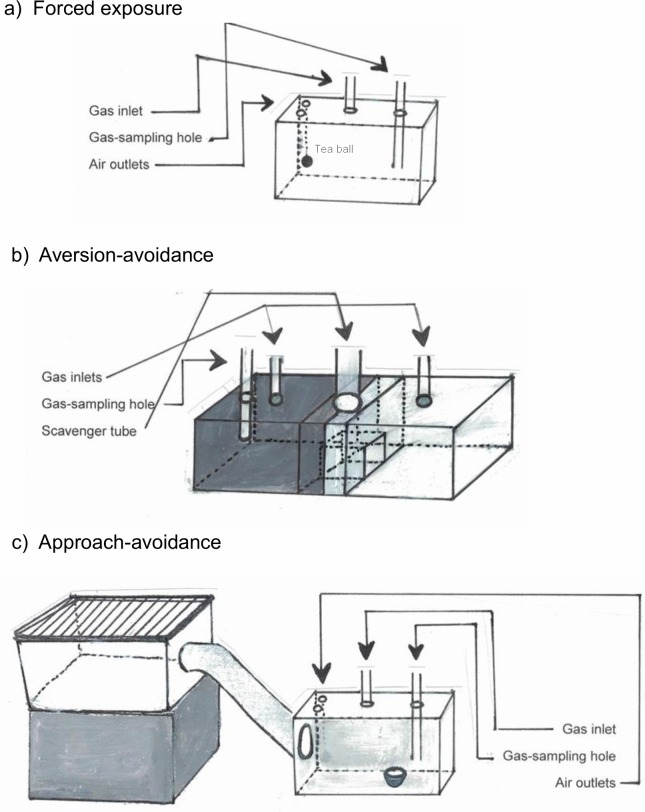
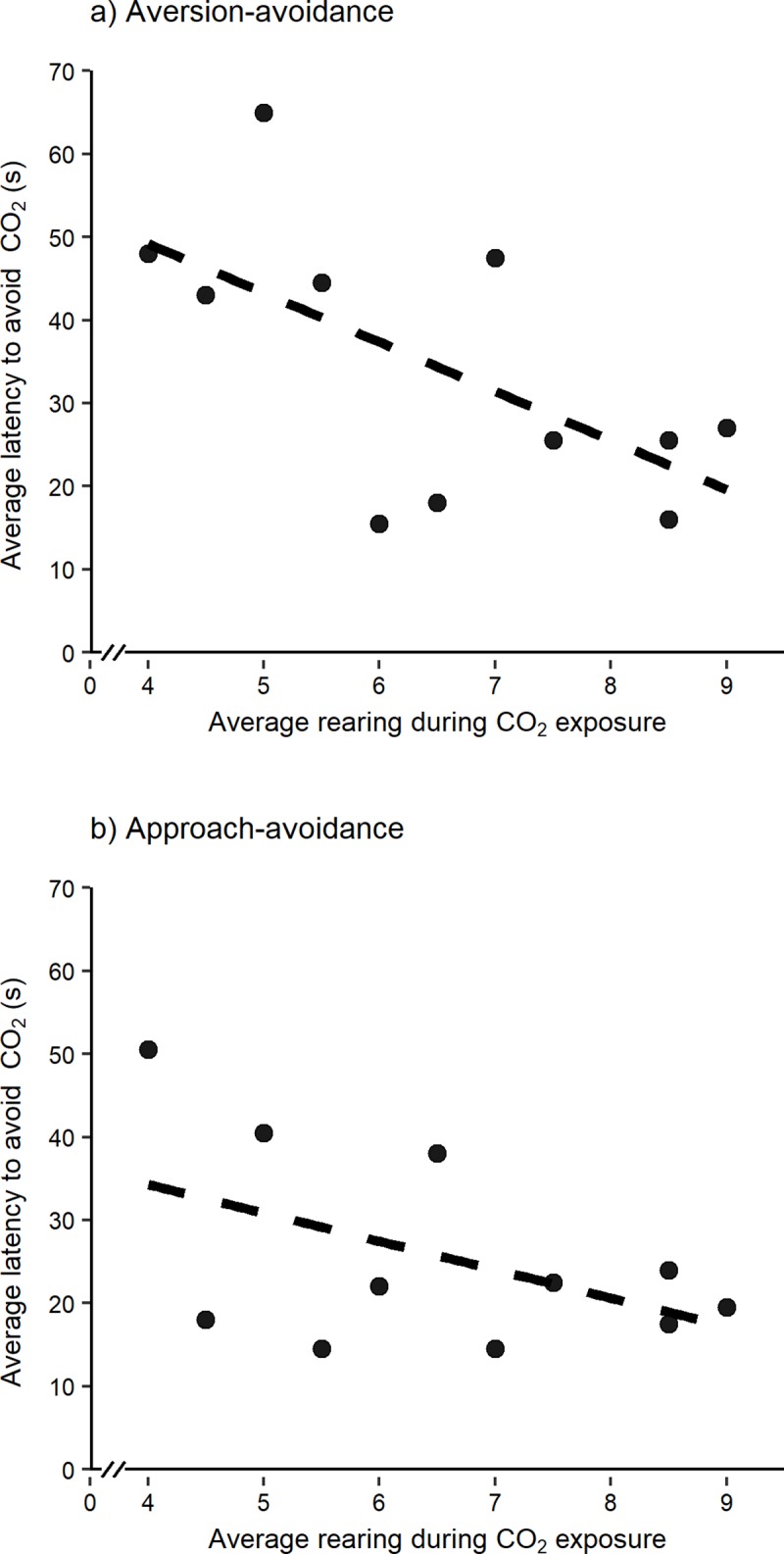
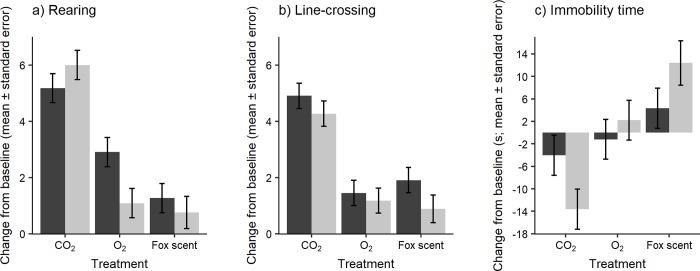
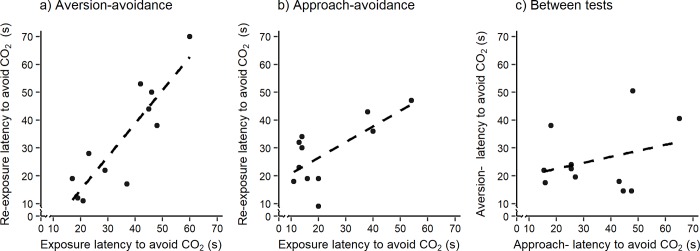
Carbon dioxide (CO2) gradual-fill is commonly used to kill laboratory rats, but this use remains controversial due to a lack of agreement between studies. Inconsistencies may arise from differences in behaviors measured (e.g. active versus passive behaviors), in how rats cope with threats, or in rat sensitivity to CO2. The aims of the current study were to 1) describe active and passive responses during CO2 forced exposure, 2) determine if these responses are consistent within individuals and across aversive stimuli, 3) assess individual differences in aversion to CO2 in aversion-avoidance and approach-avoidance tests and 4) determine how responses in aversion tests relate to individual differences in behavior during forced exposure. Twelve Sprague Dawley female rats were exposed twice to three treatments: CO2, oxygen (O2), and fox scent, and were exposed to CO2 twice in each aversion test. The change in behavior from baseline was higher for rearing and locomotion when rats were exposed to CO2 than when exposed to O2 and fox scent. Responses varied among rats but were consistent across multiple tests within rats. For example, rearing was consistent within individuals between two exposures to CO2. Similarly, the strength of aversion was consistent within individuals across multiple exposures to CO2 in aversion-avoidance and approach-avoidance testing. Latency to avoid CO2 in aversion-avoidance tests was negatively correlated with rearing during CO2 forced exposure. Collectively, these results indicate that rat responses to CO2 vary between (but are consistent within) individuals, suggesting that rats vary in CO2 sensitivity. However, even the less responsive rats avoided CO2 concentrations far below those necessary to achieve unconsciousness, indicating that all rats likely experience negative states when euthanized with CO2.
二氧化碳(CO2)逐渐填充通常用于杀死实验室大鼠,但由于研究之间缺乏一致性,这种用途仍然存在争议。差异可能来自于所测量的行为(例如主动与被动行为)、大鼠应对威胁的方式或大鼠对 CO2 的敏感性的不同。本研究的目的是:1)描述 CO2 强制暴露期间的主动和被动反应,2)确定这些反应在个体内和跨厌恶刺激是否一致,3)评估厌恶回避和回避回避测试中 CO2 厌恶的个体差异,以及 4)确定厌恶测试中的反应与强制暴露期间个体差异之间的关系。12 只 Sprague Dawley 雌性大鼠接受了三次处理的两次暴露:CO2、氧气(O2)和狐狸气味,并在每个厌恶测试中接受了两次 CO2 暴露。与暴露于 O2 和狐狸气味相比,当大鼠暴露于 CO2 时,后肢站立和运动的行为变化更高。反应因大鼠而异,但在大鼠内的多个测试中是一致的。例如,在两次 CO2 暴露中,后肢站立在个体内是一致的。同样,在厌恶回避和回避回避测试中,个体内多次暴露于 CO2 时,厌恶的强度是一致的。在厌恶回避测试中避免 CO2 的潜伏期与 CO2 强制暴露期间的后肢站立呈负相关。总的来说,这些结果表明,大鼠对 CO2 的反应在个体之间(但在个体内是一致的)有所不同,这表明大鼠对 CO2 的敏感性存在差异。然而,即使是反应较弱的大鼠也会避开远低于使意识丧失所需的 CO2 浓度,这表明所有大鼠在使用 CO2 安乐死时都可能经历负面状态。