Department of Dermatology, Hospital de Barbastro, Huesca, Spain.
Departament of Biology, Universidad Autónoma de Madrid, Madrid, Spain.
PLoS One. 2019 Apr 24;14(4):e0215537. doi: 10.1371/journal.pone.0215537. eCollection 2019.
Methyl-aminolevulinate photodynamic therapy (MAL-PDT) is an excellent option for the treatment of basal cell carcinoma (BCC). However, up to 25% of cases are resistant to this treatment modality.
The aim of this study was to identify potential biomarkers of BCC response to MAL-PDT.
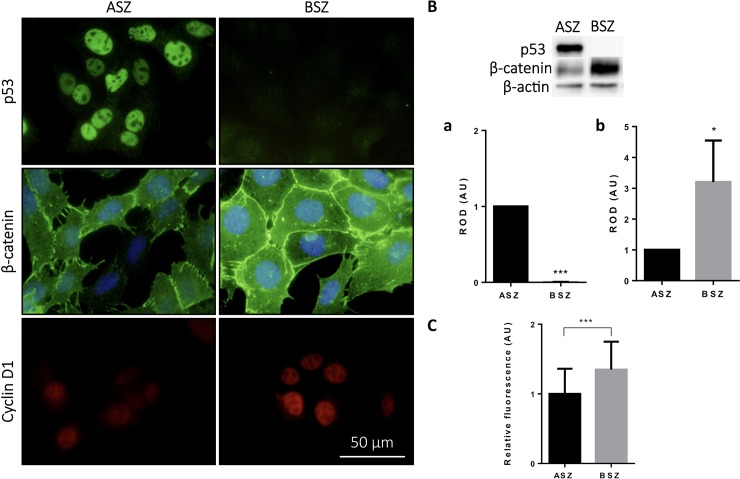
Clinical, histological, and immunohistochemical (p53, Ki-67, CD-31, COX2, β-catenin, EGFR, and survivin) variables were analyzed in a retrospective study of consecutive BCC patients treated with MAL-PDT at the San Jorge Hospital, Huesca, Spain between January 2006 and December 2015. To deepen on these markers, the effects on p53 and cyclin D1 expression, in vitro response to MAL-PDT of 2 murine BCC cell lines (ASZ and BSZ), was also evaluated.
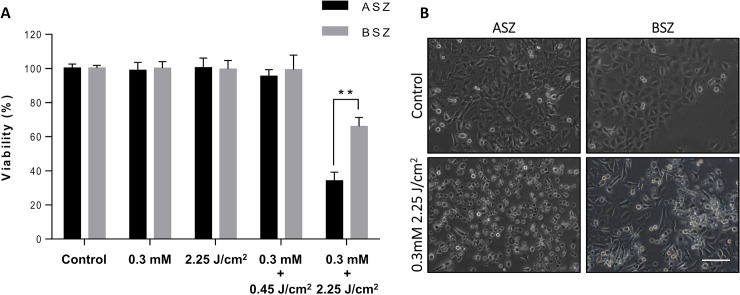
The retrospective study examined the response to MAL-PDT of 390 BCCs from 182 patients. The overall clinical response rate was 82.8%, with a mean follow-up time of 35.96 months (SD = 23.46). Immunohistochemistry revealed positive p53 in 84.6% of responders but only 15.4% of nonresponsive tumors (p = 0.011). Tumors with increased peripheral palisading of basal cell islands to immunostaining β-catenin responded poorly to PDT (p = 0.01). In line with our findings in patients, in vitro studies revealed a better response to PDT in the p53-positive ASZ cell line than the p53-negative BSZ cell line (p<0.01). Multivariate analysis revealed that the following variables were significantly associated with response to PDT: age, nBCC, presence of peritumoral inflammatory infiltrate, and p53 immunopositivity. Patients with positive p53 immunostaining were 68.54 times more likely to achieve cure than p53-negative patients (CI95% 2.94-159.8).
Our finding suggest that certain clinicopathological and immunohistochemical variables, particularly p53 expression, may serve as indicators of BCC response to MAL-PDT, and thus facilitate the selection of patients who are most likely to benefit from this therapy.
甲氨基酮戊酸光动力疗法(MAL-PDT)是治疗基底细胞癌(BCC)的绝佳选择。然而,高达 25%的病例对此治疗方式具有抗性。
本研究旨在确定 BCC 对 MAL-PDT 反应的潜在生物标志物。
在西班牙韦斯卡圣豪尔赫医院于 2006 年 1 月至 2015 年 12 月期间对连续接受 MAL-PDT 治疗的 BCC 患者进行了回顾性研究,分析了临床、组织学和免疫组织化学(p53、Ki-67、CD-31、COX2、β-连环蛋白、EGFR 和 survivin)变量。为了深入研究这些标志物,还评估了 2 种鼠类 BCC 细胞系(ASZ 和 BSZ)中 p53 和细胞周期蛋白 D1 表达对 MAL-PDT 的体外反应。
回顾性研究检查了 182 名患者的 390 例 BCC 对 MAL-PDT 的反应。总体临床缓解率为 82.8%,平均随访时间为 35.96 个月(SD=23.46)。免疫组化显示,84.6%的应答者存在阳性 p53,而非应答者仅为 15.4%(p=0.011)。对免疫染色β-连环蛋白的周边基底层岛屿呈阳性的肿瘤反应不佳(p=0.01)。与我们在患者中的发现一致,体外研究显示,p53 阳性的 ASZ 细胞系对 PDT 的反应优于 p53 阴性的 BSZ 细胞系(p<0.01)。多变量分析显示,以下变量与 PDT 反应显著相关:年龄、nBCC、肿瘤周围炎症浸润的存在和 p53 免疫阳性。与 p53 阴性患者相比,p53 免疫染色阳性的患者治愈的可能性高 68.54 倍(95%CI95%2.94-159.8)。
我们的研究结果表明,某些临床病理和免疫组织化学变量,特别是 p53 表达,可能作为 BCC 对 MAL-PDT 反应的指标,从而有助于选择最有可能受益于该治疗的患者。