Anyanwu Nneoma Confidence JeanStephanie, Ella Elijah Ekah, Aminu Maryam, Azam Maleeha, Ajmal Muhammad, Kazeem Haruna Makonjuola
Department of Microbiology, Faculty of Life Sciences, Ahmadu Bello University, Zaria, Nigeria.
Department of Biosciences, COMSATS University, Islamabad, Pakistan.
SAGE Open Med. 2019 Apr 16;7:2050312119843706. doi: 10.1177/2050312119843706. eCollection 2019.
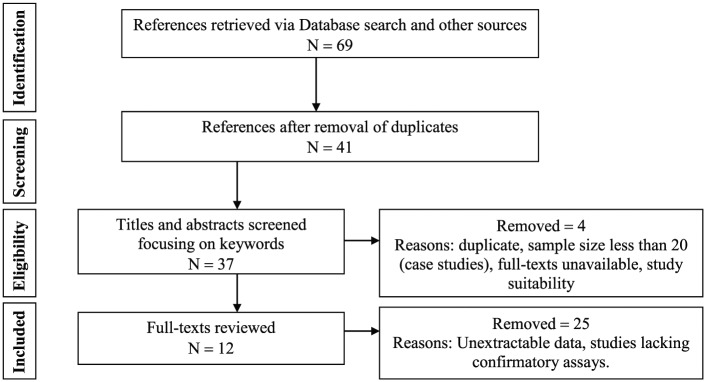
This study was aimed at determining human T-lymphotropic virus 1/2 prevalence among apparently healthy, immunocompromised and haematologic malignant individuals in Nigeria's capital, as well as meta-analysis of all Nigerian studies until date.
A total of 200 participants were recruited into a cross-sectional study. In total, 1 mL each of sera and plasma were obtained from 5 mL blood of each participant and analysed for antibodies to human T-lymphotropic virus 1/2 using enzyme-linked immunosorbent assay; positive samples confirmed with qualitative real-time polymerase chain reaction, followed by statistical and meta-analysis. Sociodemographic characteristics and possible risk factors were assessed via questionnaires.
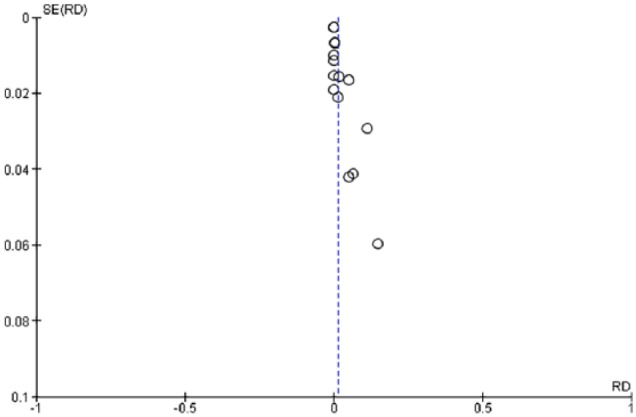
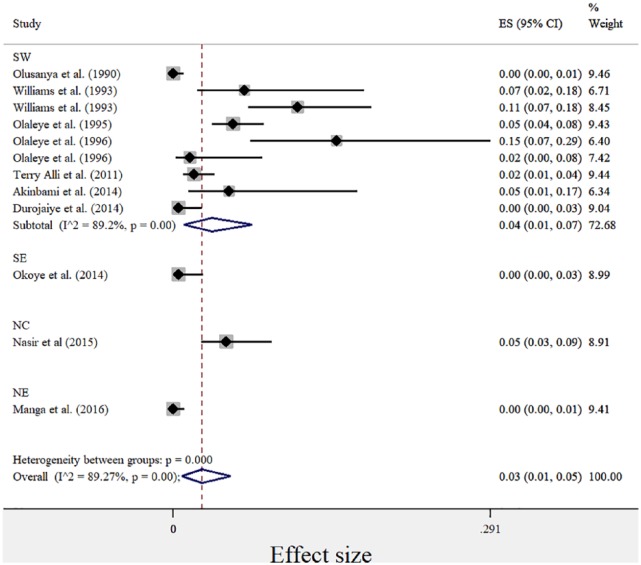
Enzyme-linked immunosorbent assay yielded 1% prevalence which was confirmed to be zero via polymerase chain reaction. A total of 119 (59.5%) of the participants were male, while the mean age was 35.28 ± 13.61 years. Apart from sex and blood reception/donation, there was generally a low rate of exposure to human T-lymphotropic virus-associated risk factors. Meta-analysis revealed pooled prevalence of human T-lymphotropic virus 1 and 2 to be 3% and 0%, respectively, from Nigerian studies.
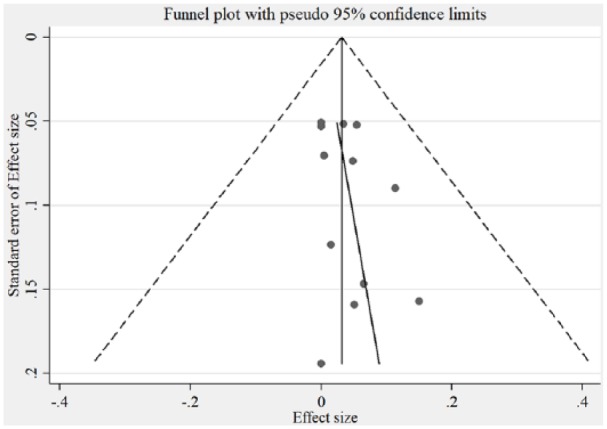
This study discovered zero prevalence of human T-lymphotropic virus 1/2 from five major hospitals in Nigeria's capital, exposing the importance of confirmatory assays after positive antibody detection assay results. Meta-analysis highlighted the existence of very few reliable Nigerian studies compared to the demography of the nation. Large-scale epidemiological studies and routine screening of risk populations are therefore needed since Nigeria lies in the region of endemicity.
本研究旨在确定尼日利亚首都表面健康、免疫功能低下和血液系统恶性肿瘤患者中人类嗜T淋巴细胞病毒1/2(HTLV-1/2)的流行率,并对迄今为止所有尼日利亚的研究进行荟萃分析。
共招募200名参与者进行横断面研究。从每位参与者的5毫升血液中分别获取1毫升血清和血浆,采用酶联免疫吸附测定法分析抗人类嗜T淋巴细胞病毒1/2抗体;阳性样本用定性实时聚合酶链反应进行确认,随后进行统计和荟萃分析。通过问卷调查评估社会人口学特征和可能的危险因素。
酶联免疫吸附测定法得出的流行率为1%,经聚合酶链反应确认该流行率为零。共有119名(59.5%)参与者为男性,平均年龄为35.28±13.61岁。除性别和血液接受/捐赠外,一般人群接触人类嗜T淋巴细胞病毒相关危险因素的比例较低。荟萃分析显示,尼日利亚的研究中人类嗜T淋巴细胞病毒1和2的合并流行率分别为3%和0%。
本研究发现尼日利亚首都五家主要医院中人类嗜T淋巴细胞病毒1/2的流行率为零,这凸显了在抗体检测呈阳性后进行确证检测的重要性。荟萃分析强调,与该国人口统计学相比,可靠的尼日利亚研究数量极少。鉴于尼日利亚处于流行区,因此需要开展大规模流行病学研究并对高危人群进行常规筛查。