College of Animal Science, National Engineering Research Center for Breeding Swine Industry, South China Agricultural University, Wushan Road, Tianhe District, Guangzhou, 510642, People's Republic of China.
Ministry of Agriculture Key Laboratory of Tropical Agricultural Environment, South China Agricultural University, Guangzhou, 510642, China.
BMC Microbiol. 2019 Apr 29;19(1):83. doi: 10.1186/s12866-019-1459-x.
Methane emissions from pigs account for 10% of total methane production from livestock in China. Methane emissions not only contribute to global warming, as it has 25 times the global warming potential (GWP) of CO, but also represent approximately 0.1~3.3% of digestive energy loss. Methanogens also play an important role in maintaining the balance of the gut microbiome. The large intestines are the main habitat for the microbiome in pigs. Thus, to better understand the mechanism of methane production and mitigation, generic-specific and physio-ecological characteristics (including redox potential (Eh), pH and volatile fatty acids (VFAs)) and methanogens in the large intestine of pig were studied in this paper. Thirty DLY finishing pigs with the same diet and feeding conditions were selected for this experiment.
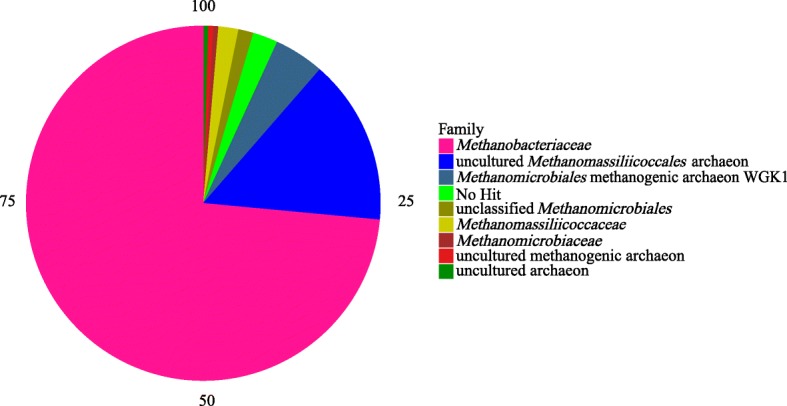
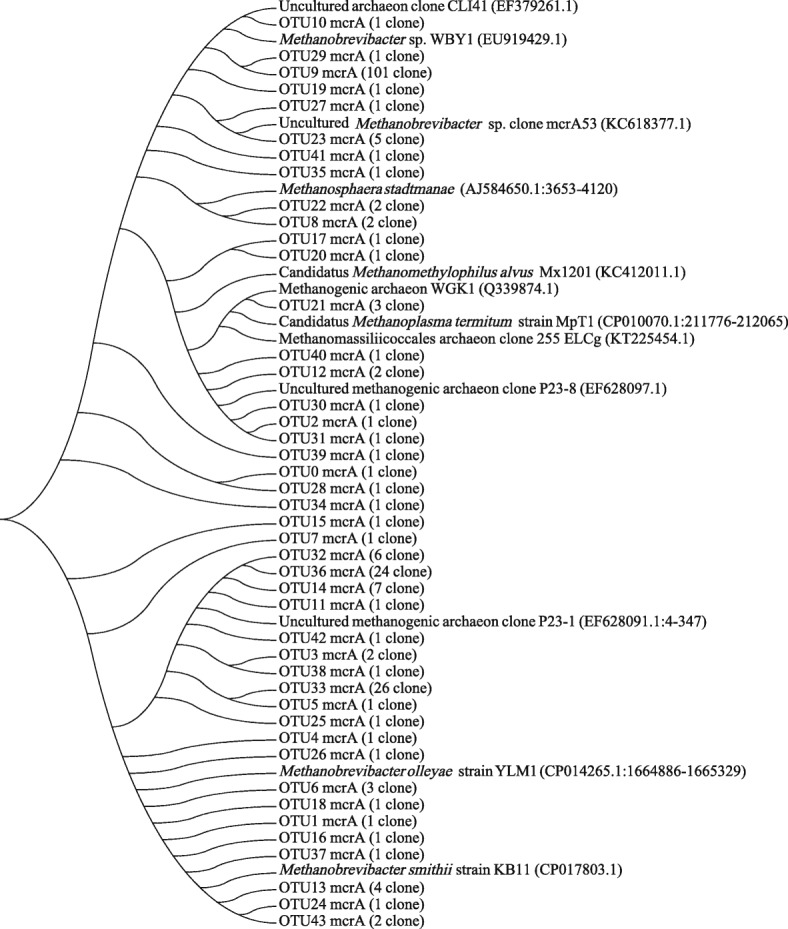
A total of 219 clones were examined using the methyl coenzyme reductase subunit A gene (mcrA) and assigned to 43 operational taxonomic units (OTUs) based on a 97% species-level identity criterion. The family Methanobacteriaceae was the dominant methanogen in colonic digesta of finishing pigs, accounting for approximately 70.6% of the identified methanogens, and comprised mainly the genera Methanobrevibacter (57%) and Methanosphaera (14%). The order Methanomassiliicoccales, classified as an uncultured taxonomy, accounted for 15.07%. The methanogenic archaeon WGK1 and unclassified Methanomicrobiales belonging to the order of Methanomicrobiales accounted for 4.57 and 1.37%, respectively. The Eh was negative and within the range - 297.00423.00 mV and the pH was within the range 5.046.97 in the large intestine. The populations of total methanogens and Methanobacteriales were stable in different parts of the large intestine according to real-time PCR.
The major methanogen in the large intestine of finishing pigs was Methanobrevibacter. The seventh order Methanomassiliicoccales and species Methanosphaera stadtmanae present in the large intestine of pigs might contribute to the transfer of hydrogen and fewer methane emissions. The redox potential (Eh) was higher in the large intestine of finishing pigs, which had a positive correlation with the population of Methanobacteriale.
甲烷排放量占中国畜牧业甲烷总排放量的 10%。甲烷排放不仅导致全球变暖,因为其全球变暖潜能值(GWP)是二氧化碳的 25 倍,还代表了约 0.1%至 3.3%的消化能损失。产甲烷菌在维持肠道微生物组平衡方面也起着重要作用。大肠是猪微生物组的主要栖息地。因此,为了更好地了解甲烷产生和减排的机制,本研究对猪大肠中的种特异性和生理生态特性(包括氧化还原电位(Eh)、pH 值和挥发性脂肪酸(VFAs))和产甲烷菌进行了研究。本实验选择了 30 头具有相同饮食和饲养条件的 DLY 育肥猪。
共检查了 219 个克隆,使用甲基辅酶还原酶亚基 A 基因(mcrA)进行分析,并根据 97%种水平的同一性标准将其分配到 43 个操作分类单元(OTUs)。结肠消化物中的产甲烷菌主要为甲烷杆菌科,约占鉴定产甲烷菌的 70.6%,主要包括甲烷短杆菌(57%)和甲烷八叠球菌(14%)。未培养分类群的 Methanomassiliicoccales 目占 15.07%。属于 Methanomicrobiales 目未分类的 Methanomicrobiales 和 Methanomicrobiales 目中的产甲烷古菌 WGK1 分别占 4.57%和 1.37%。氧化还原电位(Eh)为负值,范围为-297.00 至 423.00 mV,大肠内 pH 值范围为 5.04 至 6.97。实时 PCR 结果显示,育肥猪大肠中总产甲烷菌和 Methanobacteriales 的种群相对稳定。
育肥猪大肠中的主要产甲烷菌为甲烷短杆菌。猪大肠中存在的第七目 Methanomassiliicoccales 和 Methanosphaera stadtmanae 种可能有助于氢的转移和减少甲烷排放。育肥猪大肠中的氧化还原电位(Eh)较高,与 Methanobacteriale 种群呈正相关。