Unit of Pediatric Neurology, Hôpital des Enfants, CHU Toulouse, 330 av de Grande Bretagne-TSA, 31059, Toulouse Cedex, France.
Service de Neurologie Pédiatrique, Hôpital des Enfants, CHU Toulouse, 330 avenue de Grande Bretagne-TSA, 31059, Toulouse Cedex, France.
BMC Pediatr. 2019 Apr 29;19(1):136. doi: 10.1186/s12887-019-1508-5.
No guidelines exist concerning the maintenance antiepileptic drug to use after neonatal seizures. Practices vary from one hospital to another. The aim of this study was to investigate etiologies and to report on the use of maintenance antiepileptic therapy in our population of full-term neonates presenting neonatal seizures.
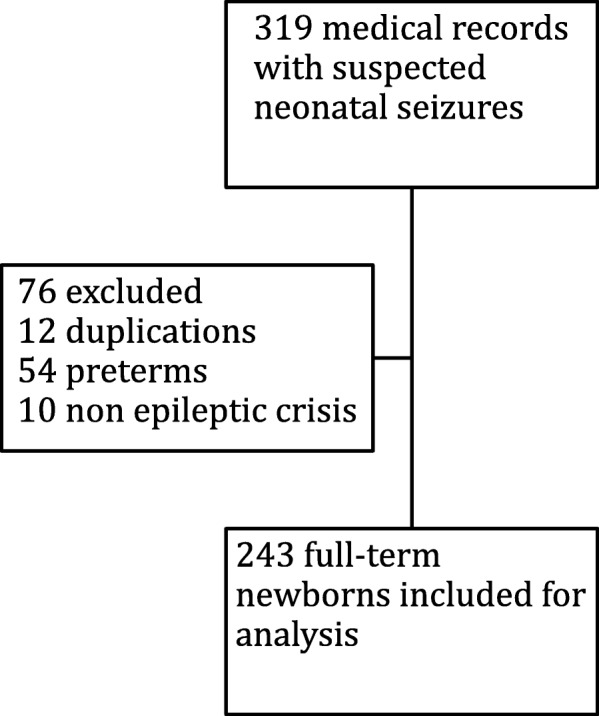
From January 2004 to October 2014, we retrospectively collected data from all full-term neonates with neonatal seizures admitted to the Children's Hospital of Toulouse, France.
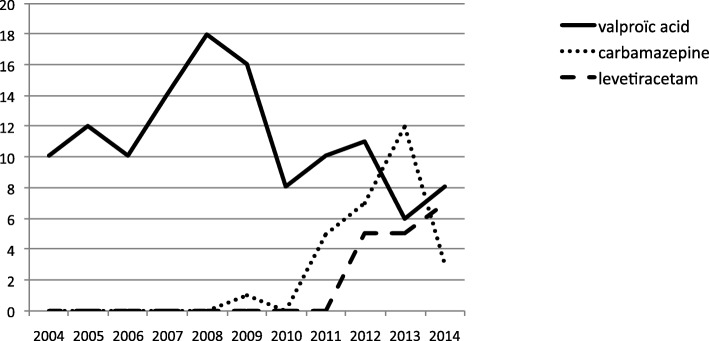
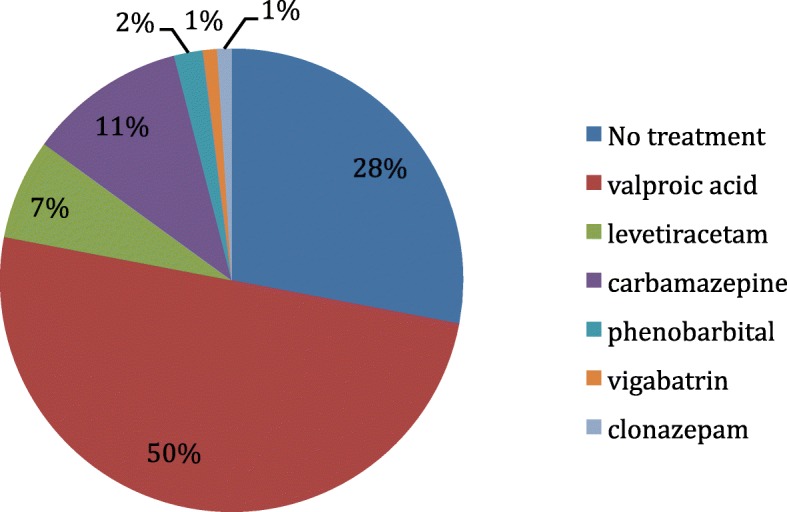
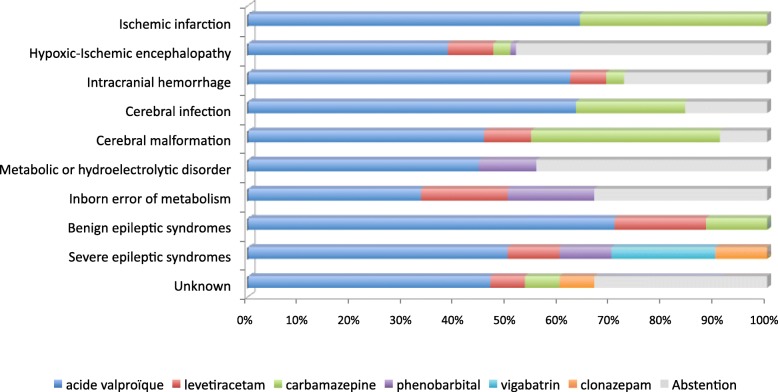
Two hundred and forty-three neonates were included (59% males, 48% electroencephalographic confirmation). The frequencies of etiologies of neonatal seizures were: hypoxic-ischemic encephalopathy (HIE) (n = 91; 37%), ischemic infarction (n = 36; 15%), intracranial hemorrhage (n = 29; 12%), intracranial infection (n = 19; 8%), metabolic or electrolyte disorders (n = 9; 3%), inborn errors of metabolism (n = 5; 2%), congenital malformations of the central nervous system (n = 11; 5%), epileptic syndromes (n = 27; 12%) and unknown (n = 16; 7%). A maintenance therapy was prescribed in 180 (72%) newborns: valproic acid (n = 123), carbamazepine (n = 28), levetiracetam (n = 17), vigabatrin (n = 2), and phenobarbital (n = 4). In our cohort, the choice of antiepileptic drug depended mainly on etiology. The average duration of treatment was six months.
In our cohort, valproic acid was the most frequently prescribed maintenance antiepileptic therapy. However, the arrival on the market of new antiepileptic drugs and a better understanding of the physiopathology of genetic encephalopathies is changing our practice.
Retrospectively registered. Patient data were reported to the "Commission Nationale Informatique et Libertés" under the number 2106953 .
目前尚缺乏新生儿惊厥后维持抗癫痫药物治疗的相关指南。不同医院的治疗方案存在差异。本研究旨在探讨病因,并报告我们收治的足月新生儿惊厥的维持抗癫痫治疗方案。
我们回顾性收集了 2004 年 1 月至 2014 年 10 月期间在法国图卢兹儿童医院住院的所有足月新生儿惊厥患儿的资料。
共纳入 243 例新生儿(男婴占 59%,脑电图确诊患儿占 48%)。新生儿惊厥的病因频率如下:缺氧缺血性脑病(HIE)(91 例,37%)、缺血性梗死(36 例,15%)、颅内出血(29 例,12%)、颅内感染(19 例,8%)、代谢或电解质紊乱(9 例,3%)、遗传代谢病(5 例,2%)、中枢神经系统先天性畸形(11 例,5%)、癫痫综合征(27 例,12%)和原因不明(16 例,7%)。180 例(72%)新生儿接受了维持治疗:丙戊酸钠(123 例)、卡马西平(28 例)、左乙拉西坦(17 例)、氨己烯酸(2 例)和苯巴比妥(4 例)。本队列中,抗癫痫药物的选择主要取决于病因。治疗平均持续时间为 6 个月。
在本队列中,丙戊酸钠是最常使用的维持抗癫痫治疗药物。然而,新的抗癫痫药物的问世以及对遗传脑病病理生理学的深入了解正在改变我们的治疗实践。
回顾性注册。患者数据已向“Commission Nationale Informatique et Libertés”报告,注册号为 2106953。