Department of Biology, Pennsylvania State University, W-234A, Millennium Science Complex, University Park, PA, 16802, USA.
Department of Entomology, Pennsylvania State University, 501 ASI Building, University Park, PA, 16802, USA.
Parasit Vectors. 2019 Apr 29;12(1):189. doi: 10.1186/s13071-019-3451-6.
Tick-borne diseases have been increasing at the local, national, and global levels. Researchers studying ticks and tick-borne diseases need a thorough knowledge of the pathogens, vectors, and epidemiology of disease spread. Both active and passive surveillance approaches are typically used to estimate tick population size and risk of tick encounter. Our data consists of a composite of active and long-term passive surveillance, which has provided insight into spatial variability and temporal dynamics of ectoparasite communities and identified rarer tick species. We present a retrospective analysis on compiled data of ticks from Pennsylvania over the last 117 years.
We compiled data from ticks collected during tick surveillance research, and from citizen-based submissions. The majority of the specimens were submitted by citizens. However, a subset of the data was collected through active methods (flagging or dragging, or removal of ticks from wildlife). We analyzed all data from 1900-2017 for tick community composition, host associations, and spatio-temporal dynamics.
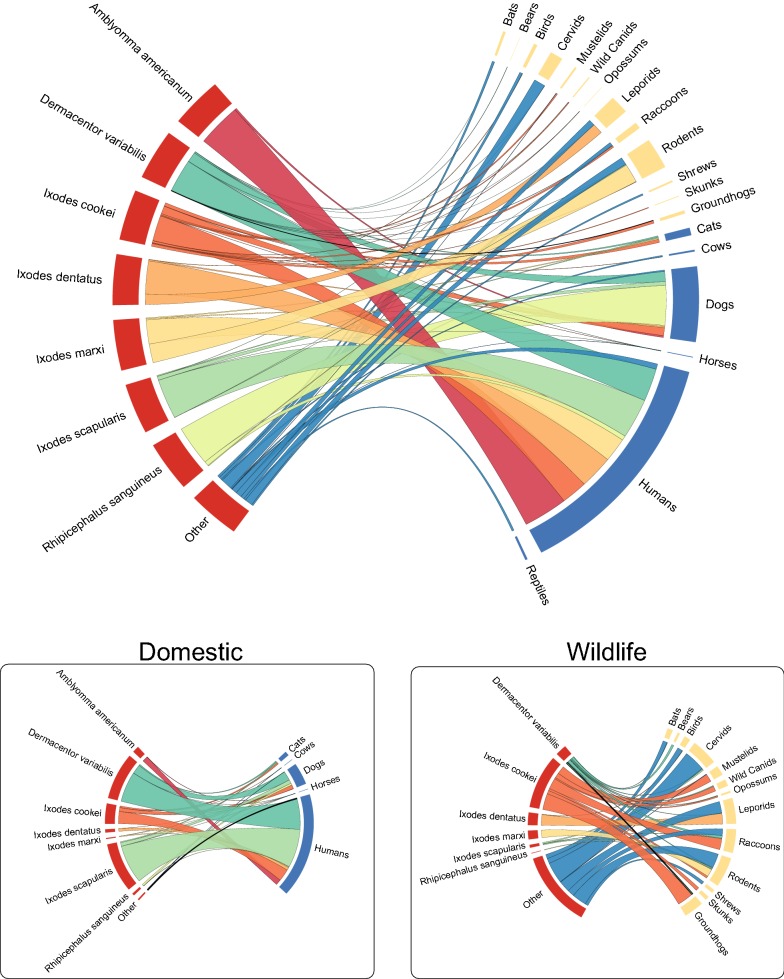
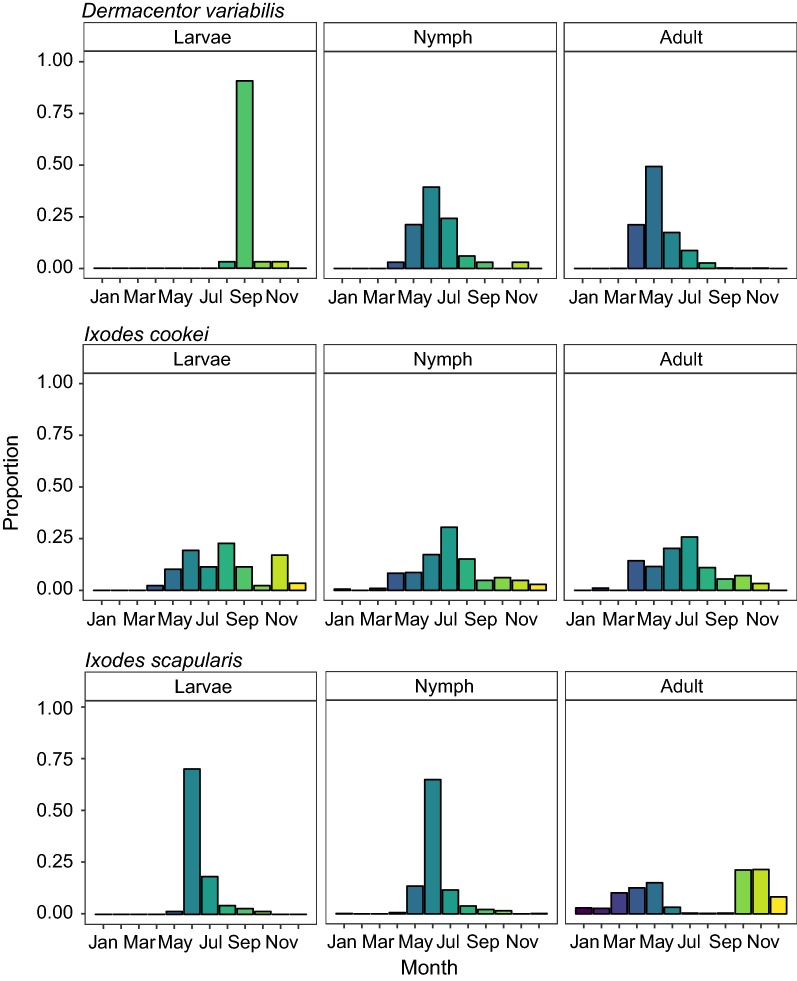
In total there were 4491 submission lots consisting of 7132 tick specimens. Twenty-four different species were identified, with the large proportion of submissions represented by five tick species. We observed a shift in tick community composition in which the dominant species of tick (Ixodes cookei) was overtaken in abundance by Dermacentor variabilis in the early 1990s and then replaced in abundance by I. scapularis. We analyzed host data and identified overlaps in host range amongst tick species.
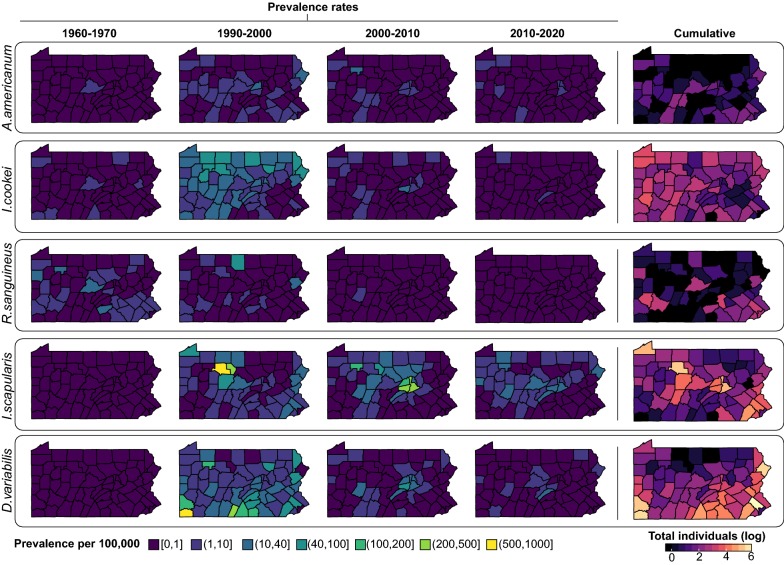
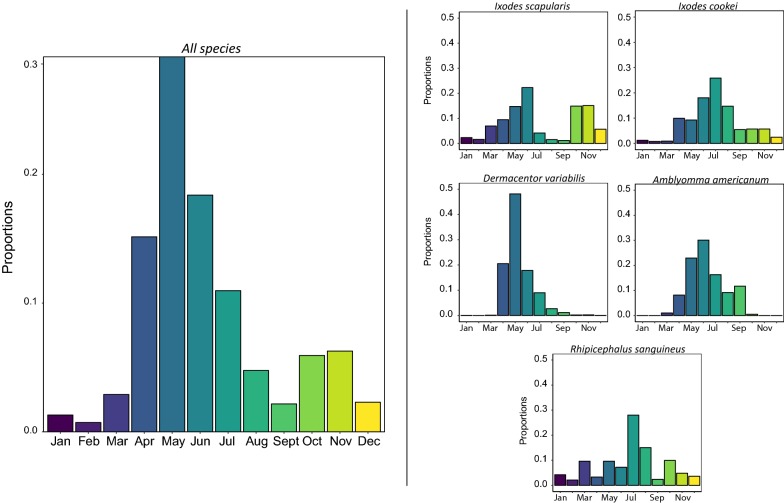
We highlight the importance of long-term passive tick surveillance in investigating the ecology of both common and rare tick species. Information on the geographical distribution, host-association, and seasonality of the tick community can help researchers and health-officials to identify high-risk areas.
蜱传疾病在地方、国家和全球范围内呈上升趋势。研究蜱虫和蜱传疾病的研究人员需要深入了解病原体、媒介和疾病传播的流行病学。通常使用主动和被动监测方法来估计蜱虫种群规模和蜱虫接触风险。我们的数据由主动和长期被动监测的综合数据组成,这些数据提供了有关节肢动物群落空间变异性和时间动态的深入了解,并确定了较罕见的蜱种。我们对过去 117 年来宾夕法尼亚州蜱虫的综合数据进行了回顾性分析。
我们对从蜱虫监测研究中收集的蜱虫数据以及基于公民的提交数据进行了汇总。大多数标本是由公民提交的。但是,通过主动方法(标记或拖动,或从野生动物身上清除蜱虫)收集了一部分数据。我们分析了 1900-2017 年所有数据,以了解蜱虫群落组成、宿主关联和时空动态。
总共有 4491 批提交数据,包含 7132 个蜱虫标本。鉴定出 24 个不同的物种,其中大部分提交的标本是由五种蜱虫组成的。我们观察到蜱虫群落组成发生了变化,优势蜱虫(Ixodes cookei)的数量在 20 世纪 90 年代初期被 Dermacentor variabilis 所取代,随后又被 I. scapularis 所取代。我们分析了宿主数据,并确定了不同蜱种之间的宿主范围重叠。
我们强调了长期被动蜱虫监测在研究常见和罕见蜱种生态方面的重要性。有关蜱虫群落的地理分布、宿主关联和季节性的信息可以帮助研究人员和卫生官员确定高风险地区。