Division of Applied Regulatory Science, Office of Clinical Pharmacology, Office of Translational Sciences, Center for Drug Evaluation and Research, US Food and Drug Administration, Silver Spring, Maryland, USA.
Division of Cardiovascular and Renal Products, Office of Drug Evaluation I, Office of New Drugs, Center for Drug Evaluation and Research, US Food and Drug Administration, Silver Spring, Maryland, USA.
CPT Pharmacometrics Syst Pharmacol. 2019 Jun;8(6):371-379. doi: 10.1002/psp4.12423. Epub 2019 Jun 17.
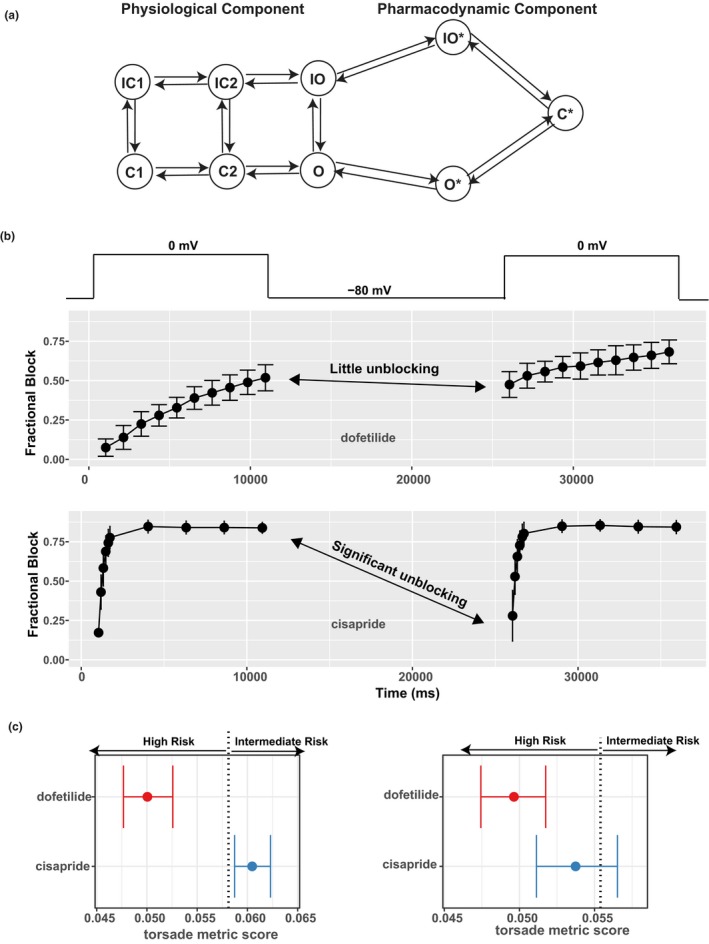
As a relatively new discipline, quantitative systems pharmacology has seen a significant increase in the application and utility of drug development. One area that could greatly benefit from such an approach is in the proarrhythmia assessment of new drugs. The Comprehensive In Vitro Proarrhythmia Assay (CiPA) Initiative is a global public-private partnership project that has developed an integrated approach using mechanistic in silico models for proarrhythmia risk prediction. Progress to date has led to the formation of the International Council on Harmonisation Implementation Working Group to revise regulatory guidelines via the Questions-and-Answers process to address the best practices for proarrhythmia models and how they can impact clinical drug development. This article reviews the CiPA in silico model-development process, focusing on its unique development and validation strategy, and summarizes the lessons learned as consideration points for the ongoing implementation of CiPA-like in silico models in drug development.
作为一个相对较新的学科,定量系统药理学在药物开发中的应用和实用性有了显著的增加。一个可以从这种方法中受益匪浅的领域是新药物的致心律失常评估。综合体外致心律失常试验(CiPA)倡议是一个全球性的公私合作伙伴关系项目,它开发了一种使用致心律失常风险预测的机制计算模型的综合方法。迄今为止的进展导致了国际协调一致实施工作组的形成,通过问答过程修订监管指南,以解决致心律失常模型的最佳实践以及它们如何影响临床药物开发的问题。本文回顾了 CiPA 计算模型的开发过程,重点介绍了其独特的开发和验证策略,并总结了在药物开发中实施类似 CiPA 的计算模型时需要考虑的要点。