Centre for Biomolecular Sciences, School of Chemistry, The University of Nottingham, Nottingham, UK.
School of Physics & Astronomy, The University of Nottingham, University Park, Nottingham, UK; and School of Chemistry, University of Lincoln, UK.
Nanomedicine. 2019 Aug;20:102005. doi: 10.1016/j.nano.2019.04.008. Epub 2019 Apr 29.
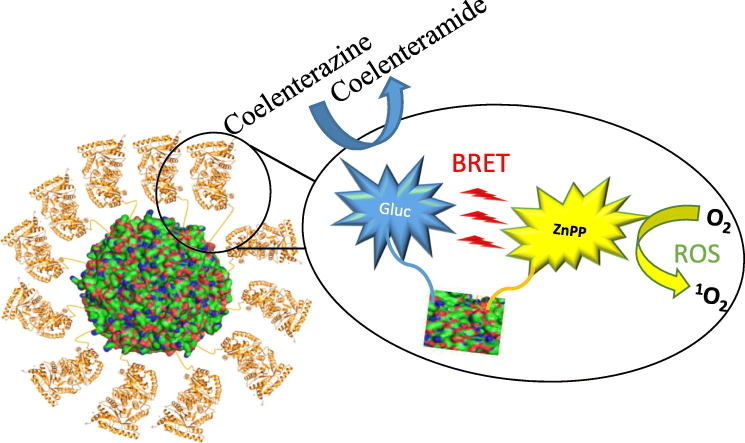
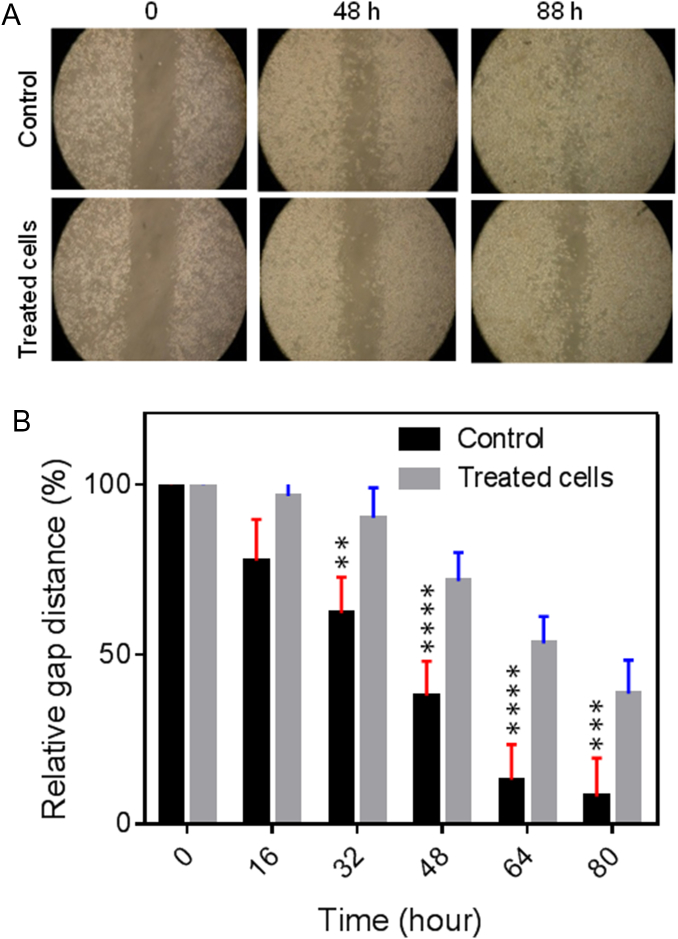
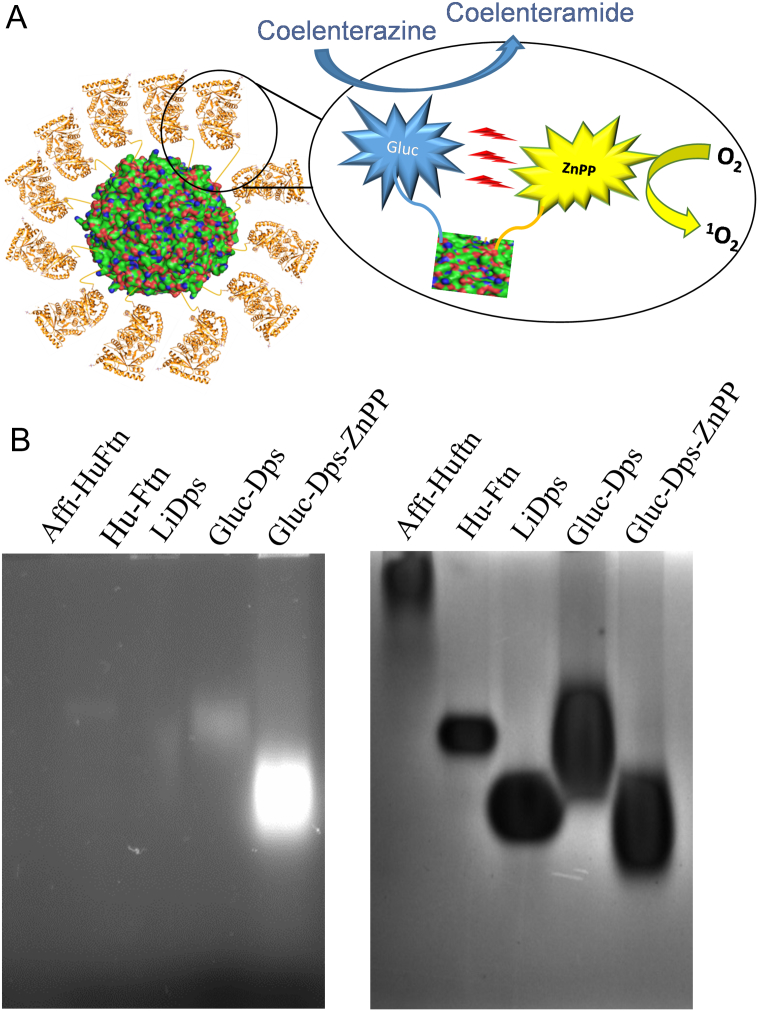
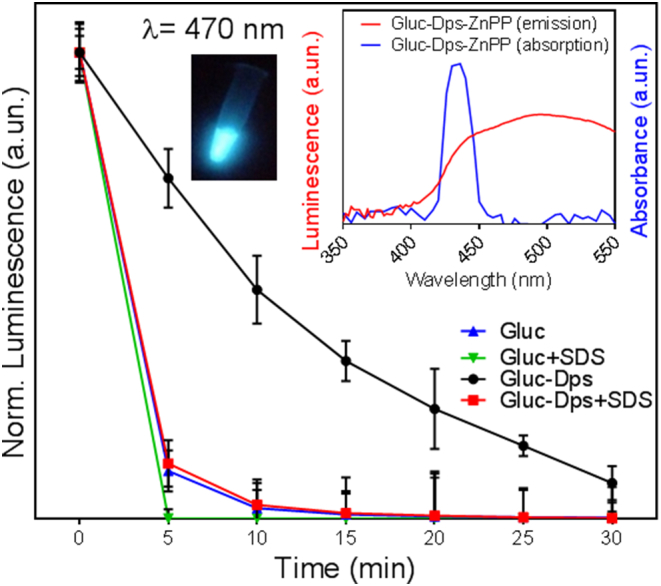
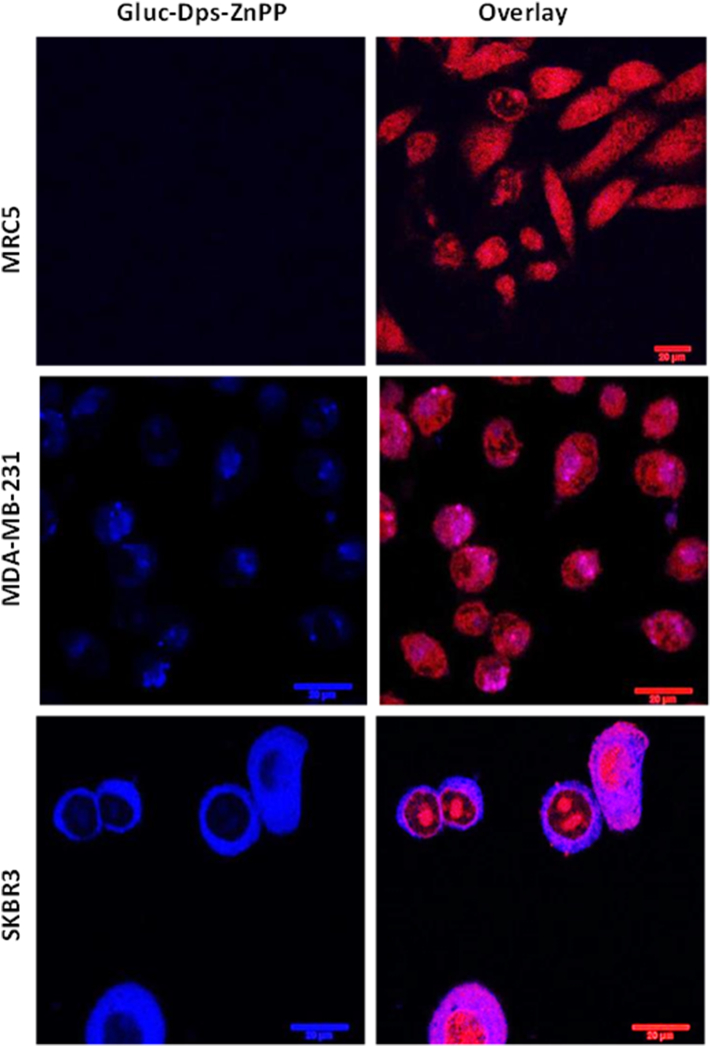
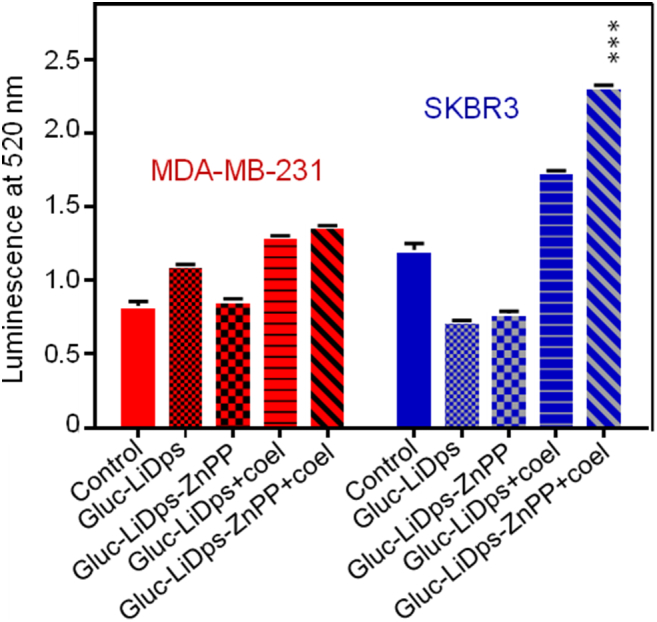
Listeria innocua DNA binding protein from starved cells (LiDps) belongs to the ferritin family and provides a promising self-assembling spherical 12-mer protein scaffold for the generation of functional nanomaterials. We report the creation of a Gaussia princeps luciferase (Gluc)-LiDps fusion protein, with chemical conjugation of Zinc (II)-protoporphyrin IX (ZnPP) to lysine residues on the fusion protein (giving Gluc-LiDps-ZnPP). The Gluc-LiDps-ZnPP conjugate is shown to generate reactive oxygen species (ROS) via Bioluminescence Resonance Energy Transfer (BRET) between the Gluc (470-490 nm) and ZnPP. In vitro, Gluc-LiDps-ZnPP is efficiently taken up by tumorigenic cells (SKBR3 and MDA-MB-231 breast cancer cells). In the presence of coelenterazine, this construct inhibits the proliferation of SKBR3 due to elevated ROS levels. Following exposure to Gluc-LiDps-ZnPP, migration of surviving SKBR3 cells is significantly suppressed. These results demonstrate the potential of the Gluc-LiDps-ZnPP conjugate as a platform for future development of an anticancer photodynamic therapy agent.
来自饥饿细胞的无害李斯特菌 DNA 结合蛋白(LiDps)属于铁蛋白家族,为功能性纳米材料的生成提供了一种有前途的自组装的 12 聚体球形蛋白支架。我们报告了一种海肾荧光素酶(Gluc)-LiDps 融合蛋白的创建,该蛋白通过赖氨酸残基上的化学缀合锌(II)原卟啉 IX(ZnPP)(产生 Gluc-LiDps-ZnPP)。Gluc-LiDps-ZnPP 缀合物通过 Gluc(470-490nm)和 ZnPP 之间的生物发光共振能量转移(BRET)产生活性氧物种(ROS)。在体外,Gluc-LiDps-ZnPP 被肿瘤细胞(SKBR3 和 MDA-MB-231 乳腺癌细胞)有效摄取。在 coelenterazine 的存在下,由于 ROS 水平升高,该构建物抑制 SKBR3 的增殖。暴露于 Gluc-LiDps-ZnPP 后,存活的 SKBR3 细胞的迁移明显受到抑制。这些结果表明,Gluc-LiDps-ZnPP 缀合物作为未来开发抗癌光动力治疗剂的平台具有潜力。