Laboratory of Genetics & Genomics, National Institute on Aging/National Institutes of Health, Baltimore, Maryland, United States of America.
Division of Epidemiology and Clinical Applications, National Eye Institute/National Institutes of Health, Baltimore, Maryland, United States of America.
PLoS One. 2019 May 2;14(5):e0215916. doi: 10.1371/journal.pone.0215916. eCollection 2019.
Blood vessels of the retina provide an easily-accessible, representative window into the condition of microvasculature. We investigated how retinal vessel structure captured in fundus photographs changes with age, and how this may reflect features related to patient health, including blood pressure.
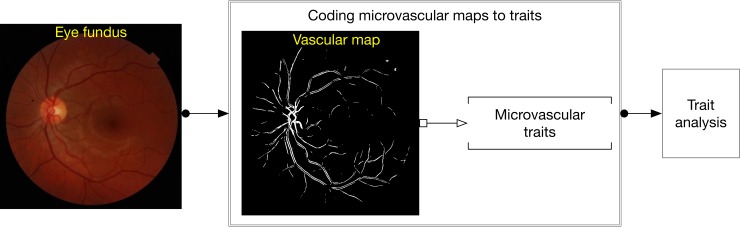
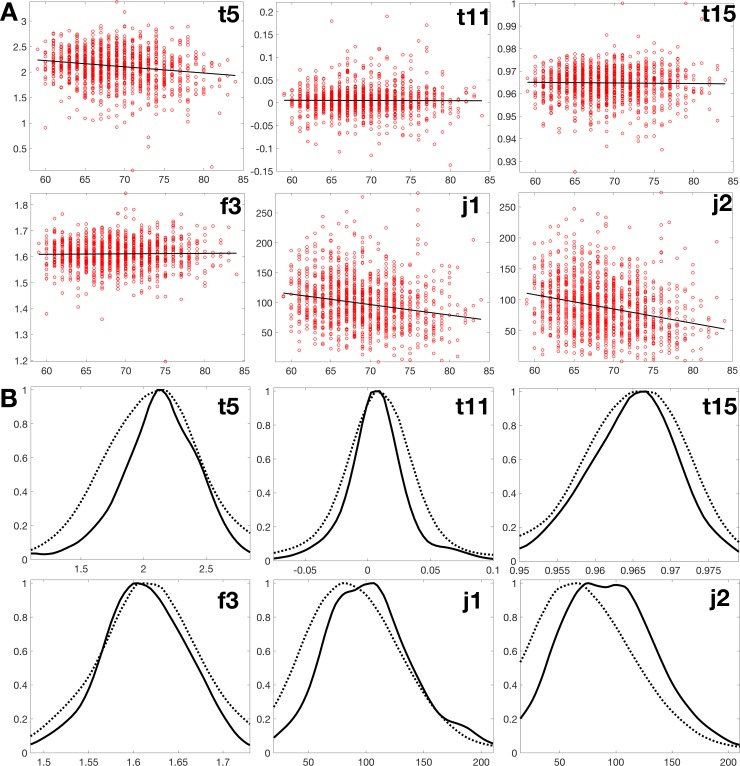
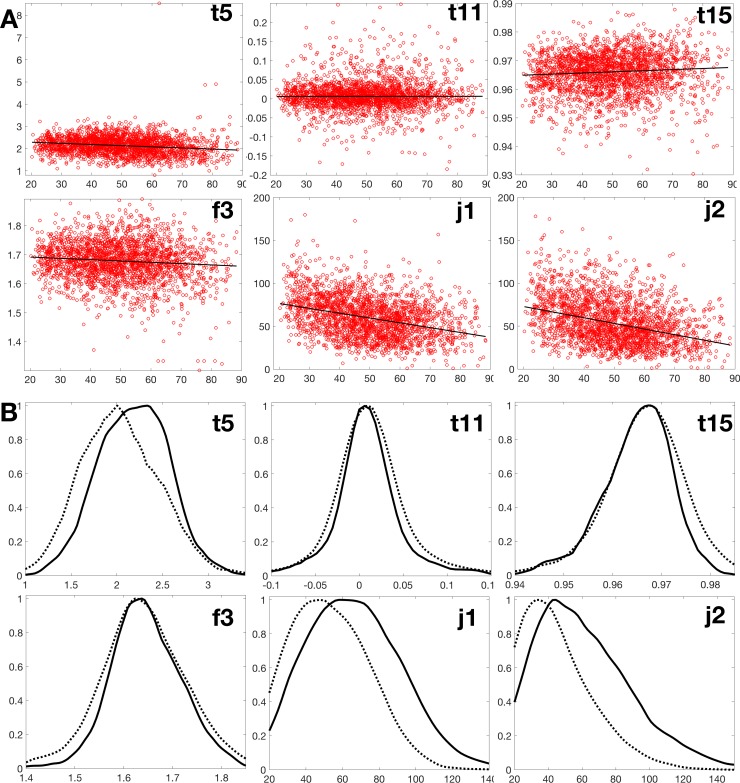
We used two approaches. In the first approach, we segmented the retinal vasculature from fundus photographs and then we correlated 25 parameterized aspects ("traits")-comprising 15 measures of tortuosity, 7 fractal ranges of self-similarity, and 3 measures of junction numbers-with participant age and blood pressure. In the second approach, we examined entire fundus photographs with a set of algorithmic CHARM features. We studied 2,280 Sardinians, ages 20-28, and an U.S. based population from the AREDS study in 1,178 participants, ages 59-84. Three traits (relating to tortuosity, vessel bifurcation number, and vessel endpoint number) showed significant changes with age in both cohorts, and one additional trait (relating to fractal number) showed a correlation in the Sardinian cohort only. When using second approach, we found significant correlations of particular CHARM features with age and blood pressure, which were stronger than those detected when using parameterized traits, reflecting a greater signal from the entire photographs than was captured in the segmented microvasculature.
These findings demonstrate that automated quantitative image analysis of fundus images can reveal general measures of patient health status.
视网膜血管为了解微血管状况提供了一个易于接近的代表性窗口。我们研究了眼底照片中视网膜血管结构随年龄的变化,以及这种变化如何反映与患者健康相关的特征,包括血压。
我们使用了两种方法。在第一种方法中,我们从眼底照片中分割出视网膜血管,然后将 25 个参数化方面(包括 15 个迂曲度测量、7 个自相似分形范围和 3 个连接点数测量)与参与者的年龄和血压进行相关分析。在第二种方法中,我们使用一组算法 CHARM 特征来检查整个眼底照片。我们研究了 2280 名年龄在 20-28 岁的撒丁岛人,以及 1178 名年龄在 59-84 岁的美国 AREDS 研究中的参与者。在两个队列中,有三个特征(与迂曲度、血管分叉数和血管终点数有关)随年龄发生显著变化,另外一个特征(与分形数有关)仅在撒丁岛队列中存在相关性。当使用第二种方法时,我们发现特定 CHARM 特征与年龄和血压之间存在显著相关性,其相关性强于使用参数化特征时的相关性,这反映了整个照片比分割后的微血管提供了更多的信号。
这些发现表明,对眼底图像的自动定量图像分析可以揭示患者健康状况的一般指标。