Systems Neurobiology Laboratories, Salk Institute for Biological Studies, La Jolla, CA 92037, USA; Neurosciences Graduate Program, University of California, San Diego, La Jolla, CA 92093, USA.
Systems Neurobiology Laboratories, Salk Institute for Biological Studies, La Jolla, CA 92037, USA.
Curr Biol. 2019 May 20;29(10):1592-1605.e5. doi: 10.1016/j.cub.2019.03.065. Epub 2019 May 2.
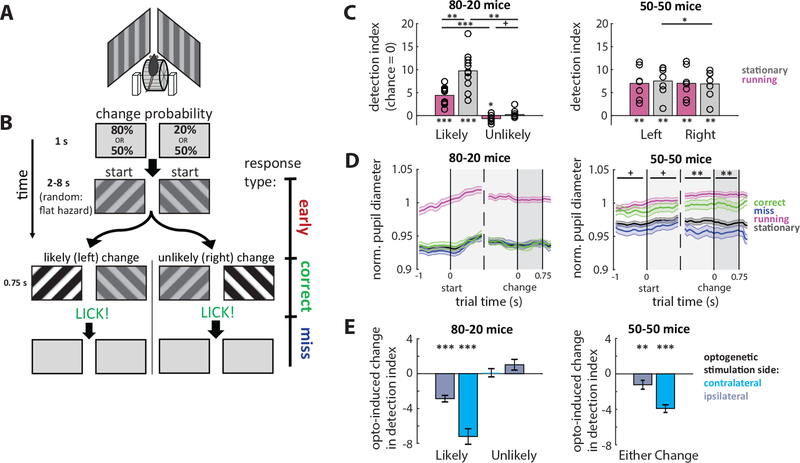
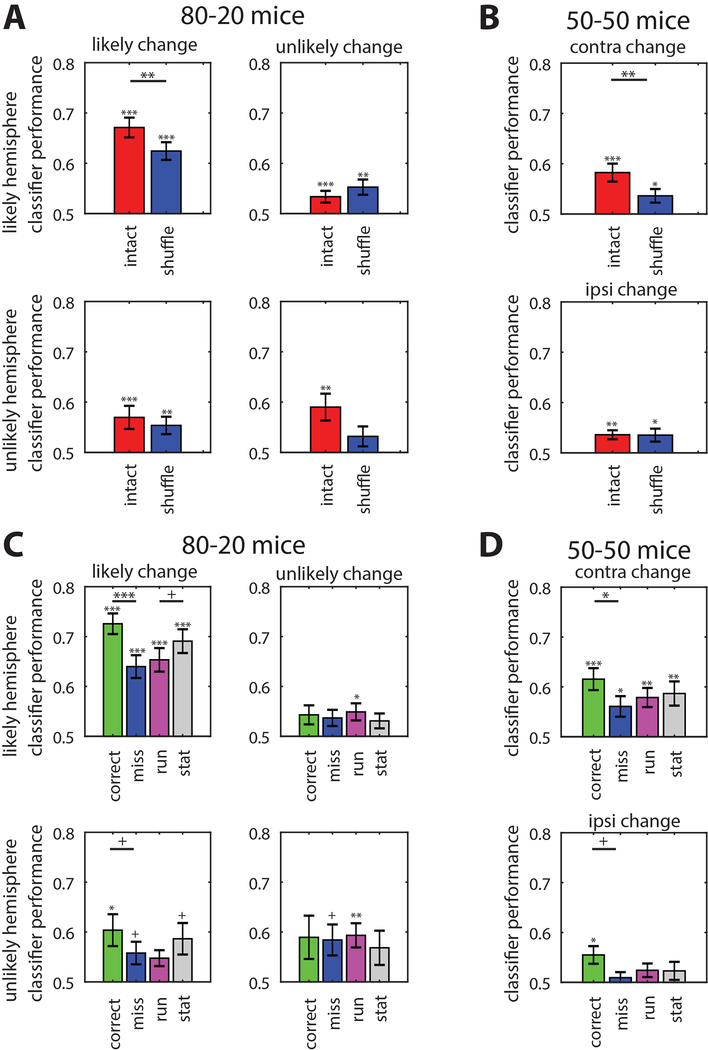
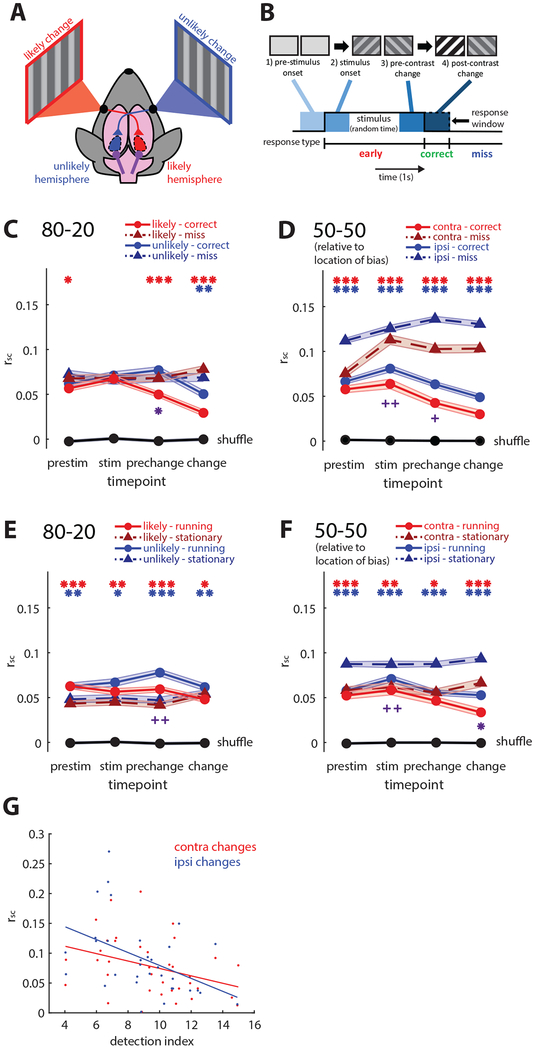
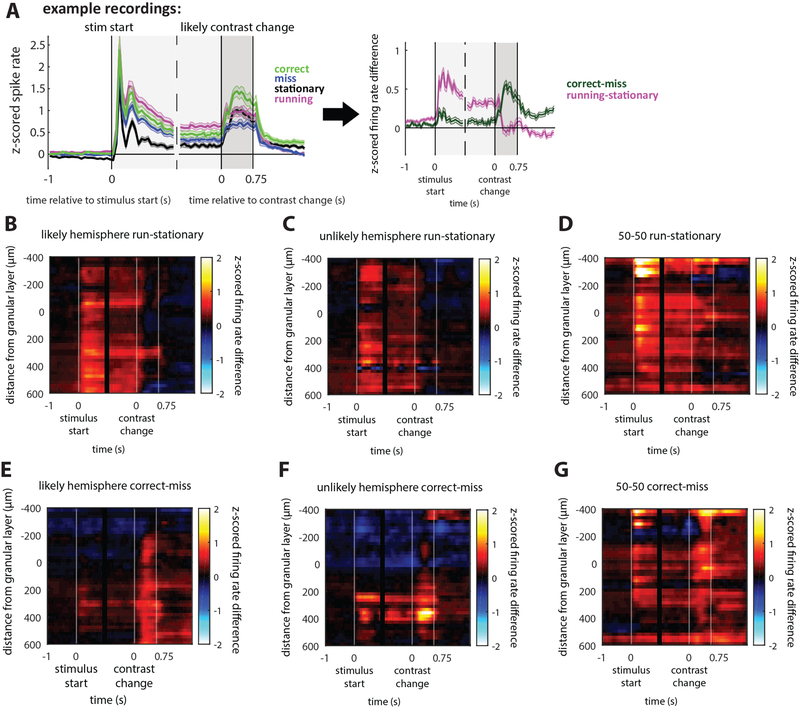
Sensory selection and movement locally and globally modulate neural responses in seemingly similar ways. For example, locomotion enhances visual responses in mouse primary visual cortex (V1), resembling the effects of spatial attention on primate visual cortical activity. However, interactions between these local and global mechanisms and the resulting effects on perceptual behavior remain largely unknown. Here, we describe a novel mouse visual spatial selection task in which animals either monitor one of two locations for a contrast change ("selective mice") or monitor both ("non-selective mice") and can run at will. Selective mice perform well only when their selected stimulus changes, giving rise to local electrophysiological changes in the corresponding hemisphere of V1 including decreased noise correlations and increased visual information. Non-selective mice perform well when either stimulus changes, giving rise to global changes across both hemispheres of V1. During locomotion, selective mice have worse behavioral performance, increased noise correlations in V1, and decreased visual information, while non-selective mice have decreased noise correlations in V1 but no change in performance or visual information. Our findings demonstrate that mice can locally or globally enhance visual information, but the interaction of the global effect of locomotion with local selection impairs behavioral performance. Moving forward, this mouse model will facilitate future studies of local and global sensory modulatory mechanisms and their effects on behavior.
感觉选择和运动以相似的方式局部和全局地调节神经反应。例如,运动增强了小鼠初级视觉皮层 (V1) 的视觉反应,类似于空间注意力对灵长类动物视觉皮层活动的影响。然而,这些局部和全局机制之间的相互作用以及对感知行为的影响在很大程度上仍然未知。在这里,我们描述了一种新颖的小鼠视觉空间选择任务,其中动物要么监视两个位置中的一个以等待对比度变化(“选择性小鼠”),要么同时监视两个位置(“非选择性小鼠”)并可以随意跑动。只有当它们选择的刺激发生变化时,选择性小鼠才能表现良好,这会导致 V1 相应半球的局部电生理变化,包括降低噪声相关性和增加视觉信息。非选择性小鼠在任一刺激发生变化时表现良好,这会导致 V1 的两个半球都发生全局变化。在运动过程中,选择性小鼠的行为表现更差,V1 中的噪声相关性增加,视觉信息减少,而非选择性小鼠的 V1 中的噪声相关性降低,但行为表现或视觉信息没有变化。我们的发现表明,小鼠可以局部或全局地增强视觉信息,但运动的全局效应与局部选择的相互作用会损害行为表现。展望未来,这种小鼠模型将有助于研究局部和全局感觉调制机制及其对行为的影响。