Division of Medical Zoology, Department of Infection and Immunity, Jichi Medical University, Tochigi, Japan.
Departamento de Parasitologia y Medicina Tropical, Facultad de Ciencias Medicas, Universidad Catolica de Santiago de Guayaquil, Guayaquil, Ecuador.
PLoS Negl Trop Dis. 2019 May 6;13(5):e0007403. doi: 10.1371/journal.pntd.0007403. eCollection 2019 May.
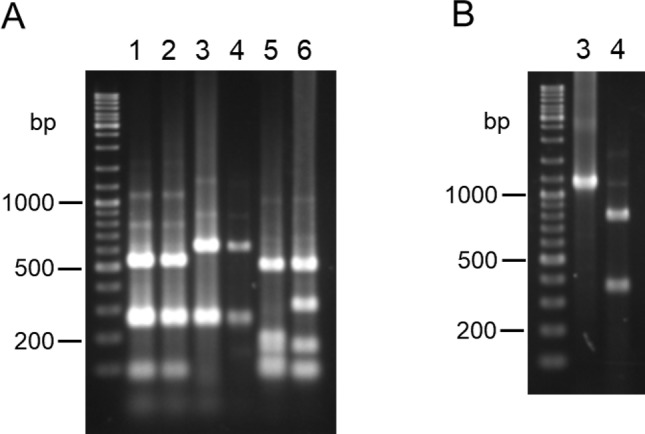
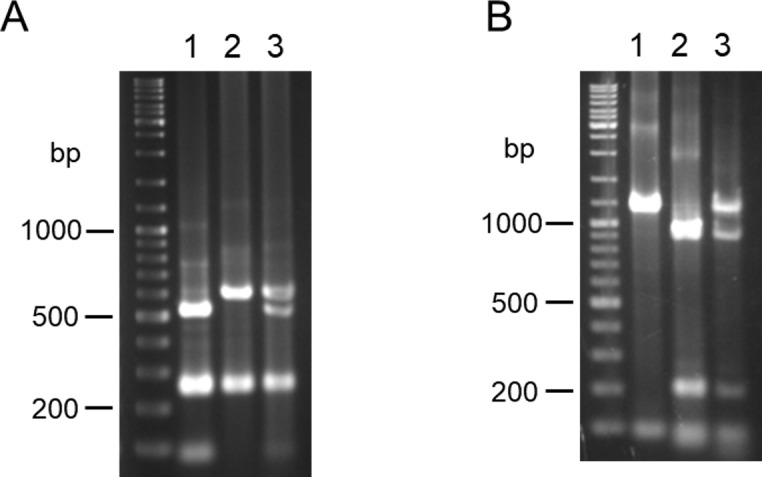
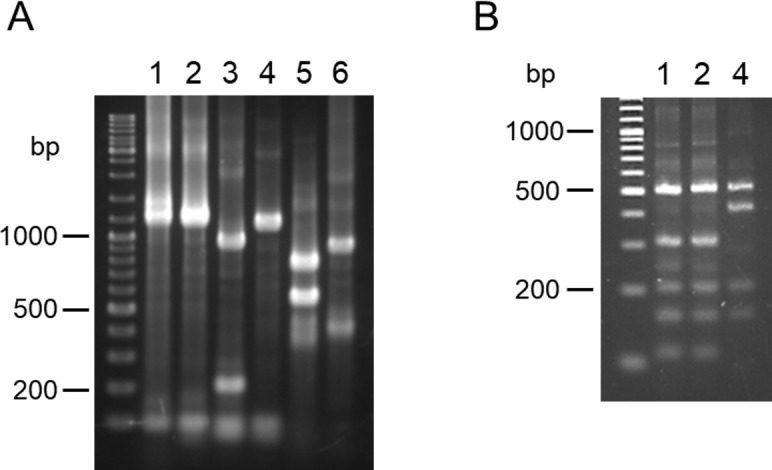
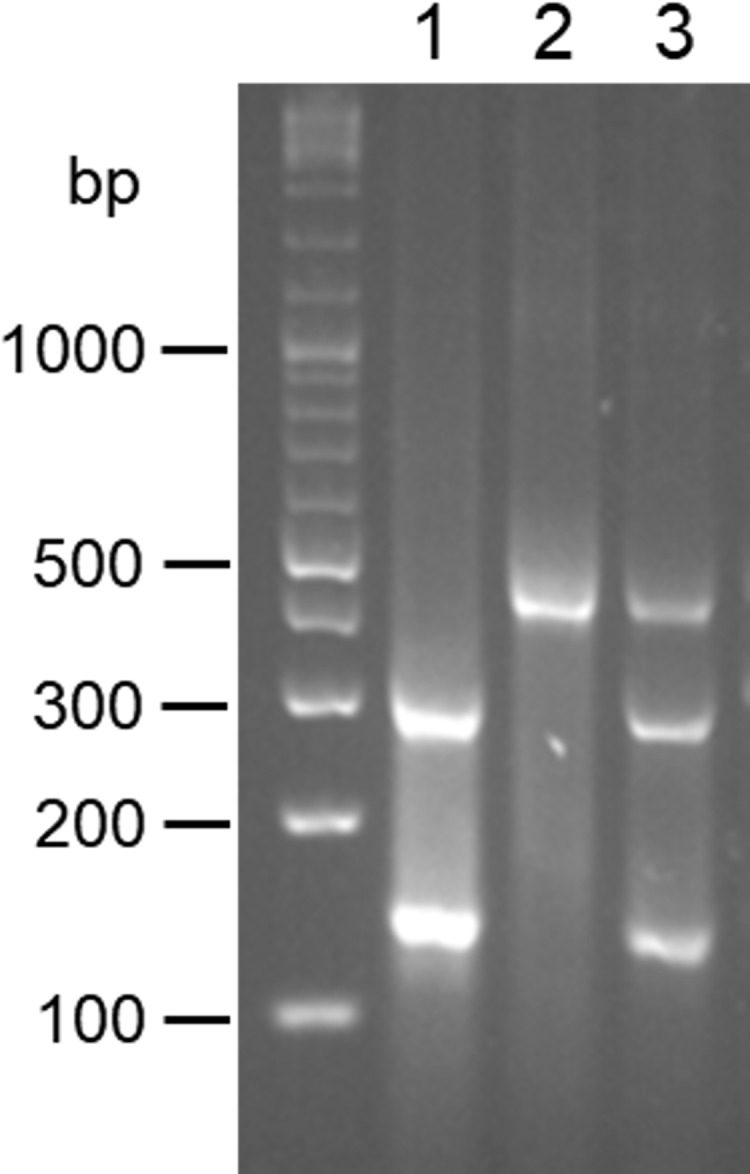
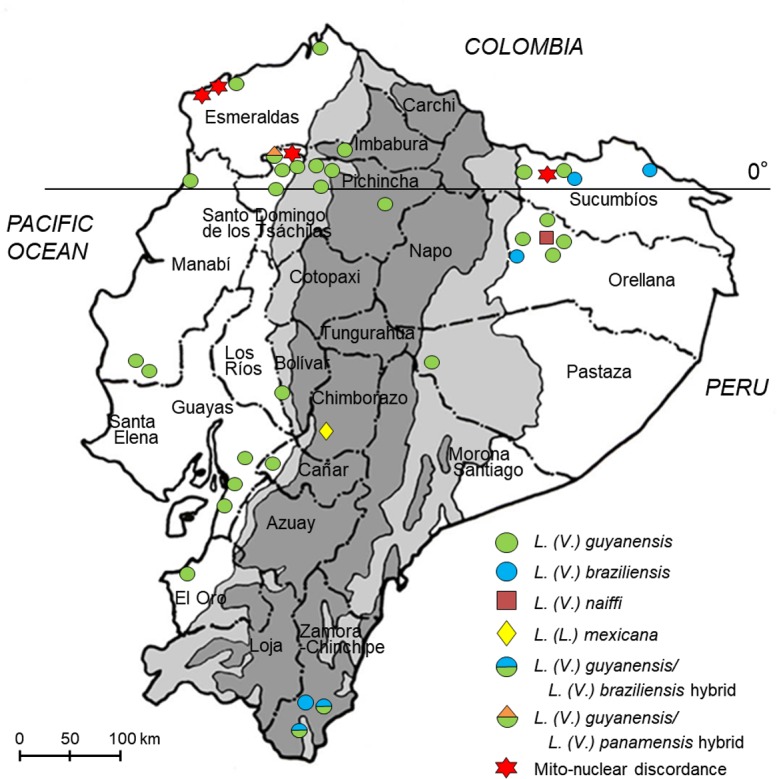
PCR-Restriction Fragment Length Polymorphism (RFLP) analyses targeting multiple nuclear genes were established for the simple and practical identification of Leishmania species without using expensive equipment. This method was applied to 92 clinical samples collected at 33 sites in 14 provinces of Ecuador, which have been identified at the species level by the kinetoplast cytochrome b (cyt b) gene sequence analysis, and the results obtained by the two analyses were compared. Although most results corresponded between the two analyses, PCR-RFLP analyses revealed distribution of hybrid strains between Leishmania (Viannia) guyanensis and L. (V.) braziliensis and between L. (V.) guyanensis and L. (V.) panamensis, of which the latter was firstly identified in Ecuador. Moreover, unexpected parasite strains having the kinetoplast cyt b gene of L. (V.) braziliensis and nuclear genes of L. (V.) guyanensis, L. (V.) panamensis, or a hybrid between L. (V.) guyanensis and L. (V.) panamensis were identified. This is the first report of the distribution of a protozoan parasite having mismatches between kinetoplast and nuclear genes, known as mito-nuclear discordance. The result demonstrated that genetically complex Leishmania strains are present in Ecuador. Since genetic exchanges such as hybrid formation were suggested to cause higher pathogenicity in Leishmania and may be transmitted by more species of sand flies, further country-wide epidemiological studies on clinical symptoms, as well as transmissible vectors, will be necessary.
聚合酶链反应-限制性片段长度多态性(RFLP)分析针对多个核基因,建立了无需昂贵设备即可简单实用地鉴定利什曼原虫种属的方法。该方法应用于在厄瓜多尔 14 个省的 33 个地点采集的 92 个临床样本,这些样本的种属已通过动基体细胞色素 b(cyt b)基因序列分析确定,并比较了两种分析方法的结果。虽然两种分析的大多数结果都相符,但 PCR-RFLP 分析揭示了 Leishmania(Viannia)guyanensis 和 L.(V.)braziliensis 以及 L.(V.)guyanensis 和 L.(V.)panamensis 之间的杂交株的分布,其中后者是在厄瓜多尔首次鉴定的。此外,还鉴定出了具有 L.(V.)braziliensis 动基体 cyt b 基因和 L.(V.)guyanensis、L.(V.)panamensis 或 L.(V.)guyanensis 和 L.(V.)panamensis 之间杂交核基因的意外寄生虫株。这是首次报道具有动基体和核基因不匹配的原生动物寄生虫的分布,称为线粒体-核不和谐。该结果表明,厄瓜多尔存在遗传复杂的利什曼原虫株。由于杂种形成等遗传交换被认为会导致利什曼原虫更高的致病性,并且可能通过更多种沙蝇传播,因此需要进一步对临床症状以及可传播的媒介进行全国范围的流行病学研究。