Winkler Laura Al-Dakhiel, Hemmingsen Simone Daugaard, Gudex Claire, Blegvad Anne-Cathrine, Støving René K, Arnfred Sidse Marie Hemmingsen
1Centre for Eating Disorders, Endocrine Elite Research Centre, Odense University Hospital, Child and Adolescent Psychiatry, Psychiatric Services in the Region of Southern Denmark, 5000 Odense C, Denmark.
2Department of Clinical Research, University of Southern Denmark, Odense, Denmark.
J Eat Disord. 2019 May 1;7:11. doi: 10.1186/s40337-019-0241-7. eCollection 2019.
In Denmark, only generic health-related quality of life measures have been developed to assess quality of life in patients with eating disorders. So far, no disease-specific questionnaires have been translated and validated. The objective of this study was to translate the Eating Disorders Quality of Life Scale into Danish and to perform a preliminary validation of the questionnaire in a small sample.
The translation process was conducted according to recommendations from the World Health Organization, using the WHO-5 Well-Being Index as a reference standard. The validation process included 41 outpatients with eating disorders. Patients were recruited from specialized outpatient clinics in the Capital Region of Denmark and asked to complete the quality of life questionnaire and the WHO-5 Well-Being Index.
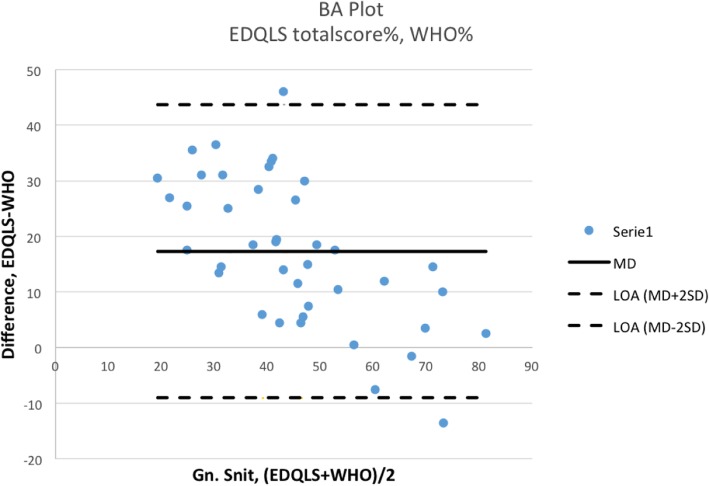
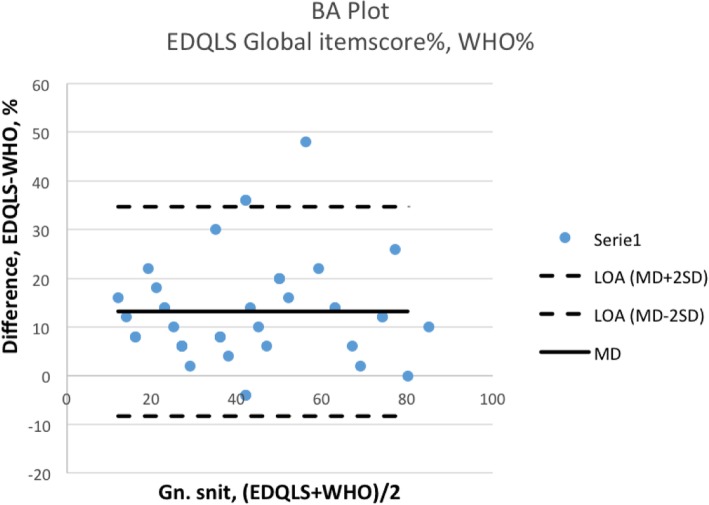
This study found poor agreement, but high correlation, between the two self-rating scales.
The translated questionnaire was concluded to be valid. However, a replication study on a larger sample with more male patients and more extensive symptoms is necessary.
在丹麦,仅开发了通用的与健康相关的生活质量测量方法来评估饮食失调患者的生活质量。到目前为止,尚无特定疾病的问卷被翻译并验证。本研究的目的是将《饮食失调生活质量量表》翻译成丹麦语,并在一个小样本中对该问卷进行初步验证。
翻译过程按照世界卫生组织的建议进行,以《WHO-5幸福指数》作为参考标准。验证过程包括41名饮食失调门诊患者。患者从丹麦首都地区的专门门诊招募,并被要求完成生活质量问卷和《WHO-5幸福指数》。
本研究发现两种自评量表之间一致性较差,但相关性较高。
翻译后的问卷被认为是有效的。然而,有必要对更大样本、更多男性患者和症状更广泛的样本进行重复研究。