Unidad de Diagnóstico Molecular y Celular del Cáncer, Centro de Investigación del Cáncer-IBMCC (USAL-CSIC), Salamanca, Spain.
IBSAL, Instituto de Investigación Biomédica de Salamanca, Salamanca, Spain.
PLoS One. 2019 May 9;14(5):e0216674. doi: 10.1371/journal.pone.0216674. eCollection 2019.
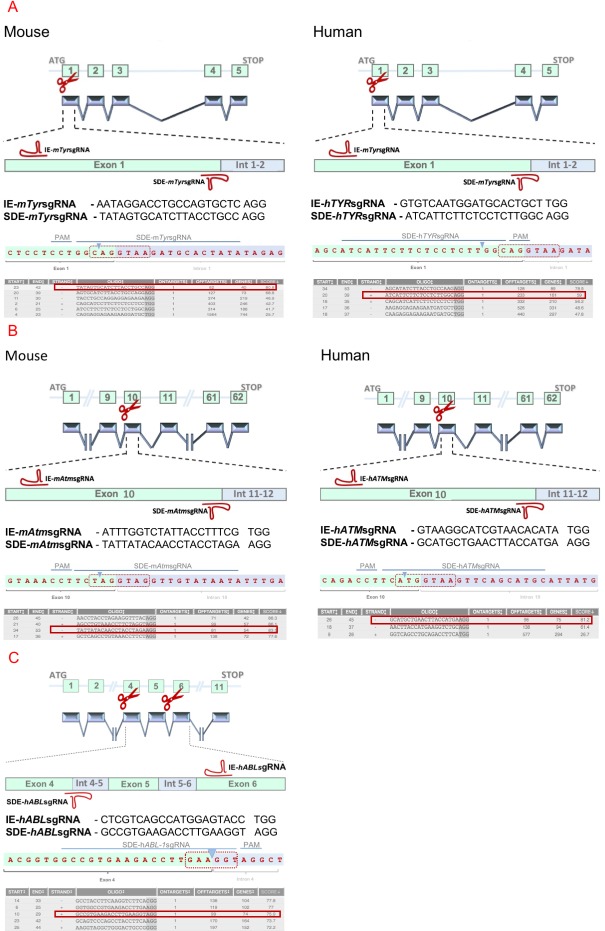
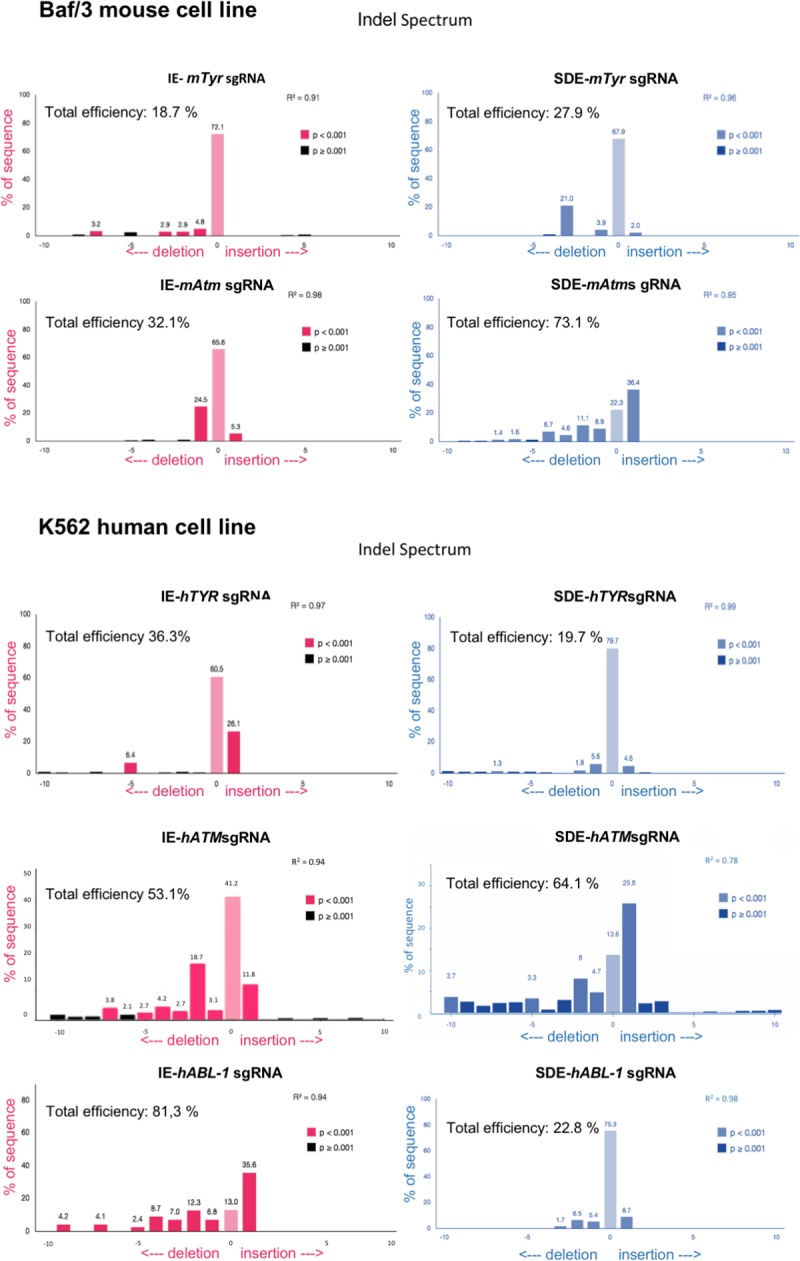
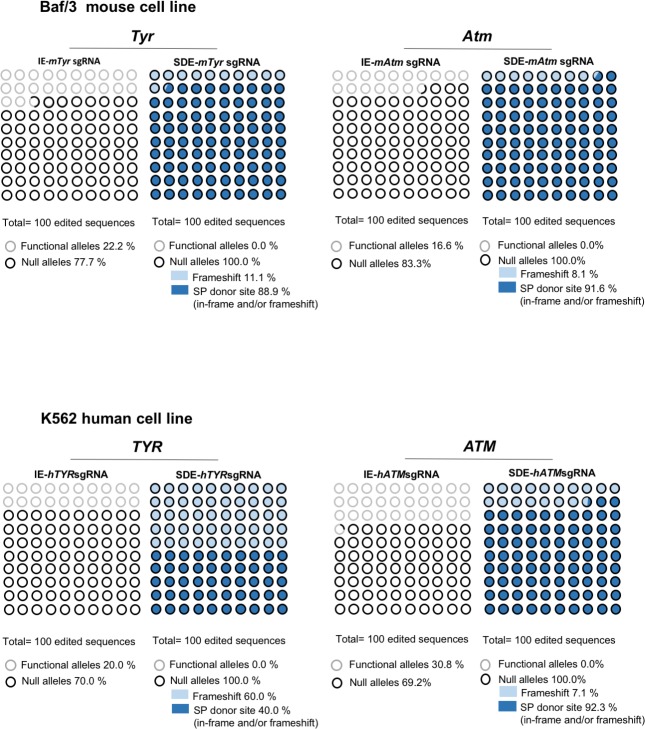
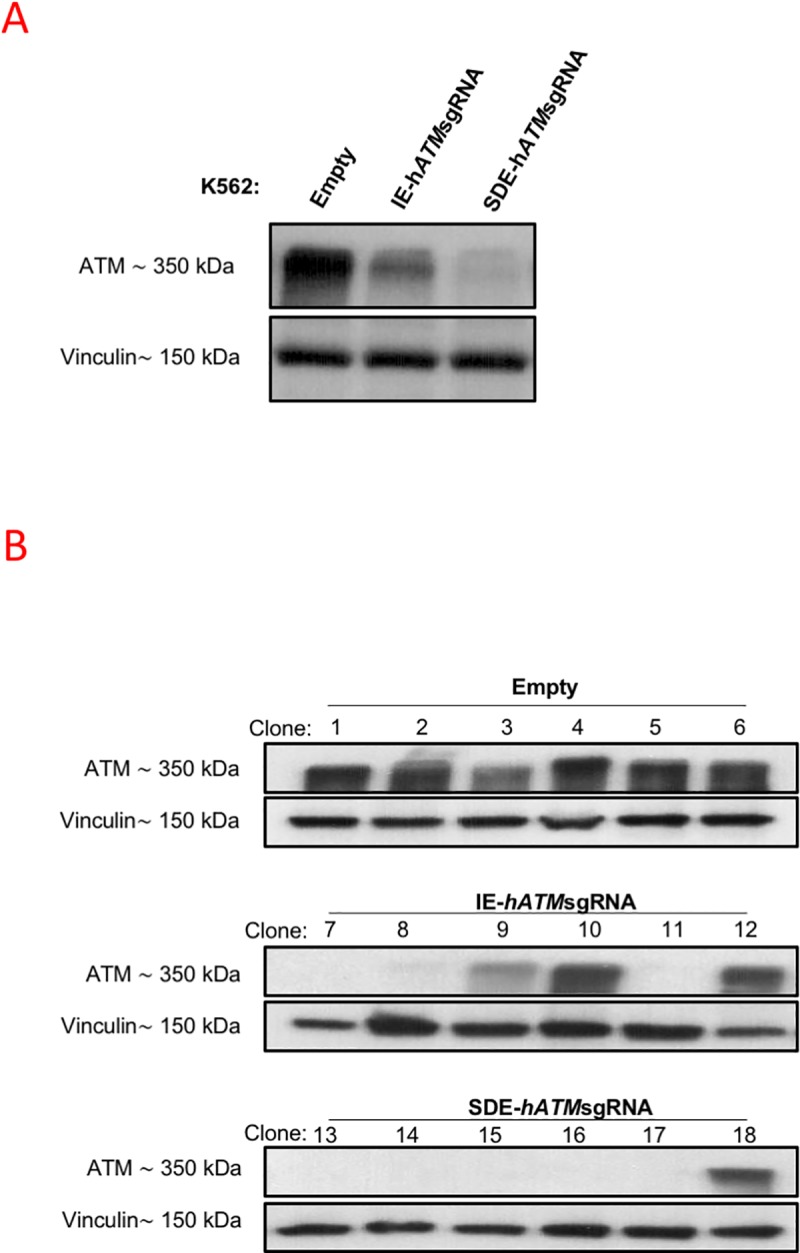
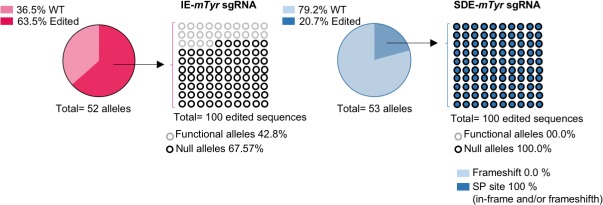
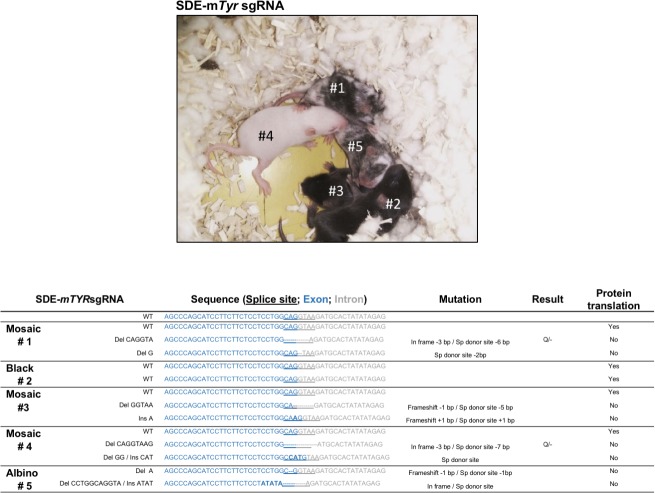
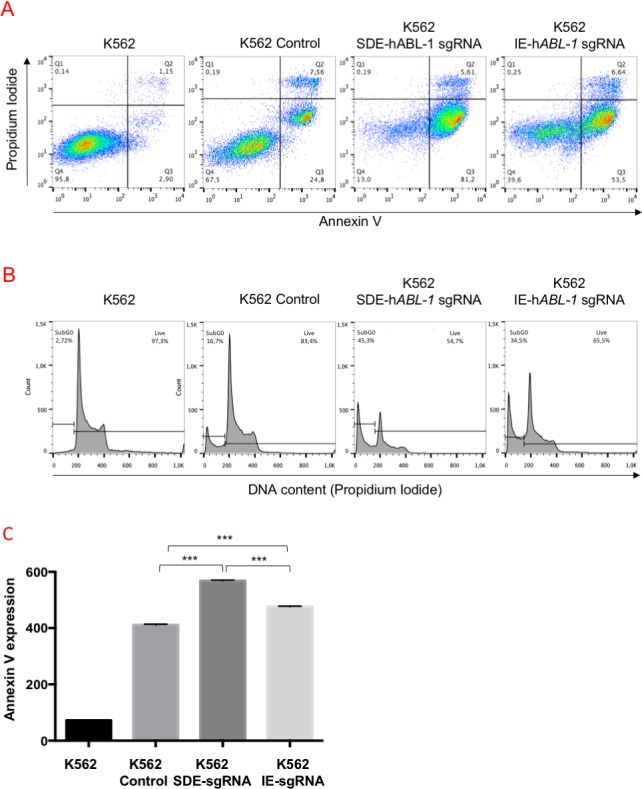
CRISPR/Cas9 allows the generation of knockout cell lines and null zygotes by inducing site-specific double-stranded breaks. In most cases the DSB is repaired by non-homologous end joining, resulting in small nucleotide insertions or deletions that can be used to construct knockout alleles. However, these mutations do not produce the desired null result in all cases, but instead generate a similar, functionally active protein. This effect could limit the therapeutic efficiency of gene therapy strategies based on abrogating oncogene expression, and therefore needs to be considered carefully. If there is an acceptable degree of efficiency of CRISPR/Cas9 delivery to cells, the key step for success lies in the effectiveness of a specific sgRNA at knocking out the oncogene, when only one sgRNA can be used. This study shows that the null effect could be increased with an sgRNA targeting the splice donor site (SDS) of the chosen exon. Following this strategy, the generation of null alleles would be facilitated in two independent ways: the probability of producing a frameshift mutation and the probability of interrupting the canonical mechanism of pre-mRNA splicing. In these contexts, we propose to improve the loss-of-function yield driving the CRISPR system at the SDS of critical exons.
CRISPR/Cas9 通过诱导特定的双链断裂来产生敲除细胞系和无核受精卵。在大多数情况下,DSB 通过非同源末端连接修复,导致可以用来构建敲除等位基因的小核苷酸插入或缺失。然而,这些突变并不能在所有情况下产生所需的缺失结果,而是产生类似的、功能活跃的蛋白质。这种效应可能会限制基于消除致癌基因表达的基因治疗策略的治疗效率,因此需要仔细考虑。如果有可接受的 CRISPR/Cas9 向细胞递送效率,那么成功的关键步骤在于当只能使用一个 sgRNA 时,特定 sgRNA 敲除致癌基因的有效性。本研究表明,通过针对所选外显子的剪接供体位点 (SDS) 的 sgRNA 可以增加缺失效应。通过这种策略,可以通过两种独立的方式促进缺失等位基因的产生:产生移码突变的概率和中断前体 mRNA 剪接的典型机制的概率。在这些情况下,我们建议在关键外显子的 SDS 处提高 CRISPR 系统的失活功能产量。