Sanders-Brown Center on Aging, University of Kentucky, 101 Sanders-Brown Bldg., 800 S. Limestone Street, Lexington, KY, 40536, USA.
Department of Neuroscience, University of Kentucky, Lexington, KY, USA.
J Neuroinflammation. 2019 May 10;16(1):98. doi: 10.1186/s12974-019-1493-5.
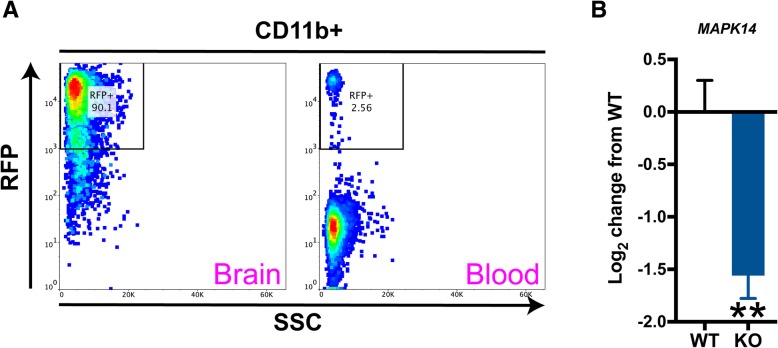
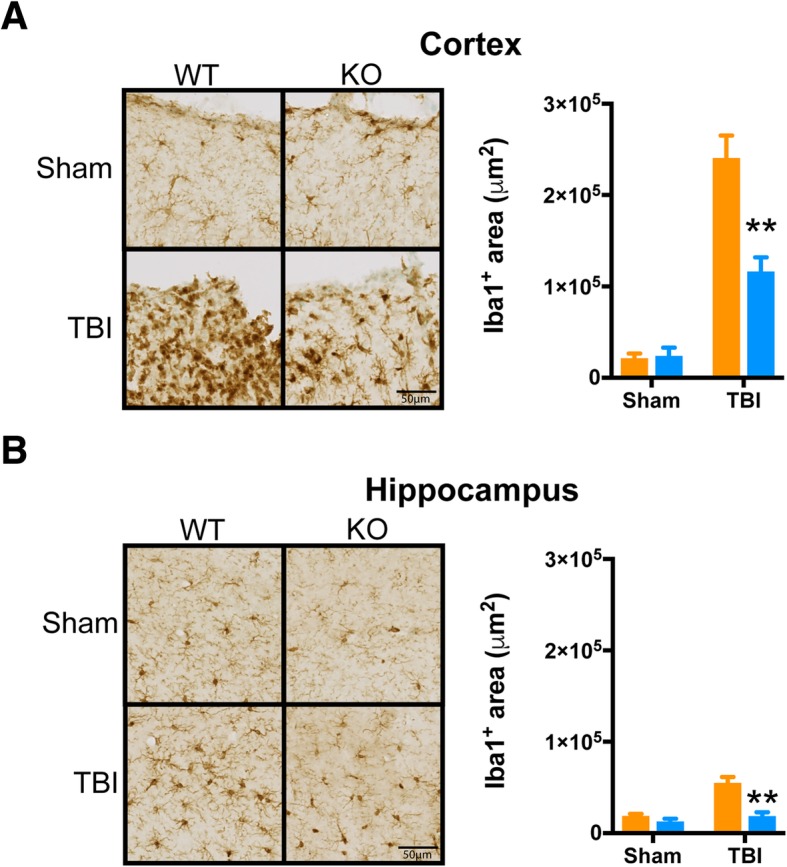
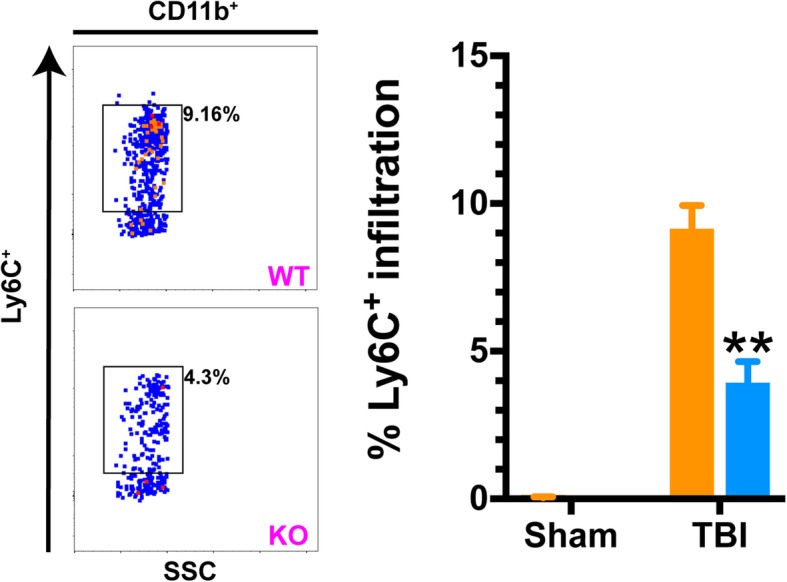
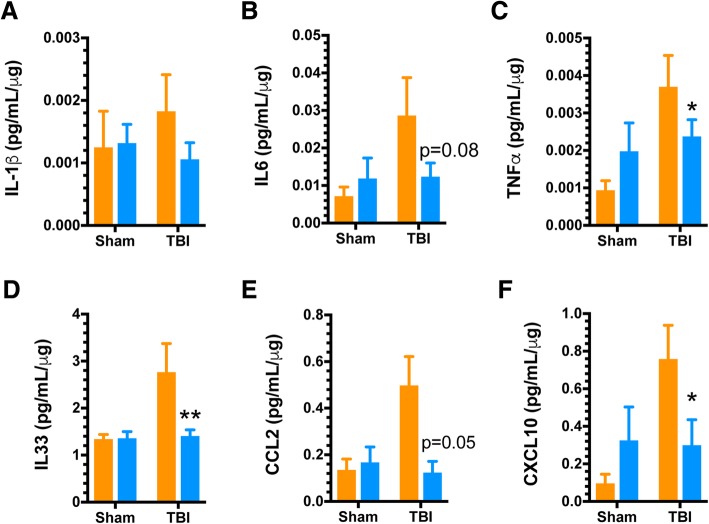
Traumatic brain injury (TBI) is a significant cause of morbidity and mortality in the USA and other developed countries worldwide. Following the initial mechanical insult, the brain's primary innate immune effector, microglia, initiate inflammatory signaling cascades and pathophysiological responses that can lead to chronic neuroinflammation and neurodegenerative sequelae. The p38α MAPK signaling pathway in microglia is a key contributor to inflammatory responses to diverse disease-relevant stressors and injury conditions. Therefore, we tested here whether microglia p38α contributes to acute and persistent inflammatory responses induced by a focal TBI. We generated conditional cell-specific knockout of p38α in microglia using a CX3CR1 Cre-lox system, subjected the p38α knockout and wild-type mice to a controlled cortical impact TBI, and measured inflammatory responses at acute (1-day) and subacute (7-day) post-injury time points. We found that deletion of p38α in microglia only was sufficient to attenuate multiple pro-inflammatory responses following TBI, notably reducing pro-inflammatory cytokine/chemokine production and recruitment of inflammatory monocytes into the brain and preventing the persistent microglial morphological activation. These data provide strong evidence supporting a role for microglial p38α in propagation of a chronic and potentially neurotoxic pro-inflammatory environment in the brain following TBI.
创伤性脑损伤(TBI)是美国和其他发达国家发病率和死亡率的重要原因。在初始机械损伤后,大脑的主要先天免疫效应细胞小胶质细胞启动炎症信号级联和病理生理反应,导致慢性神经炎症和神经退行性病变的后遗症。小胶质细胞中的 p38α MAPK 信号通路是对多种与疾病相关的应激源和损伤条件的炎症反应的关键贡献者。因此,我们在这里测试了小胶质细胞 p38α 是否有助于由局灶性 TBI 引起的急性和持续性炎症反应。我们使用 CX3CR1 Cre-lox 系统生成了小胶质细胞中 p38α 的条件性细胞特异性敲除,使 p38α 敲除和野生型小鼠经受控制性皮质撞击 TBI,并在急性(1 天)和亚急性(7 天)损伤后时间点测量炎症反应。我们发现,小胶质细胞中 p38α 的缺失足以减轻 TBI 后的多种促炎反应,特别是减少促炎细胞因子/趋化因子的产生以及炎症单核细胞向大脑的募集,并防止小胶质细胞形态的持续激活。这些数据为小胶质细胞 p38α 在 TBI 后大脑中慢性和潜在神经毒性促炎环境的传播中起作用提供了有力证据。