Govindpani Karan, McNamara Laura G, Smith Nicholas R, Vinnakota Chitra, Waldvogel Henry J, Faull Richard Lm, Kwakowsky Andrea
Centre for Brain Research, Department of Anatomy and Medical Imaging, Faculty of Medical and Health Sciences, University of Auckland, Auckland, New Zealand.
J Clin Med. 2019 May 10;8(5):651. doi: 10.3390/jcm8050651.
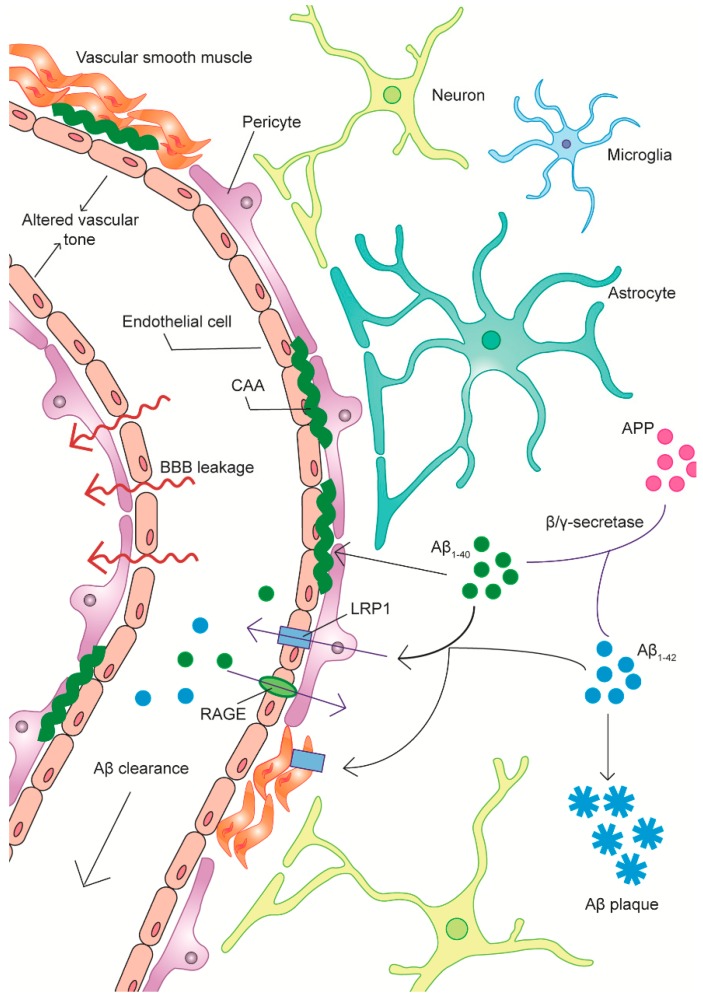
Alzheimer's disease (AD) is the most prevalent form of dementia. Despite decades of research following several theoretical and clinical lines, all existing treatments for the disorder are purely symptomatic. AD research has traditionally been focused on neuronal and glial dysfunction. Although there is a wealth of evidence pointing to a significant vascular component in the disease, this angle has been relatively poorly explored. In this review, we consider the various aspects of vascular dysfunction in AD, which has a significant impact on brain metabolism and homeostasis and the clearance of β-amyloid and other toxic metabolites. This may potentially precede the onset of the hallmark pathophysiological and cognitive symptoms of the disease. Pathological changes in vessel haemodynamics, angiogenesis, vascular cell function, vascular coverage, blood-brain barrier permeability and immune cell migration may be related to amyloid toxicity, oxidative stress and apolipoprotein E (APOE) genotype. These vascular deficits may in turn contribute to parenchymal amyloid deposition, neurotoxicity, glial activation and metabolic dysfunction in multiple cell types. A vicious feedback cycle ensues, with progressively worsening neuronal and vascular pathology through the course of the disease. Thus, a better appreciation for the importance of vascular dysfunction in AD may open new avenues for research and therapy.
阿尔茨海默病(AD)是最常见的痴呆形式。尽管沿着几条理论和临床路线进行了数十年的研究,但针对该疾病的所有现有治疗方法都只是对症治疗。传统上,AD研究主要集中在神经元和胶质细胞功能障碍上。尽管有大量证据表明该疾病存在显著的血管成分,但这一角度的研究相对较少。在本综述中,我们考虑了AD中血管功能障碍的各个方面,其对脑代谢、内环境稳态以及β-淀粉样蛋白和其他有毒代谢产物的清除有重大影响。这可能在该疾病标志性的病理生理和认知症状出现之前就已发生。血管血流动力学、血管生成、血管细胞功能、血管覆盖、血脑屏障通透性和免疫细胞迁移的病理变化可能与淀粉样蛋白毒性、氧化应激和载脂蛋白E(APOE)基因型有关。这些血管缺陷可能反过来导致多种细胞类型的实质淀粉样蛋白沉积、神经毒性、胶质细胞活化和代谢功能障碍。随之而来的是一个恶性循环,在疾病过程中神经元和血管病理状况逐渐恶化。因此,更好地认识血管功能障碍在AD中的重要性可能为研究和治疗开辟新的途径。