Eells Janis T
Department of Biomedical Sciences, University of Wisconsin-Milwaukee, Milwaukee, WI 53211, USA.
Biology (Basel). 2019 May 11;8(2):31. doi: 10.3390/biology8020031.
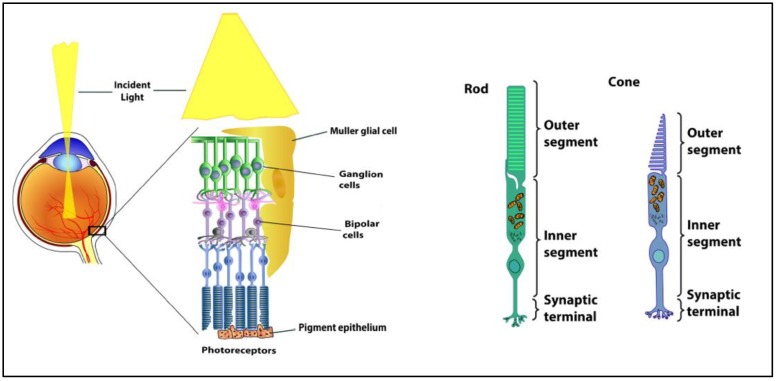
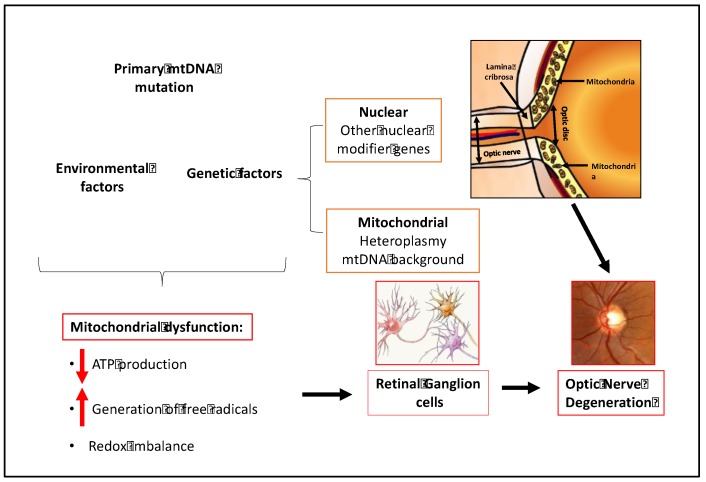
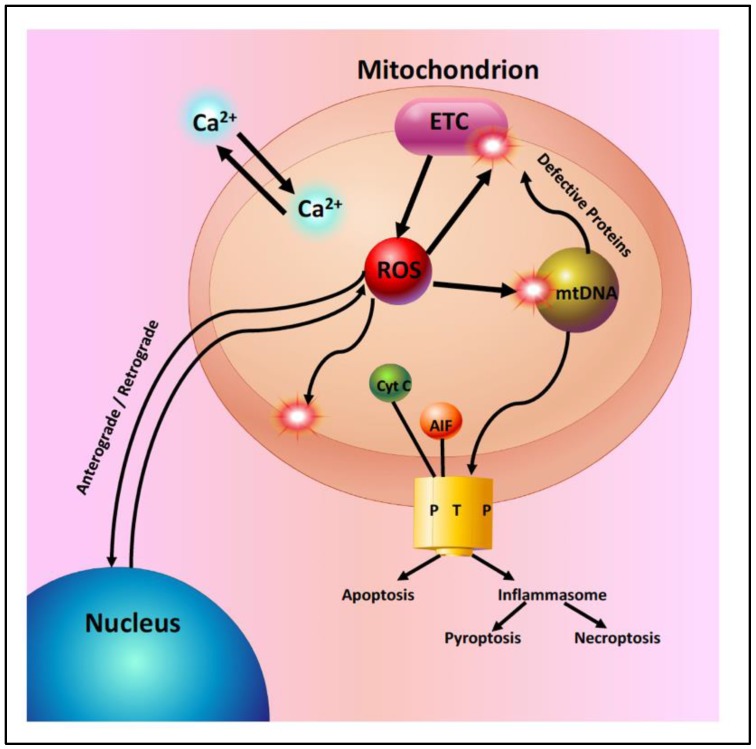
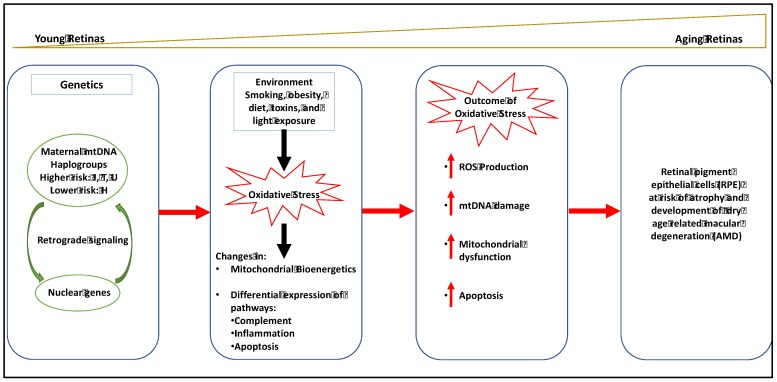
Mitochondria are central in retinal cell function and survival and they perform functions that are critical to cell function. Retinal neurons have high energy requirements, since large amounts of ATP are needed to generate membrane potentials and power membrane pumps. Mitochondria over the course of aging undergo a number of changes. Aged mitochondria exhibit decreased rates of oxidative phosphorylation, increased reactive oxygen species (ROS) generation and increased numbers of mtDNA mutations. Mitochondria in the neural retina and the retinal pigment epithelium are particularly susceptible to oxidative damage with aging. Many age-related retinal diseases, including glaucoma and age-related macular degeneration, have been associated with mitochondrial dysfunction. Therefore, mitochondria are a promising therapeutic target for the treatment of retinal disease.
线粒体在视网膜细胞功能和存活中起着核心作用,它们执行对细胞功能至关重要的功能。视网膜神经元对能量的需求很高,因为产生膜电位和驱动膜泵需要大量的三磷酸腺苷(ATP)。在衰老过程中,线粒体经历了许多变化。衰老的线粒体氧化磷酸化速率降低,活性氧(ROS)生成增加,线粒体DNA(mtDNA)突变数量增加。神经视网膜和视网膜色素上皮中的线粒体随着衰老特别容易受到氧化损伤。许多与年龄相关的视网膜疾病,包括青光眼和年龄相关性黄斑变性,都与线粒体功能障碍有关。因此,线粒体是治疗视网膜疾病的一个有前景的治疗靶点。