School of Health Sciences, University of East Anglia, Norwich Research Park, Norwich, United Kingdom.
School of Health and Related Research, University of Sheffield, Sheffield, United Kingdom.
PLoS One. 2019 May 14;14(5):e0215953. doi: 10.1371/journal.pone.0215953. eCollection 2019.
Patient and public involvement (PPI) is a requirement for UK health and social care research funding. Evidence for how best to implement PPI in research programmes, such as National Institute for Health Research (NIHR) Collaborations for Applied Health Research and Care (CLAHRCs), remains limited. This paper reports findings from an action research (AR) project called IMPRESS, which aims to strengthen PPI within CLAHRC East of England (EoE). IMPRESS combines AR with Normalisation Process Theory (NPT) to explore PPI within diverse case study projects, identifying actions to implement, test and refine to further embed PPI.
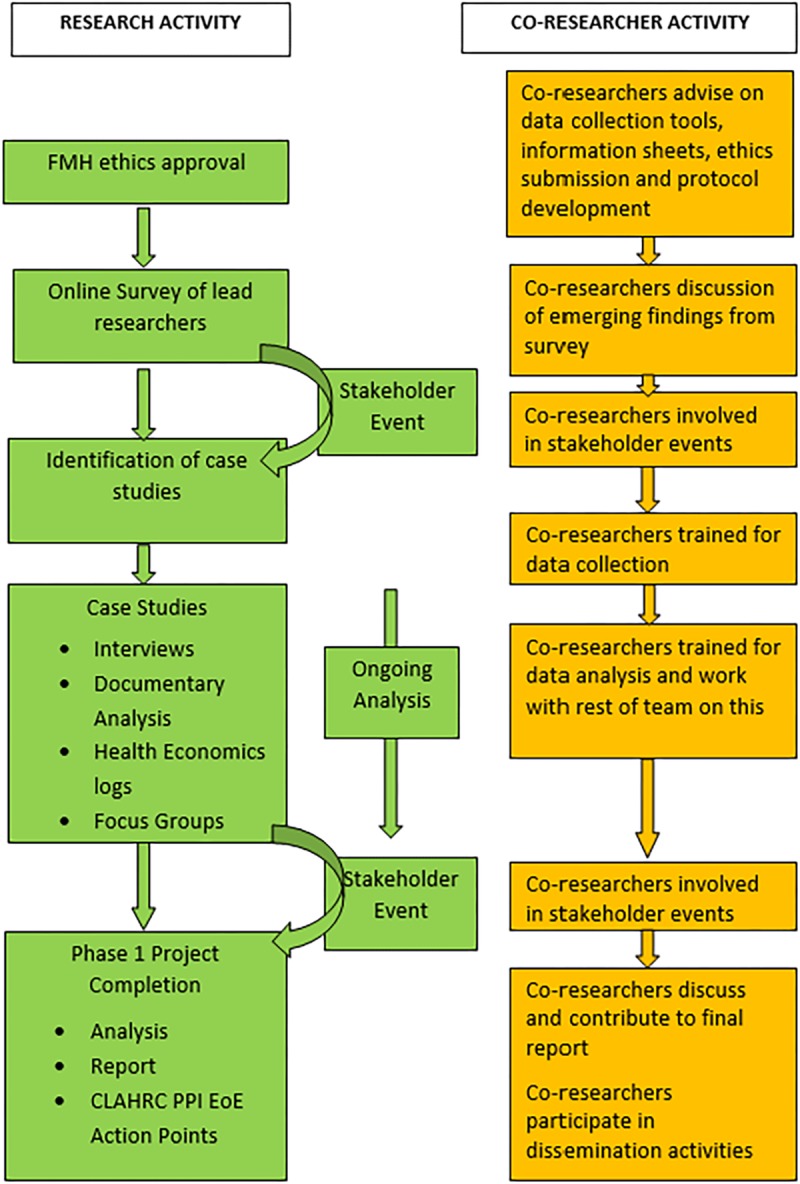
We purposively selected CLAHRC EoE case study projects for in-depth analysis of PPI using NPT. Data were generated from project PPI documentation, semi-structured qualitative interviews with researchers and PPI contributors and focus groups. Transcripts and documents were subjected to abductive thematic analysis and triangulation within case. Systematic across case comparison of themes was undertaken with findings and implications refined through stakeholder consultation.
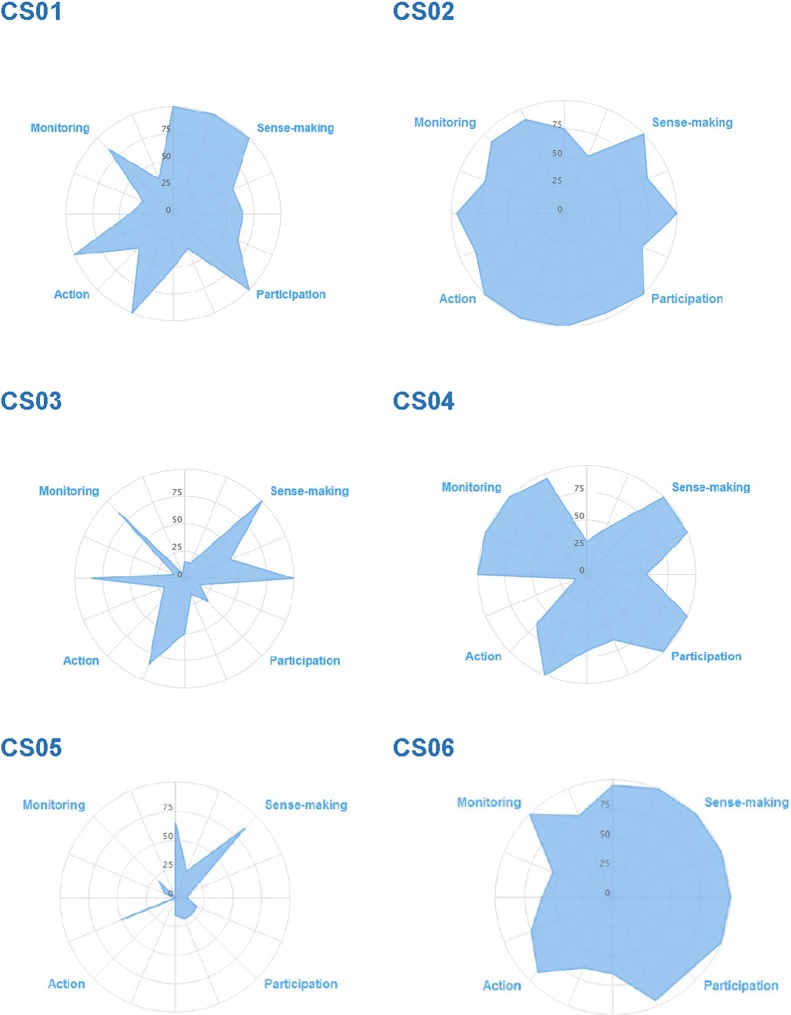
We interviewed 24 researchers and 13 PPI contributors and analysed 28 documents from 10 case studies. Three focus groups were held: two with researchers (n = 4 and n = 6) and one with PPI contributors (n = 5). Findings detail to what extent projects made sense of PPI, bought in to PPI, operationalised PPI and appraised it, thus identifying barriers and enablers to fully embedded PPI.
Combining NPT with AR allows us to assess the embeddedness of PPI within projects and programme, to inform specific local action and report broader conceptual lessons for PPI knowledge and practice informing the development of an action framework for embedding PPI in research programmes. To embed PPI within similar programmes teams, professionals, disciplines and institutions should be recognised as variably networked into existing PPI support. Further focus and research is needed on sharing PPI learning and supporting innovation in PPI.
患者和公众参与(PPI)是英国卫生和社会保健研究资金的要求。关于如何在研究计划中最好地实施 PPI 的证据,例如国家健康研究所(NIHR)应用健康研究和护理合作组织(CLAHRCs),仍然有限。本文报告了一个名为 IMPRESS 的行动研究(AR)项目的结果,该项目旨在加强英格兰东部 CLAHRC 内的 PPI。IMPRESS 将 AR 与正常化过程理论(NPT)相结合,通过对不同案例研究项目中的 PPI 进行深入分析,确定实施、测试和完善的行动,以进一步嵌入 PPI。
我们选择了 CLAHRC EoE 案例研究项目,使用 NPT 对 PPI 进行深入分析。数据来自项目 PPI 文档、对研究人员和 PPI 贡献者的半结构化定性访谈以及焦点小组。对转录本和文件进行了归纳主题分析,并在案例内进行了三角分析。通过利益相关者咨询,对主题进行了系统的跨案例比较,并对发现和影响进行了细化。
我们采访了 24 名研究人员和 13 名 PPI 贡献者,并分析了 10 个案例研究中的 28 份文件。举行了三次焦点小组会议:两次与研究人员(n=4 和 n=6)和一次与 PPI 贡献者(n=5)。研究结果详细说明了项目在多大程度上理解了 PPI,接受了 PPI,实施了 PPI 并对其进行了评估,从而确定了充分嵌入 PPI 的障碍和促进因素。
将 NPT 与 AR 相结合,使我们能够评估 PPI 在项目和计划中的嵌入程度,为特定的本地行动提供信息,并报告更广泛的概念性经验教训,为嵌入 PPI 以促进研究计划的知识和实践发展提供行动框架。为了在类似的计划中嵌入 PPI,团队、专业人员、学科和机构应该被视为不同程度地与现有的 PPI 支持相联系。需要进一步关注和研究共享 PPI 学习和支持 PPI 创新。