Schouten Laura R, van Kaam Anton H, Kohse Franziska, Veltkamp Floor, Bos Lieuwe D, de Beer Friso M, van Hooijdonk Roosmarijn T, Horn Janneke, Straat Marleen, Witteveen Esther, Glas Gerie J, Wieske Luuk, van Vught Lonneke A, Wiewel Maryse A, Ingelse Sarah A, Cortjens Bart, van Woensel Job B, Bos Albert P, Walther Thomas, Schultz Marcus J, Wösten-van Asperen Roelie M
Department of Pediatric Intensive Care, Amsterdam University Medical Centers, Amsterdam, The Netherlands.
Department of Intensive Care, Amsterdam University Medical Centers, Amsterdam, The Netherlands.
Ann Intensive Care. 2019 May 14;9(1):55. doi: 10.1186/s13613-019-0529-4.
Results from preclinical studies suggest that age-dependent differences in host defense and the pulmonary renin-angiotensin system (RAS) are responsible for observed differences in epidemiology of acute respiratory distress syndrome (ARDS) between children and adults. The present study compares biomarkers of host defense and RAS in bronchoalveolar lavage (BAL) fluid from neonates, children, adults, and older adults with ARDS.
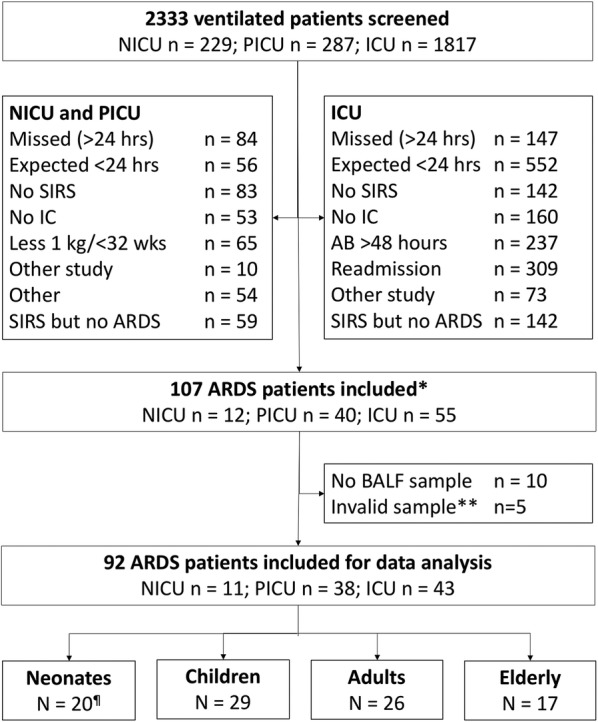
In this prospective observational study, we enrolled mechanical ventilated ARDS patients categorized into four age groups: 20 neonates (< 28 days corrected postnatal age), 29 children (28 days-18 years), 26 adults (18-65 years), and 17 older adults (> 65 years of age). All patients underwent a nondirected BAL within 72 h after intubation. Activities of the two main enzymes of RAS, angiotensin converting enzyme (ACE) and ACE2, and levels of biomarkers of inflammation, endothelial activation, and epithelial damage were determined in BAL fluid.
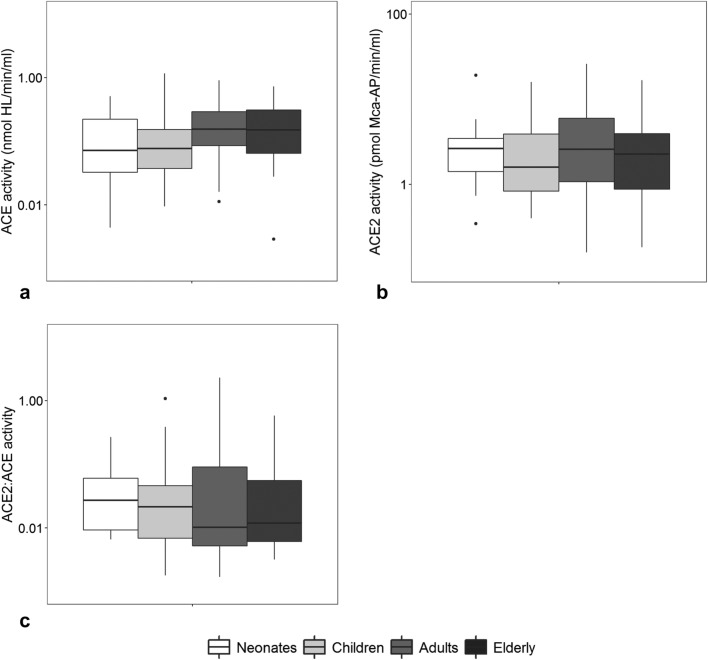
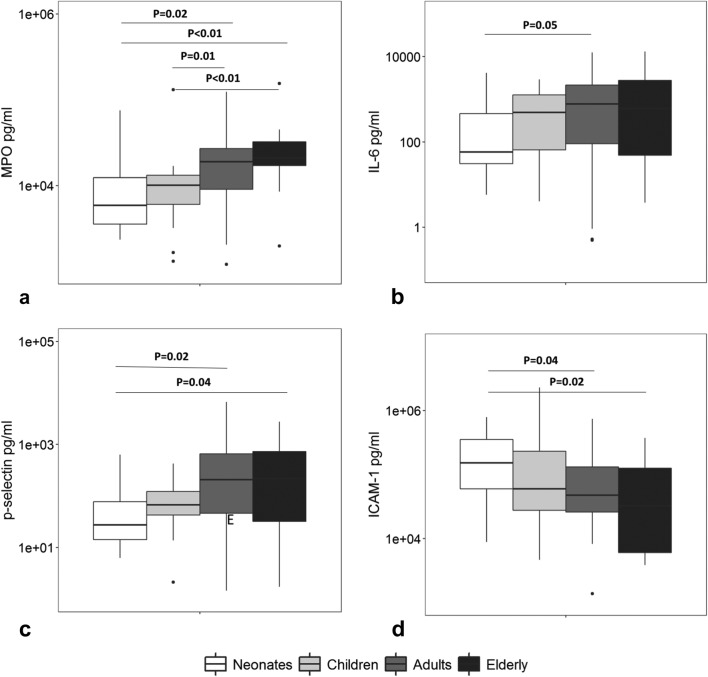
Levels of myeloperoxidase, interleukin (IL)-6, IL-10, and p-selectin were higher with increasing age, whereas intercellular adhesion molecule-1 was higher in neonates. No differences in activity of ACE and ACE2 were seen between the four age groups.
Age-dependent differences in the levels of biomarkers in lungs of ARDS patients are present. Especially, higher levels of markers involved in the neutrophil response were found with increasing age. In contrast to preclinical studies, age is not associated with changes in the pulmonary RAS.
临床前研究结果表明,宿主防御及肺肾素-血管紧张素系统(RAS)中与年龄相关的差异是儿童和成人急性呼吸窘迫综合征(ARDS)流行病学观察到的差异的原因。本研究比较了患有ARDS的新生儿、儿童、成人和老年人支气管肺泡灌洗(BAL)液中宿主防御和RAS的生物标志物。
在这项前瞻性观察研究中,我们纳入了机械通气的ARDS患者,分为四个年龄组:20例新生儿(出生后校正年龄<28天),29例儿童(28天至18岁),26例成人(18至65岁),以及17例老年人(>65岁)。所有患者在插管后72小时内接受了非定向BAL。测定了BAL液中RAS的两种主要酶血管紧张素转换酶(ACE)和ACE2的活性,以及炎症、内皮激活和上皮损伤的生物标志物水平。
髓过氧化物酶、白细胞介素(IL)-6、IL-10和p-选择素的水平随年龄增长而升高,而细胞间黏附分子-1在新生儿中较高。四个年龄组之间ACE和ACE2的活性未见差异。
ARDS患者肺部生物标志物水平存在年龄依赖性差异。特别是,随着年龄的增长,参与中性粒细胞反应的标志物水平升高。与临床前研究不同,年龄与肺RAS的变化无关。