Lutz Holly L, Ramírez-Puebla S Tabita, Abbo Lisa, Durand Amber, Schlundt Cathleen, Gottel Neil R, Sjaarda Alexandra K, Hanlon Roger T, Gilbert Jack A, Mark Welch Jessica L
Department of Pediatrics, University of California-San Diego, La Jolla, California, USA.
Scripps Institution for Oceanography, University of California-San Diego, La Jolla, California, USA.
mSystems. 2019 May 14;4(4). doi: 10.1128/mSystems.00177-19. eCollection 2019 Jul-Aug.
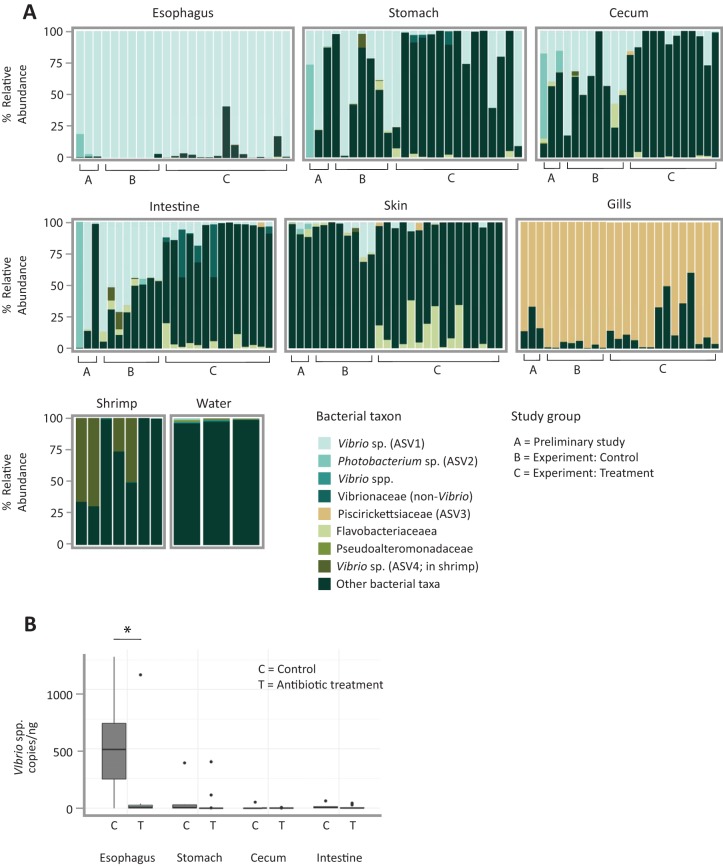
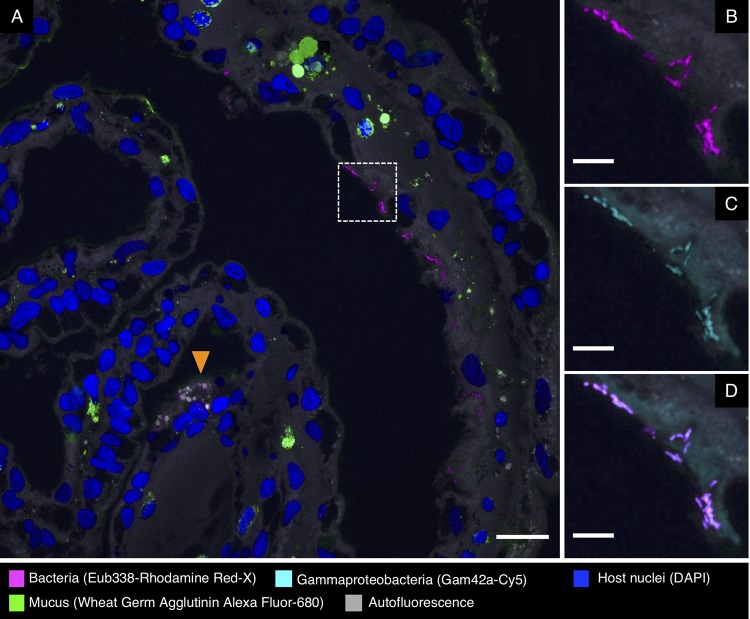
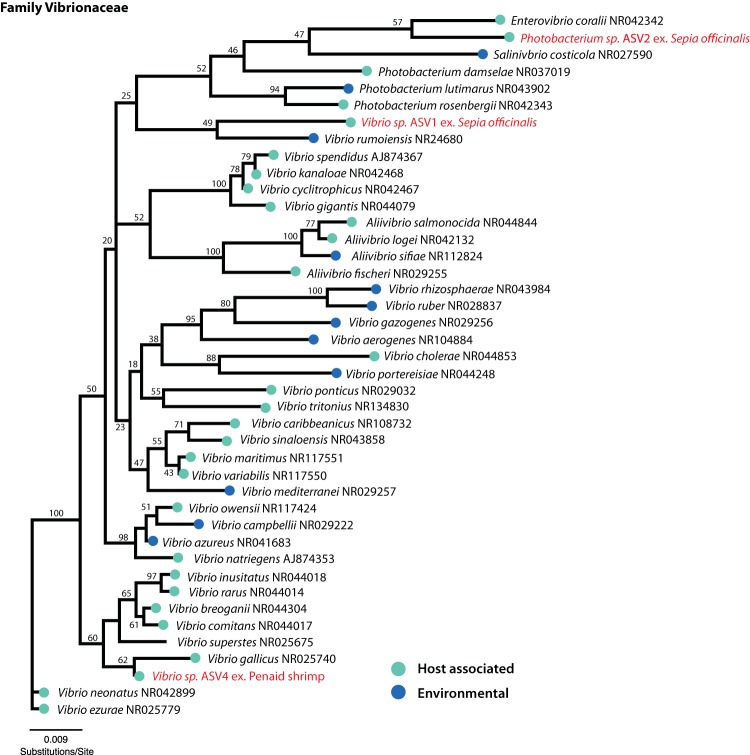
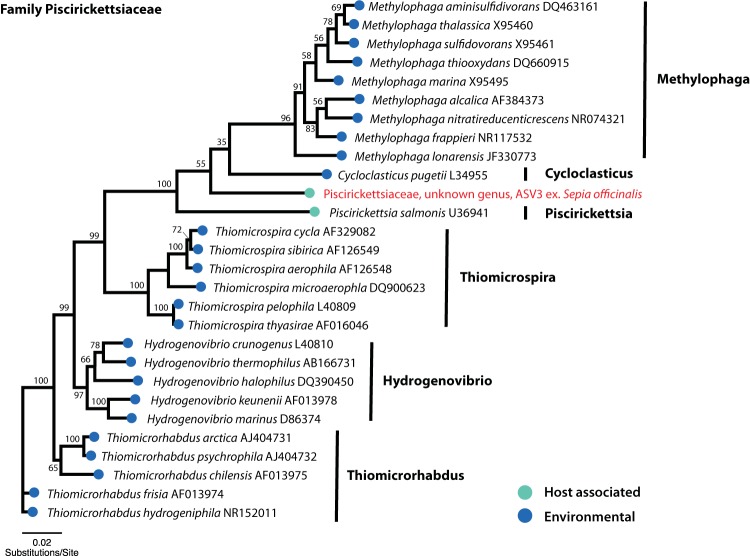
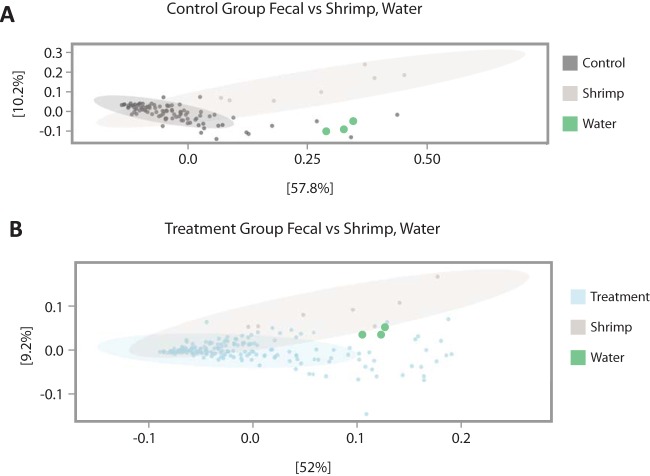
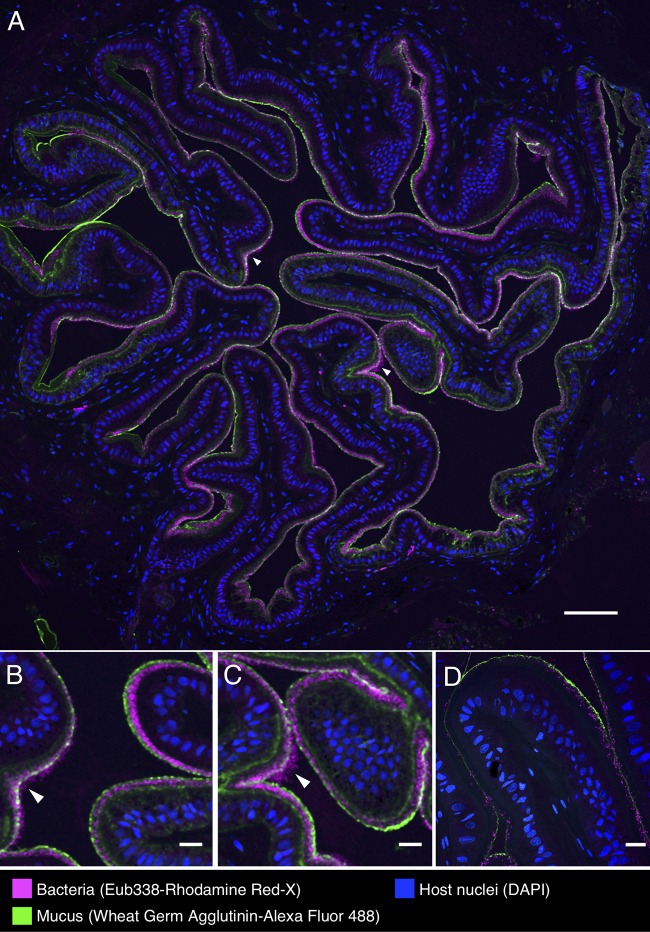
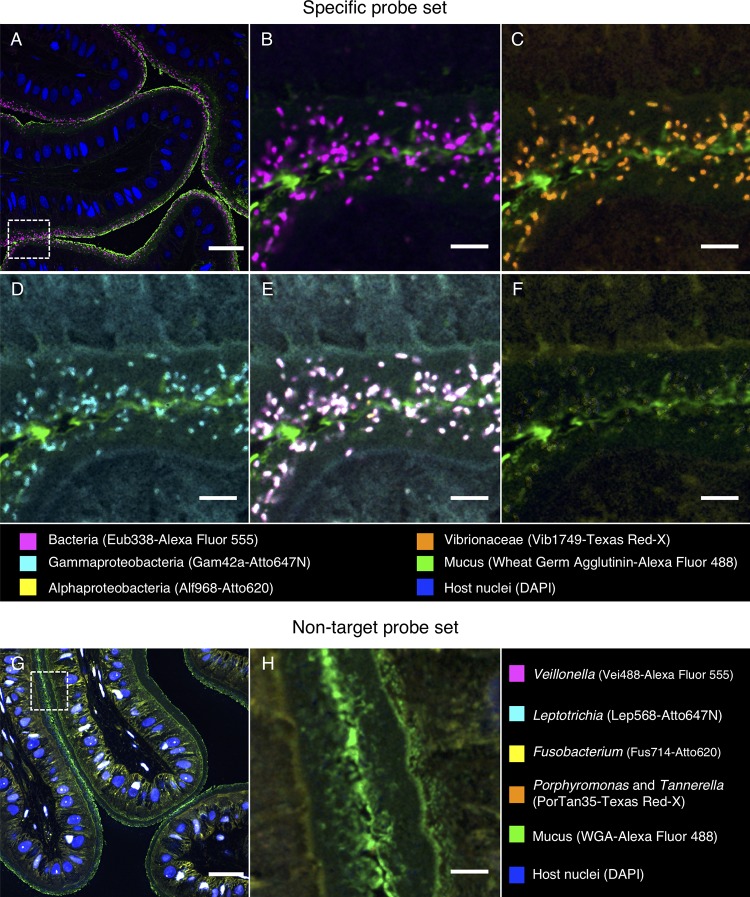
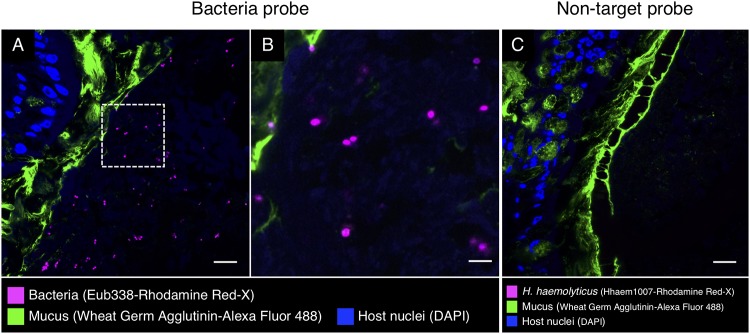
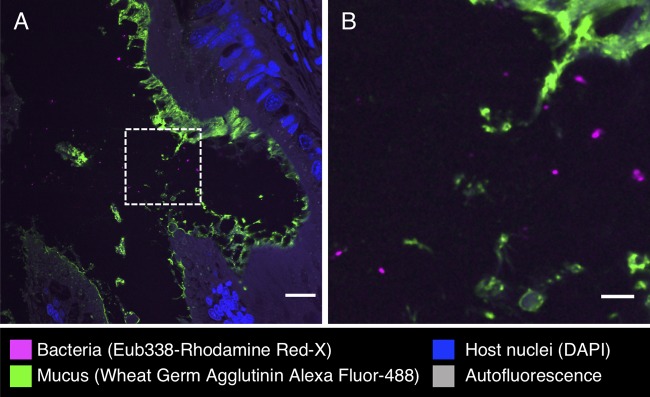
The European common cuttlefish, Sepia officinalis, is used extensively in biological and biomedical research, yet its microbiome remains poorly characterized. We analyzed the microbiota of the digestive tract, gills, and skin in mariculture-raised using a combination of 16S rRNA amplicon sequencing, quantitative PCR (qPCR), and fluorescence spectral imaging. Sequencing revealed a highly simplified microbiota consisting largely of two single bacterial amplicon sequence variants (ASVs) of and . The esophagus was dominated by a single ASV of the genus . Imaging revealed bacteria in the family distributed in a discrete layer that lines the esophagus. This was also the primary ASV found in the microbiota of the stomach, cecum, and intestine, but occurred at lower abundance, as determined by qPCR, and was found only scattered in the lumen rather than in a discrete layer via imaging analysis. Treatment of animals with the commonly used antibiotic enrofloxacin led to a nearly 80% reduction of the dominant ASV in the esophagus but did not significantly alter the relative abundance of bacteria overall between treated versus control animals. Data from the gills were dominated by a single ASV in the family , which imaging visualized as small clusters of cells. We conclude that bacteria belonging to the are the major symbionts of the cuttlefish cultured from eggs in captivity and that the esophagus and gills are major colonization sites. Microbes can play critical roles in the physiology of their animal hosts, as evidenced in cephalopods by the role of () in the light organ of the bobtail squid and the role of - and in the reproductive system and egg defense in a variety of cephalopods. We sampled the cuttlefish microbiome throughout the digestive tract, gills, and skin and found dense colonization of an unexpected site, the esophagus, by a microbe of the genus , as well as colonization of gills by . This finding expands the range of organisms and body sites known to be associated with and is of potential significance for understanding host-symbiont associations, as well as for understanding and maintaining the health of cephalopods in mariculture.
欧洲普通乌贼(Sepia officinalis)在生物学和生物医学研究中被广泛使用,但其微生物群仍未得到充分表征。我们结合16S rRNA扩增子测序、定量PCR(qPCR)和荧光光谱成像技术,分析了海水养殖的欧洲普通乌贼消化道、鳃和皮肤的微生物群。测序结果显示,其微生物群高度简化,主要由两种单一细菌扩增子序列变体(ASV)组成,分别为 和 。食管中以单一属的ASV为主。成像显示, 科细菌分布在食管内衬的离散层中。这也是在胃、盲肠和肠道微生物群中发现的主要ASV,但通过qPCR测定其丰度较低,且通过成像分析发现其仅散在于管腔中,而非呈离散层分布。用常用抗生素恩诺沙星处理动物后,食管中占主导地位的 ASV减少了近80%,但处理组与对照组动物之间细菌的总体相对丰度没有显著变化。鳃部的数据以 科中的单一ASV为主,成像显示为小细胞簇。我们得出结论,属于 的细菌是人工养殖孵化的乌贼的主要共生菌,食管和鳃是主要的定殖部位。微生物可在其动物宿主的生理学中发挥关键作用,头足类动物中的证据表明, ( )在短尾鱿鱼的发光器官中发挥作用,以及 和 在各种头足类动物的生殖系统和卵防御中发挥作用。我们对乌贼消化道、鳃和皮肤的微生物群进行了采样,发现食管这个意外部位被 属的一种微生物密集定殖,鳃也被 定殖。这一发现扩大了已知与 相关的生物体和身体部位的范围,对于理解宿主 - 共生体关联以及理解和维持海水养殖中头足类动物的健康具有潜在意义。