Department of Pediatrics, Emory University, Atlanta, Ga; Center for Cystic Fibrosis and Airways Disease Research, Children's Healthcare of Atlanta, Atlanta, Ga.
Department of Pediatrics, Emory University, Atlanta, Ga.
J Allergy Clin Immunol Pract. 2019 Nov-Dec;7(8):2624-2633.e2. doi: 10.1016/j.jaip.2019.04.043. Epub 2019 May 14.
Noninvasive markers of type 2 inflammation are needed to identify children and adolescents who might benefit from personalized biologic therapy.
We hypothesized that blood eosinophil counts would predict 1 or more acute visits for asthma and that prediction could be improved with the addition of a second, noninvasive type 2 inflammatory biomarker.
Children and adolescents 5 to 21 years (N = 589) with an asthma exacerbation necessitating systemic corticosteroid treatment in the previous year completed a characterization visit and telephone calls at 6 and 12 months. The primary outcome was an acute visit for asthma with receipt of systemic corticosteroids. Acute visits were verified by medical record review. Exploratory outcomes included time to first acute visit and hospitalization.
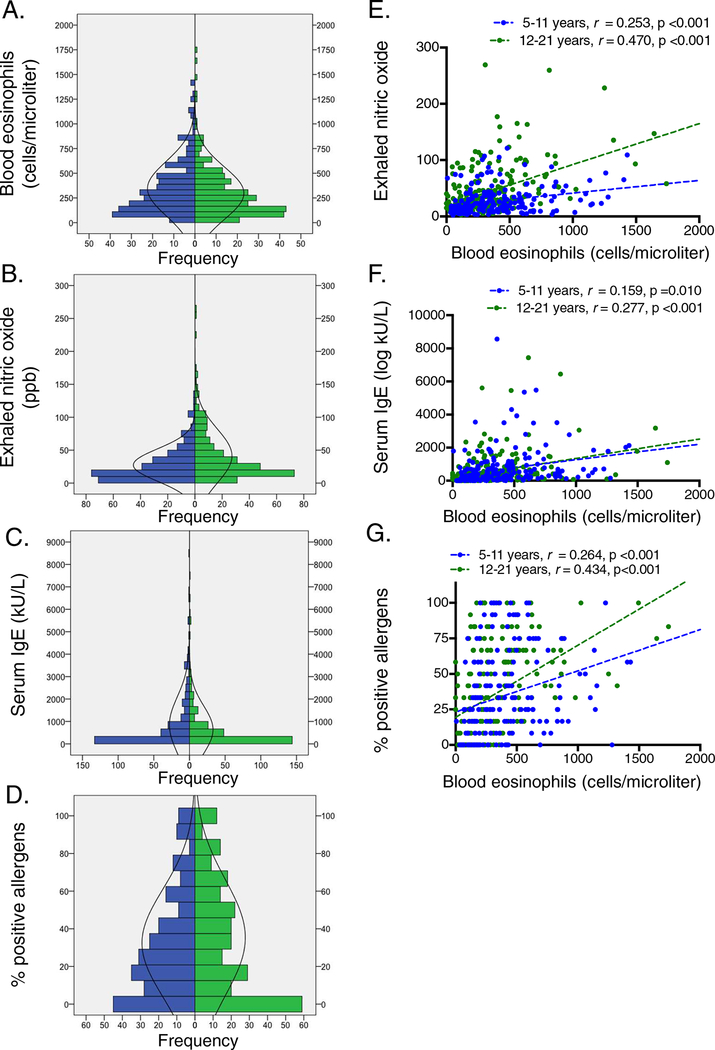
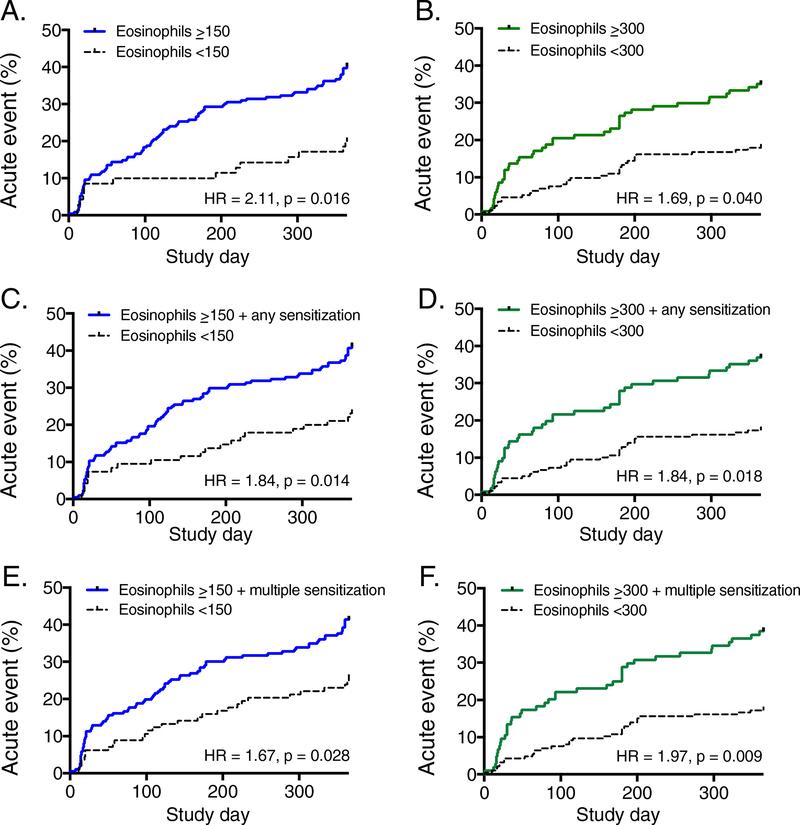
Acute visits occurred in 106 (35.5%) children and 72 (24.8%) adolescents. Elevated blood eosinophils were associated with increased odds and shorter time to first acute visit, but optimal cut-points differed by age (≥150 vs ≥300 cells/μL for children vs adolescents, respectively). The addition of a second marker of type 2 inflammation did not improve prediction in children, but increased the odds and hazard of an acute visit up to 16.2% and 11.9%, respectively, in adolescents. Similar trends were noted for hospitalizations.
Blood eosinophils and other noninvasive markers of type 2 inflammation may be useful in the clinical assessment of children and adolescents with asthma. However, features of type 2 inflammation vary by age. Whether children and adolescents also respond differently to management of type 2 inflammation is unclear and warrants further evaluation.
需要非侵入性的 2 型炎症标志物来识别可能受益于个体化生物治疗的儿童和青少年。
我们假设血液嗜酸性粒细胞计数可预测 1 次或多次哮喘急性发作,并且通过添加第二种非侵入性 2 型炎症生物标志物可以改善预测。
5 至 21 岁(N=589)因哮喘加重需要在过去一年中接受全身皮质类固醇治疗的儿童和青少年完成了特征描述性就诊和 6 个月及 12 个月的电话随访。主要结局是因哮喘急性发作而接受全身皮质类固醇治疗。急性发作通过病历审查进行验证。探索性结局包括首次急性发作和住院时间。
106 名儿童(35.5%)和 72 名青少年(24.8%)发生了急性发作。血液嗜酸性粒细胞升高与发生急性发作的几率增加和首次急性发作时间缩短相关,但最佳切点因年龄而异(儿童分别为≥150 与≥300 个细胞/μL,青少年分别为≥200 与≥350 个细胞/μL)。添加第二种 2 型炎症标志物并不能改善儿童的预测,但在青少年中,分别将急性发作的几率和风险提高了高达 16.2%和 11.9%。住院的趋势相似。
血液嗜酸性粒细胞和其他 2 型炎症的非侵入性标志物可能有助于评估儿童和青少年哮喘患者。然而,2 型炎症的特征因年龄而异。儿童和青少年对 2 型炎症管理的反应是否也不同尚不清楚,需要进一步评估。