Division of Radiation Health, College of Pharmacy, University of Arkansas for Medical Sciences, Little Rock, AR, United States; Department of Pharmaceutical Sciences, College of Pharmacy, University of Arkansas for Medical Sciences, Little Rock, AR, United States.
Division of Radiation Health, College of Pharmacy, University of Arkansas for Medical Sciences, Little Rock, AR, United States; Department of Pharmaceutical Sciences, College of Pharmacy, University of Arkansas for Medical Sciences, Little Rock, AR, United States; Department of Neurobiology & Developmental Sciences, College of Medicine, University of Arkansas for Medical Sciences, Little Rock, AR, United States.
Life Sci Space Res (Amst). 2019 May;21:1-21. doi: 10.1016/j.lssr.2019.02.004. Epub 2019 Feb 19.
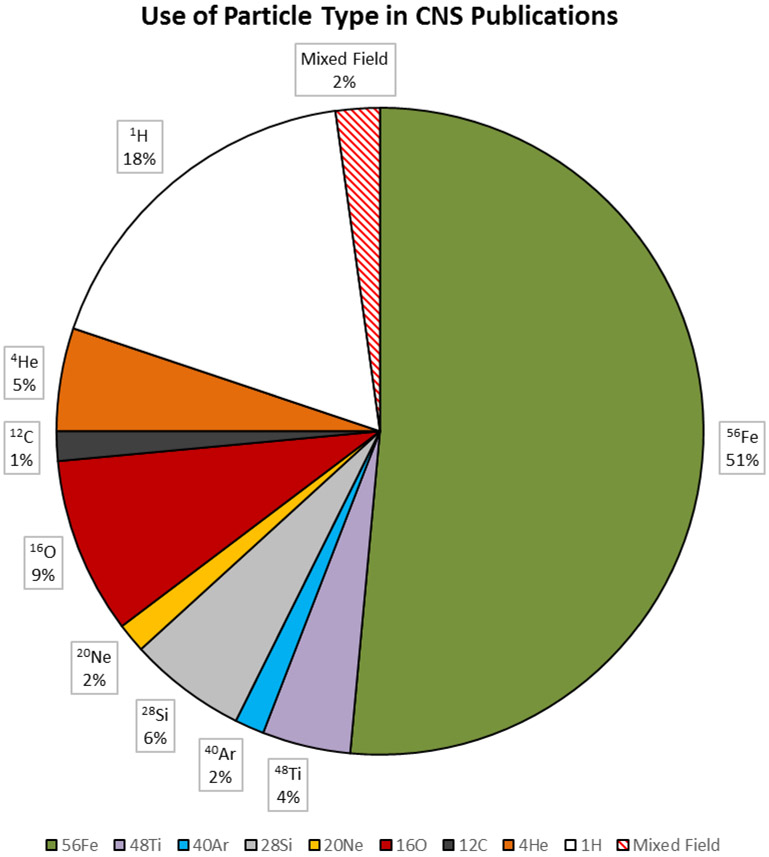
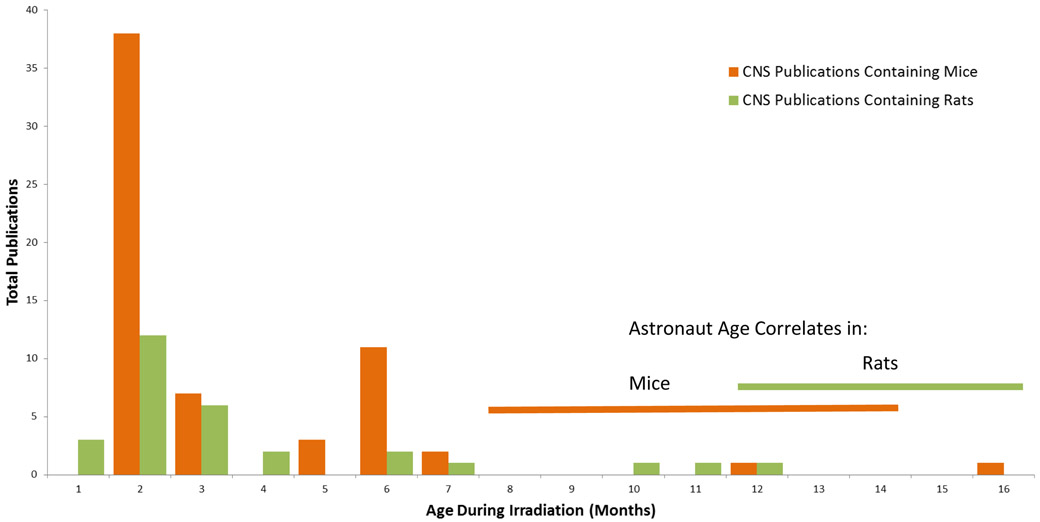
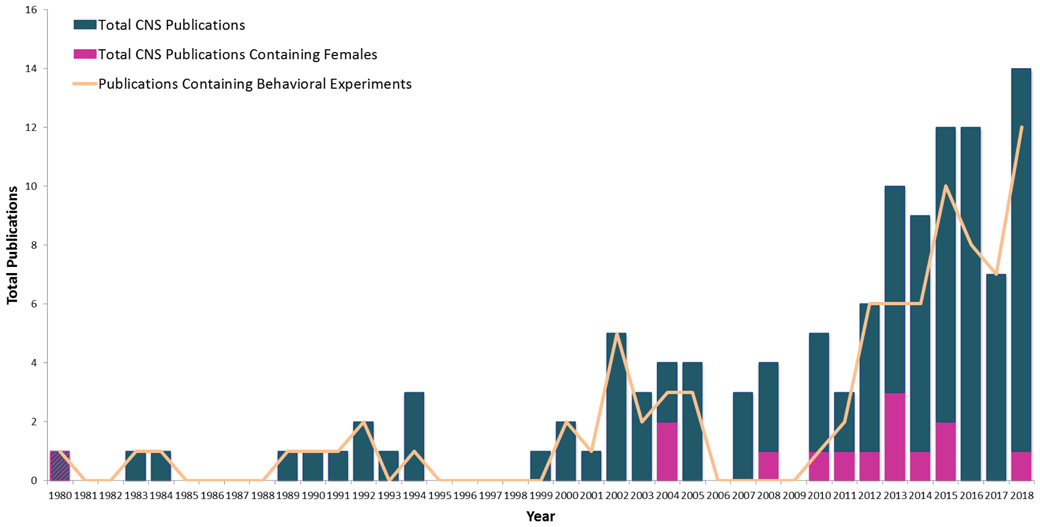
As NASA prepares for the first manned mission to Mars in the next 20 years, close attention has been placed on the cognitive welfare of astronauts, who will likely endure extended durations in confinement and microgravity and be subjected to the radioactive charged particles travelling at relativistic speeds in interplanetary space. The future of long-duration manned spaceflight, thus, depends on understanding the individual hazards associated with the environment beyond Earth's protective magnetosphere. Ground-based single-particle studies of exposed mice and rats have, in the last 30 years, overwhelmingly reported deficits in their cognitive behaviors. However, as particle-accelerator technologies at NASA's Space Radiation Laboratory continue to progress, more realistic representations of space radiation are materializing, including multiple-particle exposures and, eventually, at multiple energy distributions. These advancements help determine how to best mitigate possible hazards due to space radiation. However, risk models will depend on delineating which particles are most responsible for specific behavioral outcomes and whether multiple-particle exposures produce synergistic effects. Here, we review the literature on animal exposures by particle, energy, and behavioral assay to inform future mixed-field radiation studies of possible behavioral outcomes.
随着美国国家航空航天局(NASA)准备在未来 20 年内进行首次载人火星任务,人们密切关注宇航员的认知健康,他们可能会在禁闭和微重力环境中长时间承受辐射,并受到在行星际空间以相对论速度运动的放射性带电粒子的影响。因此,未来的长时间载人航天飞行取决于了解地球磁屏蔽以外环境的个别危害。在过去的 30 年中,基于地面的暴露于单一粒子的老鼠研究压倒性地报告了它们认知行为的缺陷。然而,随着 NASA 空间辐射实验室的粒子加速器技术不断进步,更现实的空间辐射模型正在出现,包括多粒子暴露,最终是在多个能量分布中。这些进展有助于确定如何最好地减轻由于空间辐射可能带来的危害。然而,风险模型将取决于确定哪些粒子对特定行为结果最负责,以及多粒子暴露是否会产生协同效应。在这里,我们回顾了关于动物暴露于不同粒子、能量和行为检测的文献,为未来关于可能的行为结果的混合场辐射研究提供信息。