Bidhult Sebastian, Hedström Erik, Carlsson Marcus, Töger Johannes, Steding-Ehrenborg Katarina, Arheden Håkan, Aletras Anthony H, Heiberg Einar
Department of Clinical Sciences Lund, Clinical Physiology, Skane University Hospital, Lund University, Lund, Sweden.
Department of Biomedical Engineering, Faculty of Engineering, Lund University, Lund, Sweden.
Clin Physiol Funct Imaging. 2019 Sep;39(5):327-338. doi: 10.1111/cpf.12582. Epub 2019 Jun 6.
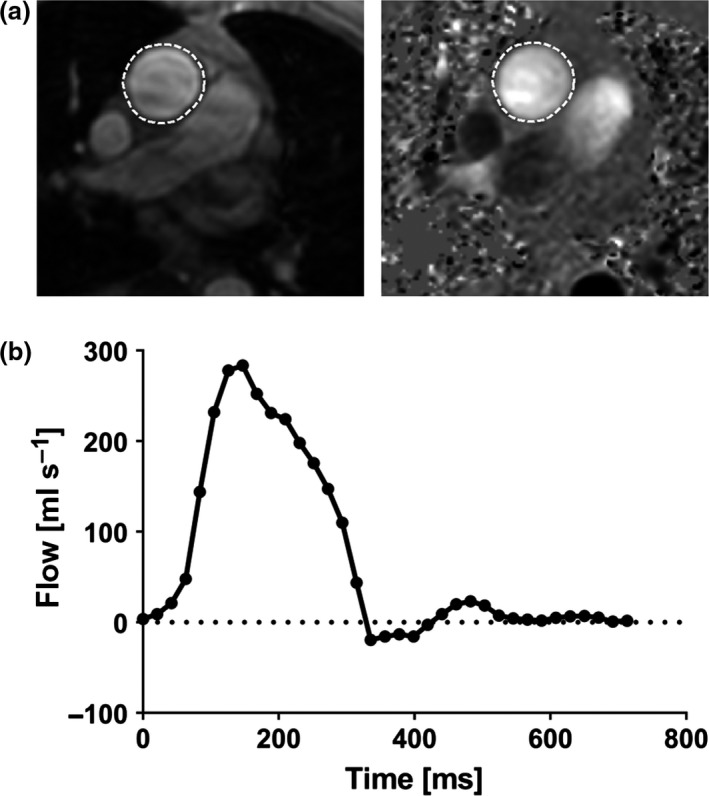
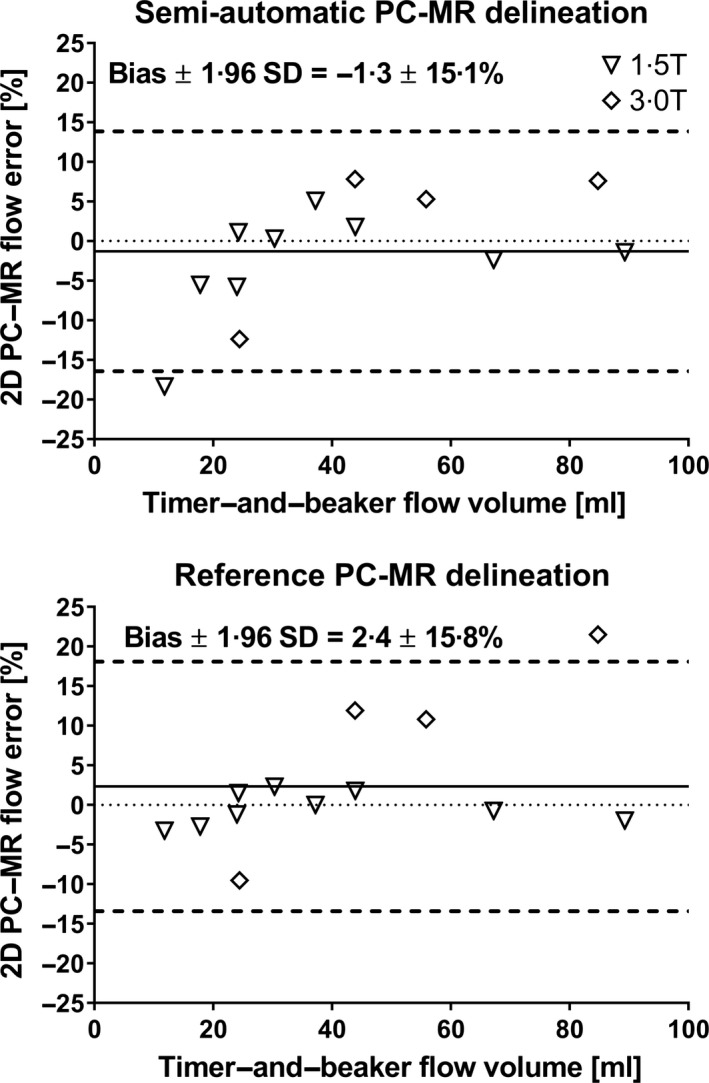
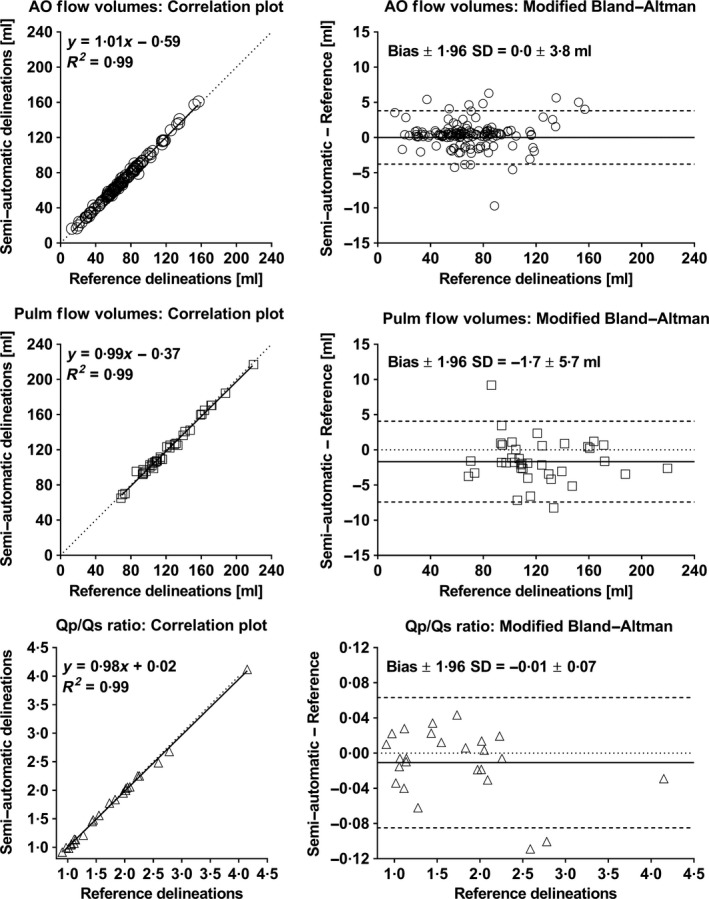
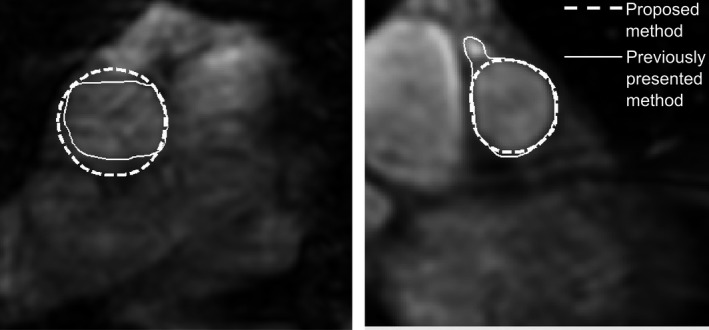
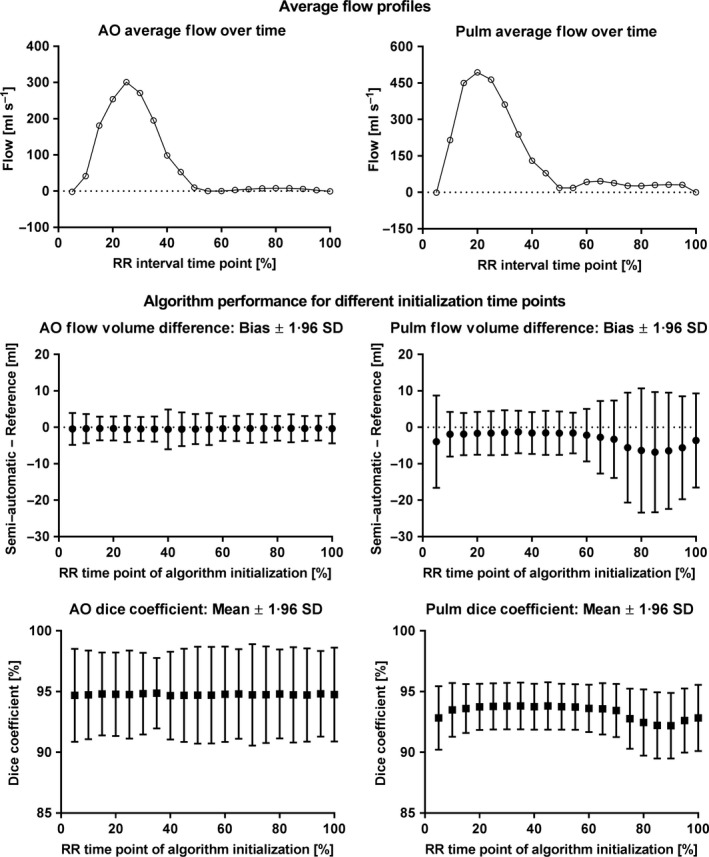
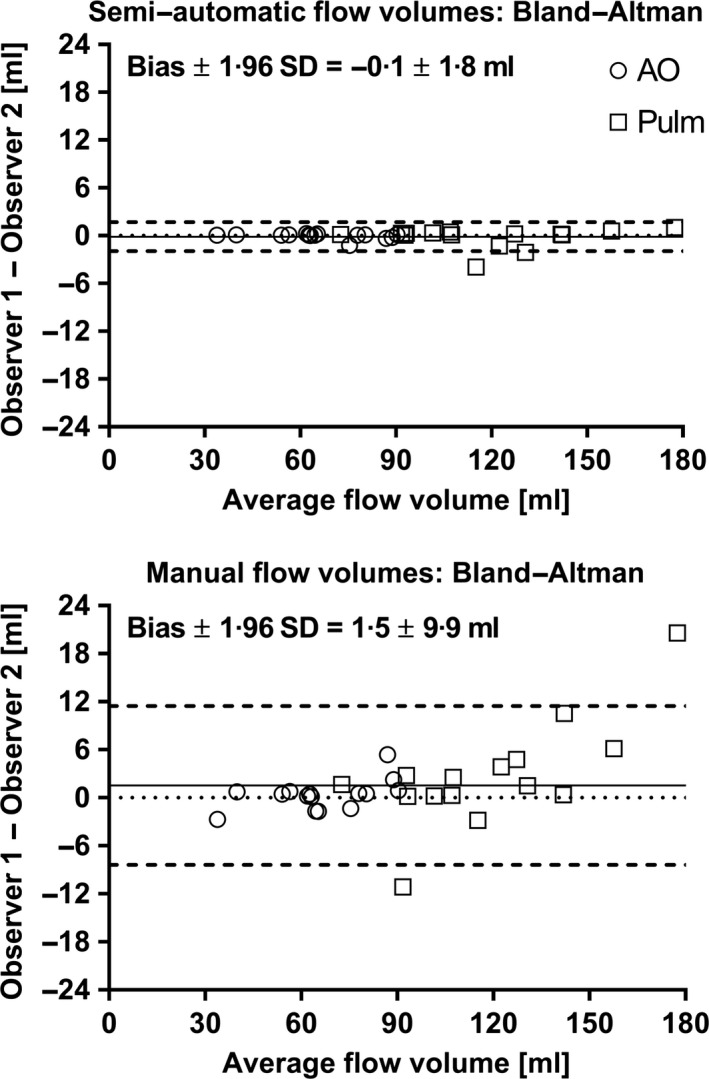
Blood flow measurements in the ascending aorta and pulmonary artery from phase-contrast magnetic resonance images require accurate time-resolved vessel segmentation over the cardiac cycle. Current semi-automatic segmentation methods often involve time-consuming manual correction, relying on user experience for accurate results. The purpose of this study was to develop a semi-automatic vessel segmentation algorithm with shape constraints based on manual vessel delineations for robust segmentation of the ascending aorta and pulmonary artery, to evaluate the proposed method in healthy volunteers and patients with heart failure and congenital heart disease, to validate the method in a pulsatile flow phantom experiment, and to make the method freely available for research purposes. Algorithm shape constraints were extracted from manual reference delineations of the ascending aorta (n = 20) and pulmonary artery (n = 20) and were included in a semi-automatic segmentation method only requiring manual delineation in one image. Bias and variability (bias ± SD) for flow volume of the proposed algorithm versus manual reference delineations were 0·0 ± 1·9 ml in the ascending aorta (n = 151; seven healthy volunteers; 144 heart failure patients) and -1·7 ± 2·9 ml in the pulmonary artery (n = 40; 25 healthy volunteers; 15 patients with atrial septal defect). Interobserver bias and variability were lower (P = 0·008) for the proposed semi-automatic method (-0·1 ± 0·9 ml) compared to manual reference delineations (1·5 ± 5·1 ml). Phantom validation showed good agreement between the proposed method and timer-and-beaker flow volumes (0·4 ± 2·7 ml). In conclusion, the proposed semi-automatic vessel segmentation algorithm can be used for efficient analysis of flow and shunt volumes in the aorta and pulmonary artery.
通过相位对比磁共振图像测量升主动脉和肺动脉的血流,需要在心动周期内对血管进行准确的时间分辨分割。当前的半自动分割方法通常需要耗时的人工校正,依赖用户经验才能获得准确结果。本研究的目的是基于手动血管描绘开发一种具有形状约束的半自动血管分割算法,用于稳健分割升主动脉和肺动脉;在健康志愿者、心力衰竭患者和先天性心脏病患者中评估所提出的方法;在脉动流体模实验中验证该方法;并使该方法免费用于研究目的。算法形状约束从升主动脉(n = 20)和肺动脉(n = 20)的手动参考描绘中提取,并包含在仅需在一幅图像中进行手动描绘的半自动分割方法中。在所提出算法与手动参考描绘之间,升主动脉(n = 151;7名健康志愿者;144名心力衰竭患者)的流量偏差和变异性(偏差±标准差)为0·0 ± 1·9 ml,肺动脉(n = 40;25名健康志愿者;15名房间隔缺损患者)为-1·7 ± 2·9 ml。与手动参考描绘(1·5 ± 5·1 ml)相比,所提出的半自动方法(-0·1 ± 0·9 ml)的观察者间偏差和变异性更低(P = 0·008)。体模验证表明所提出的方法与计时器和烧杯测量的流量之间具有良好的一致性(0·4 ± 2·7 ml)。总之,所提出的半自动血管分割算法可用于高效分析主动脉和肺动脉中的血流及分流体积。