Department of Traditional Chinese Medicine, Chinese PLA General Hospital, Beijing, 100853, China.
Department of Radiotherapy, Chinese PLA General Hospital, Beijing, 100853, China.
Radiat Oncol. 2019 May 22;14(1):84. doi: 10.1186/s13014-019-1294-0.
Radiation or radiochemotherapy is a common adjuvant therapy for gastric cancer. Intensity-modulated radiation therapy (IMRT) has been demonstrated to provide better dose conformity, allowing dose escalation and/or reduction of normal tissue exposure compared with three-dimensional conformal radiation treatment (3D-CRT). However, the efficacy of IMRT and 3D-CRT in gastric cancer remains controversial. This study aimed to compare the efficacy and safety of IMRT with those of 3D-CRT in treating patients with gastric cancer through conducting a meta-analysis of 3-year survival rates [overall survival (OS) and disease-free survival (DFS)], local control rates, and toxic event rates.
Embase, PubMed, the Cochrane Library, and clinical trial databases were searched to identify the clinical trials of IMRT versus 3D-CRT for treating patients with gastric cancer. The obtained data of survival and safety were analyzed using the Stata 14.0 software.
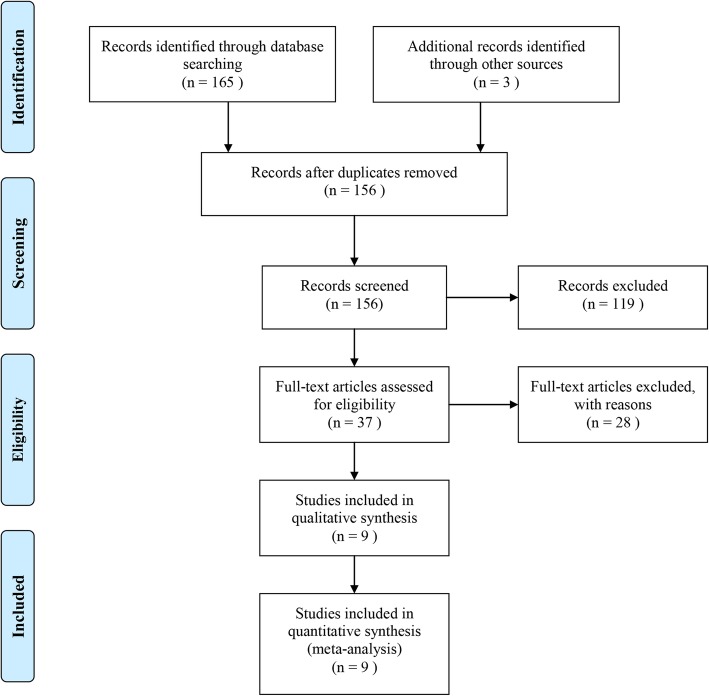
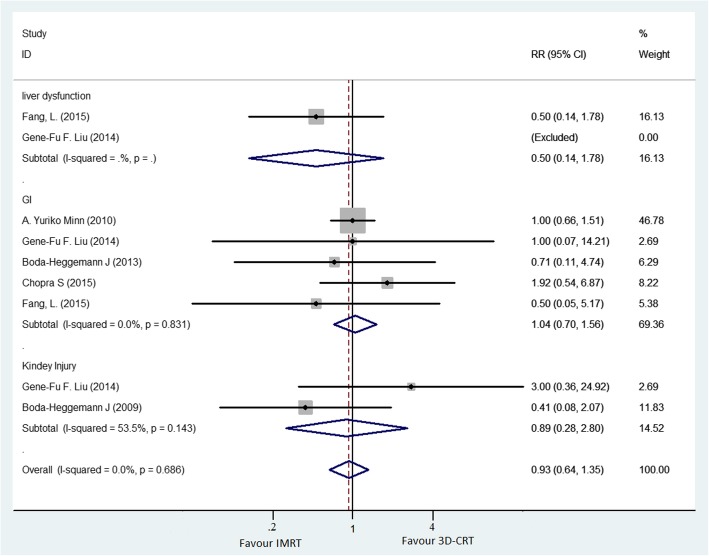
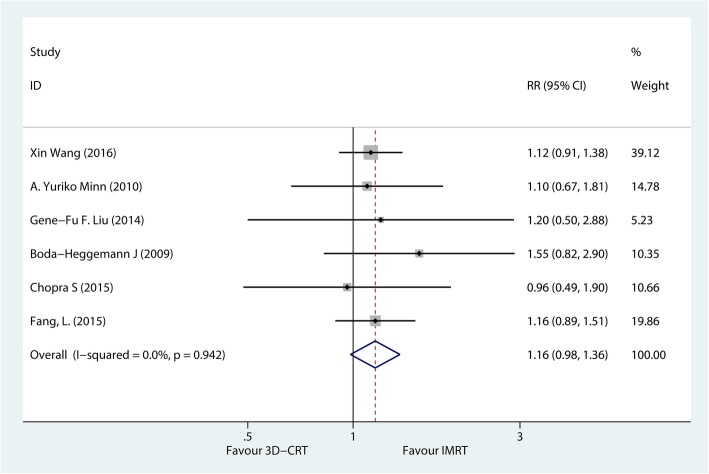
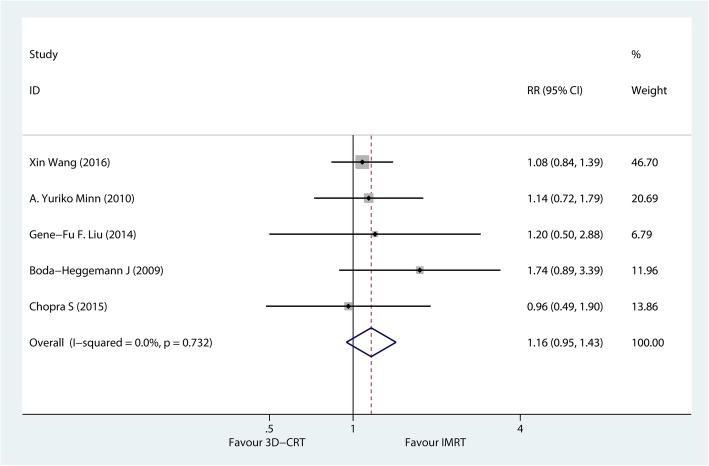
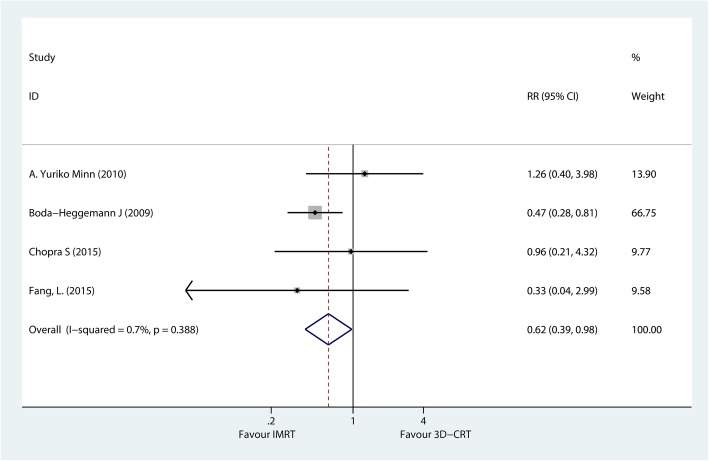
A total of 9 controlled clinical studies, including 516 patients with gastric cancer, met the inclusion criteria and were included in this meta-analysis. The results of the meta-analysis showed that the 3-year OS rate was slightly higher in the IMRT group than in the 3D-CRT group, without any statistical significance. The 3-year local control rate was significantly higher in the IMRT group than in the 3D-CRT group. No significant difference in the 3-year DFS rate was found between the IMRT and 3D-CRT groups. Grade 2-4 toxicities were similar between the IMRT and 3D-CRT groups.
The findings suggested that IMRT might be superior to 3D-CRT in treating patients with gastric cancer in terms of local control rates without increasing toxicity.
放疗或放化疗是胃癌的常用辅助治疗方法。调强放疗(IMRT)已被证明与三维适形放疗(3D-CRT)相比,能提供更好的剂量适形性,允许提高剂量和/或减少正常组织暴露。然而,IMRT 和 3D-CRT 在胃癌中的疗效仍存在争议。本研究旨在通过对 3 年生存率(总生存率[OS]和无病生存率[DFS])、局部控制率和毒副作用发生率进行荟萃分析,比较 IMRT 与 3D-CRT 治疗胃癌患者的疗效和安全性。
检索 Embase、PubMed、Cochrane 图书馆和临床试验数据库,以确定 IMRT 与 3D-CRT 治疗胃癌患者的临床试验。使用 Stata 14.0 软件对生存和安全性数据进行分析。
共有 9 项对照临床试验,包括 516 例胃癌患者,符合纳入标准并纳入本荟萃分析。荟萃分析结果表明,IMRT 组 3 年 OS 率略高于 3D-CRT 组,但无统计学意义。IMRT 组 3 年局部控制率明显高于 3D-CRT 组。IMRT 组和 3D-CRT 组 3 年无病生存率无显著差异。IMRT 组和 3D-CRT 组 2-4 级毒性发生率相似。
研究结果表明,在不增加毒性的情况下,IMRT 可能在局部控制率方面优于 3D-CRT,治疗胃癌患者。