Department of Biology, University of Nevada, Reno, 1664 North Virginia Street, Reno, NV, 89557, USA.
Ecohealth. 2019 Jun;16(2):346-350. doi: 10.1007/s10393-019-01414-6. Epub 2019 May 23.
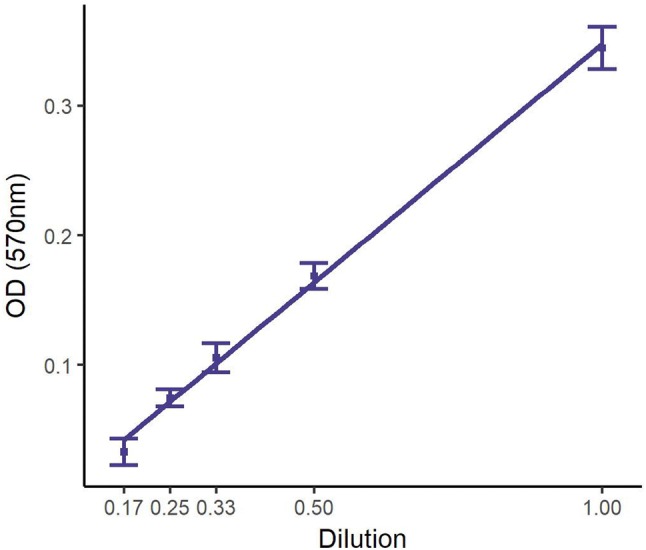
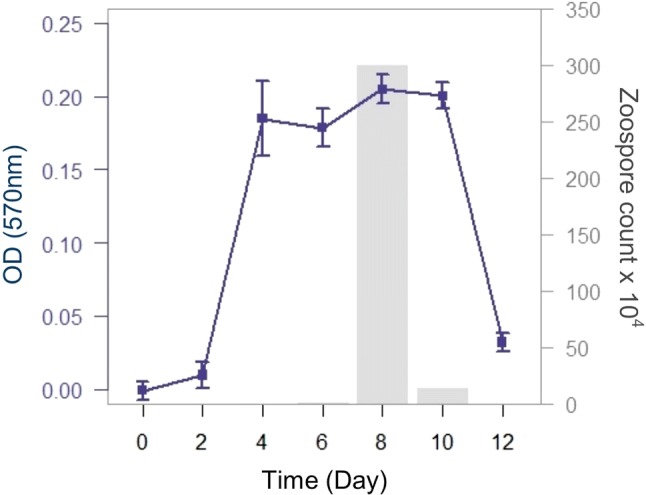
The disease chytridiomycosis is responsible for global amphibian declines. Chytridiomycosis is caused by Batrachochytrium dendrobatidis (Bd) and B. salamandrivorans (Bsal), fungal pathogens with stationary and transmissible life stages. Establishing methods that quantify growth and survival of both life stages can facilitate research on the pathophysiology and disease ecology of these pathogens. We tested the efficacy of the MTT assay, a colorimetric test of cell viability, and found it to be a reliable method for quantifying the viability of Bd and Bsal stationary life stages. This method can provide insights into these pathogens' growth and reproduction to improve our understanding of chytridiomycosis.
这种疾病叫做蛙壶菌病,是造成全球两栖动物数量减少的主要原因。蛙壶菌病是由两栖动物壶菌(Batrachochytrium dendrobatidis,Bd)和蛙壶菌 salamandrivorans(Batrachochytrium salamandrivorans,Bsal)引起的,这两种真菌病原体都具有静止期和可传播的生命阶段。建立定量评估这两个生命阶段生长和存活的方法,可以促进对这些病原体病理生理学和疾病生态学的研究。我们测试了 MTT 检测法(一种细胞活力比色检测法)的效果,发现它是一种可靠的定量评估 Bd 和 Bsal 静止期生命阶段活力的方法。这种方法可以深入了解这些病原体的生长和繁殖,从而增进我们对蛙壶菌病的认识。