Dal Ferro Matteo, De Paris Valerio, Collia Dario, Stolfo Davide, Caiffa Thomas, Barbati Giulia, Korcova Renata, Pinamonti Bruno, Zovatto Luigino, Zecchin Massimo, Sinagra Gianfranco, Pedrizzetti Gianni
Cardiovascular Department, Azienda Ospedaliera Universitaria Integrata of Trieste, Trieste, Italy.
Department of Engineering and Architecture, University of Trieste, Trieste, Italy.
Front Cardiovasc Med. 2019 May 14;6:59. doi: 10.3389/fcvm.2019.00059. eCollection 2019.
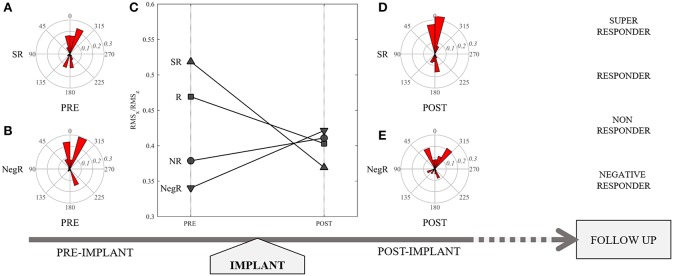
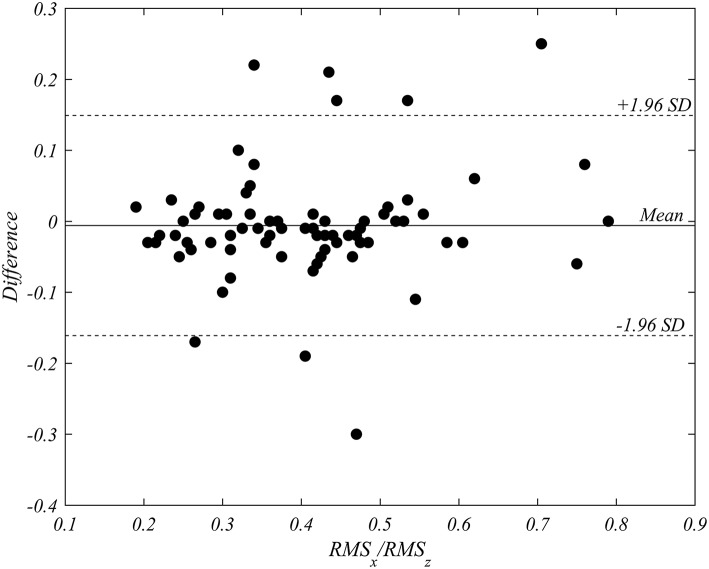
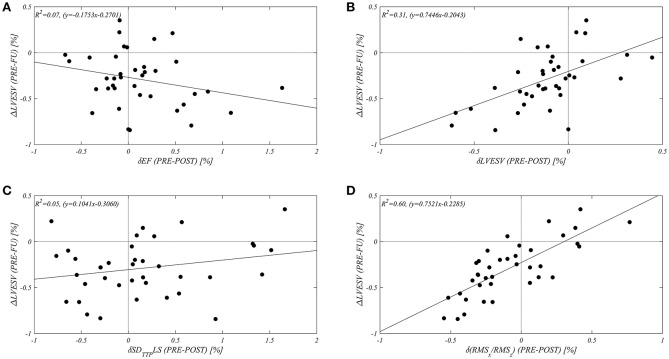
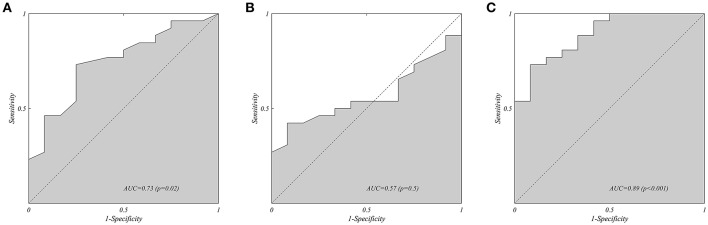
Despite continuous efforts in improving the selection process, the rate of non-responders to cardiac resynchronization therapy (CRT) remains high. Recent studies on intraventricular blood flow suggested that the alignment of hemodynamic forces (HDFs) may be a reproducible biomarker of mechanical dyssynchrony. We aimed to explore the relationship between pacing-induced realignment of HDFs and positive response to CRT. We retrospectively analyzed 38 patients from the CRT database of our institution fulfilling the inclusion criteria for HDFs-related echocardiographic assessment early pre and post CRT implantation, with available mid-term follow-up (≥ 6 months) evaluation. Standard echocardiographic and deformation parameters early pre and post CRT implantation were integrated with the measurement of HFDs through novel methods based on speckle-tracking analysis. At midterm follow-up 71% of patients were classified as responders (reduction of Left Ventricular Systolic Volume Indexed ≥ 15%). Patients did not display significant changes between close evaluations pre and post-implant in terms of ejection fraction and strain metrics. A significant reduction of the ratio between the amplitudes of transversal and longitudinal force components was found. The variation of this ratio strongly correlates (R =0.60) with Left Ventricular (LV) end-systolic volume variation at mid-term follow up. Pacing-induced realignment of HDFs is associated with CRT efficacy at follow up. These preliminary results claim for dedicated prospective clinical studies testing the potential impact of HDFs study for patient selection and pacing optimization in CRT.
尽管在改进选择过程方面不断努力,但心脏再同步治疗(CRT)无反应者的比例仍然很高。最近关于心室内血流的研究表明,血流动力学力(HDFs)的排列可能是机械不同步的一个可重复的生物标志物。我们旨在探讨起搏诱导的HDFs重新排列与CRT阳性反应之间的关系。我们回顾性分析了来自我们机构CRT数据库的38例患者,这些患者符合CRT植入前后早期HDFs相关超声心动图评估的纳入标准,并进行了中期随访(≥6个月)评估。通过基于斑点追踪分析的新方法,将CRT植入前后早期的标准超声心动图和变形参数与HFDs的测量相结合。在中期随访时,71%的患者被归类为反应者(左心室收缩容积指数降低≥15%)。在植入前后的密切评估中,患者在射血分数和应变指标方面没有显示出显著变化。发现横向和纵向力分量幅度之比显著降低。该比值的变化与中期随访时左心室(LV)收缩末期容积变化密切相关(R = 0.60)。起搏诱导的HDFs重新排列与随访时CRT的疗效相关。这些初步结果呼吁进行专门的前瞻性临床研究,以测试HDFs研究对CRT患者选择和起搏优化的潜在影响。