Dyer D W, West E P, Sparling P F
Infect Immun. 1987 Sep;55(9):2171-5. doi: 10.1128/iai.55.9.2171-2175.1987.
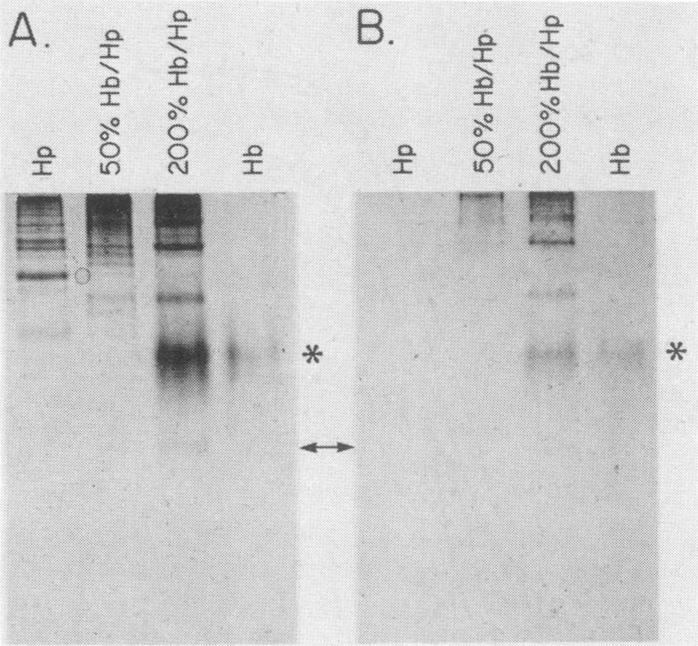
The pathogenic neisseriae can use free heme and hemoglobin as an essential source of iron (Fe) for growth in vitro, but it is unknown whether they can utilize heme bound to human hemopexin or to human serum albumin, or hemoglobin bound to haptoglobin. We found that neither Neisseria meningitidis nor Neisseria gonorrhoeae used bound heme, but bound hemoglobin was used as an Fe source by two meningococcal strains and one gonococcal strain. A second gonococcal strain, previously shown to use free hemoglobin poorly or not at all, also did not grow with hemoglobin-haptoglobin complex as an Fe source. These observations suggest that hemoglobin might act as an Fe source in vivo for many pathogenic neisseriae even when in complexed (bound) form, but heme probably would not support growth in vivo if bound to serum carrier proteins.
致病性奈瑟菌可利用游离血红素和血红蛋白作为体外生长所需的铁(Fe)来源,但它们是否能利用与人类血红素结合蛋白或人类血清白蛋白结合的血红素,或与触珠蛋白结合的血红蛋白尚不清楚。我们发现,脑膜炎奈瑟菌和淋病奈瑟菌均不利用结合型血红素,但两种脑膜炎球菌菌株和一种淋病球菌菌株将结合型血红蛋白用作铁源。另一株淋病奈瑟菌,此前显示其对游离血红蛋白利用不佳或完全不利用,也不能以血红蛋白-触珠蛋白复合物作为铁源生长。这些观察结果表明,即使处于复合(结合)形式,血红蛋白在体内可能作为许多致病性奈瑟菌的铁源,但血红素如果与血清载体蛋白结合,可能无法支持体内生长。