Vázquez-Fresno Rosa, Rosana Albert Remus R, Sajed Tanvir, Onookome-Okome Tuviere, Wishart Noah A, Wishart David S
1Department of Biological Sciences, University of Alberta, Edmonton, AB T6G 2E9 Canada.
2Department of Computing Science, University of Alberta, Edmonton, AB T6G 2E8 Canada.
Genes Nutr. 2019 May 22;14:18. doi: 10.1186/s12263-019-0636-8. eCollection 2019.
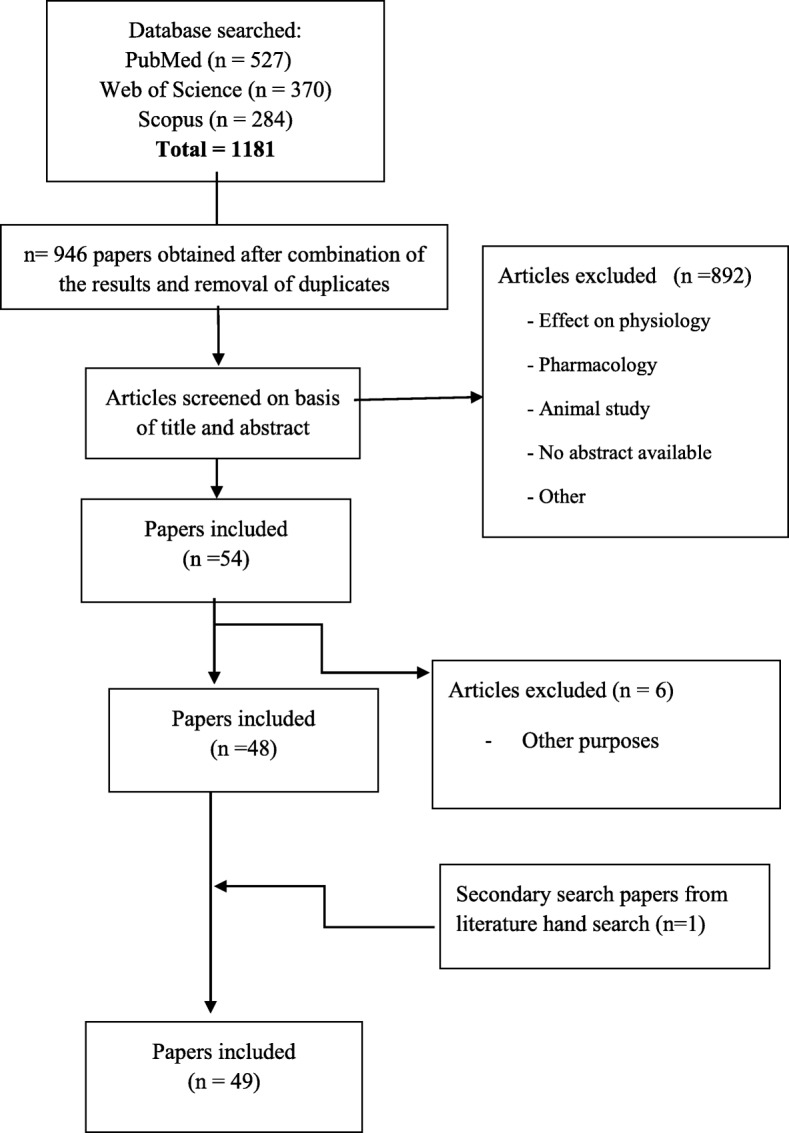
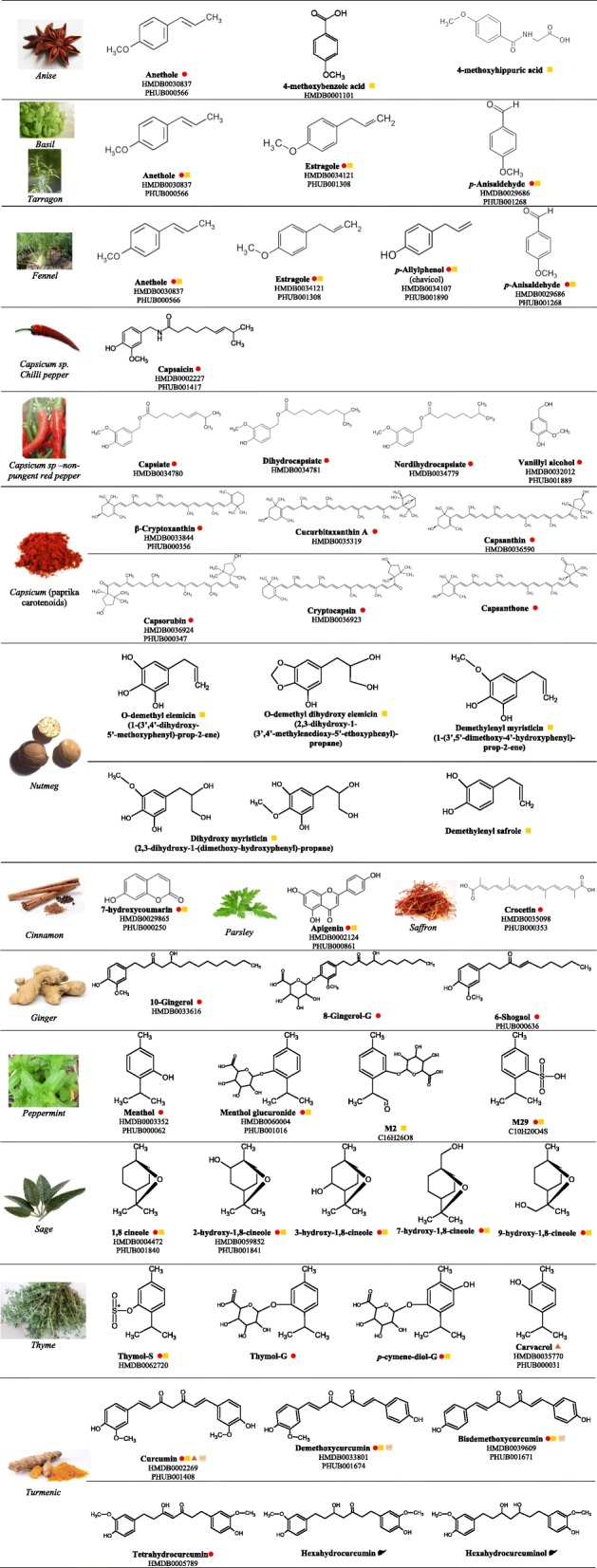
Culinary herbs and spices have been used as both food flavoring and food preservative agents for centuries. Moreover, due to their known and presumptive health benefits, herbs and spices have also been used in medical practices since ancient times. Some of the health effects attributed to herbs and spices include antioxidant, anti-microbial, and anti-inflammatory effects as well as potential protection against cardiovascular disease, neurodegeneration, type 2 diabetes, and cancer. While interest in herbs and spices as medicinal agents remains high and their use in foods continues to grow, there have been remarkably few studies that have attempted to track the dietary intake of herbs and spices and even fewer that have tried to find potential biomarkers of food intake (BFIs). The aim of the present review is to systematically survey the global literature on herbs and spices in an effort to identify and evaluate specific intake biomarkers for a representative set of common herbs and spices in humans. A total of 25 herbs and spices were initially chosen, including anise, basil, black pepper, caraway, chili pepper, cinnamon, clove, cumin, curcumin, dill, fennel, fenugreek, ginger, lemongrass, marjoram, nutmeg, oregano, parsley, peppermint and spearmint, rosemary, saffron, sage, tarragon, and thyme. However, only 17 of these herbs and spices had published, peer-reviewed studies describing potential biomarkers of intake. In many studies, the herb or spice of interest was administrated in the form of a capsule or extract and very few studies were performed with actual foods. A systematic assessment of the candidate biomarkers was also performed. Given the limitations in the experimental designs for many of the published studies, further work is needed to better evaluate the identified set of BFIs. Although the daily intake of herbs and spices is very low compared to most other foods, this important set of food seasoning agents should not be underestimated, especially given their potential benefits to human health.
几个世纪以来,烹饪用香草和香料一直被用作食品调味剂和防腐剂。此外,由于其已知的和推测的健康益处,香草和香料自古以来也被用于医疗实践。归因于香草和香料的一些健康功效包括抗氧化、抗菌和抗炎作用,以及对心血管疾病、神经退行性变、2型糖尿病和癌症的潜在保护作用。尽管人们对香草和香料作为药物的兴趣仍然很高,并且它们在食品中的使用也在不断增加,但试图追踪香草和香料的膳食摄入量的研究非常少,而试图找到食物摄入量潜在生物标志物(BFIs)的研究更少。本综述的目的是系统地调查全球关于香草和香料的文献,以识别和评估一组有代表性的常见香草和香料在人体中的特定摄入生物标志物。最初共选择了25种香草和香料,包括茴芹、罗勒、黑胡椒、葛缕子、辣椒、肉桂、丁香、小茴香、姜黄素、莳萝、茴香、葫芦巴、姜、柠檬草、马郁兰、肉豆蔻、牛至、欧芹、薄荷和留兰香、迷迭香、藏红花、鼠尾草、龙蒿和百里香。然而,这些香草和香料中只有17种有已发表的、经过同行评审的描述摄入潜在生物标志物的研究。在许多研究中,所关注的香草或香料是以胶囊或提取物的形式给药的,很少有研究使用实际食物进行。还对候选生物标志物进行了系统评估。鉴于许多已发表研究的实验设计存在局限性,需要进一步开展工作以更好地评估已识别的BFIs集。尽管与大多数其他食物相比,香草和香料的每日摄入量非常低,但这组重要的食品调味剂不应被低估,特别是考虑到它们对人类健康的潜在益处。