Boriushkin Evgenii, Fancher Ibra S, Levitan Irena
Department of Medicine, Stony Brook University, Stony Brook, NY, USA.
Division of Pulmonary, Critical Care, Sleep and Allergy, Department of Medicine, University of Illinois at Chicago, Chicago, IL, USA.
Cell Physiol Biochem. 2019;52(6):1569-1583. doi: 10.33594/000000109.
BACKGROUND/AIMS: Shear stress plays major roles in developmental angiogenesis, particularly in blood vessel remodeling and maturation but little is known about the shear stress sensors involved in this process. Our recent study identified endothelial Kir2.1 channels as major contributors to flow-induced vasodilation, a hallmark of the endothelial flow response. The goal of this study is to establish the role of Kir2.1 in the regulation of retinal angiogenesis.
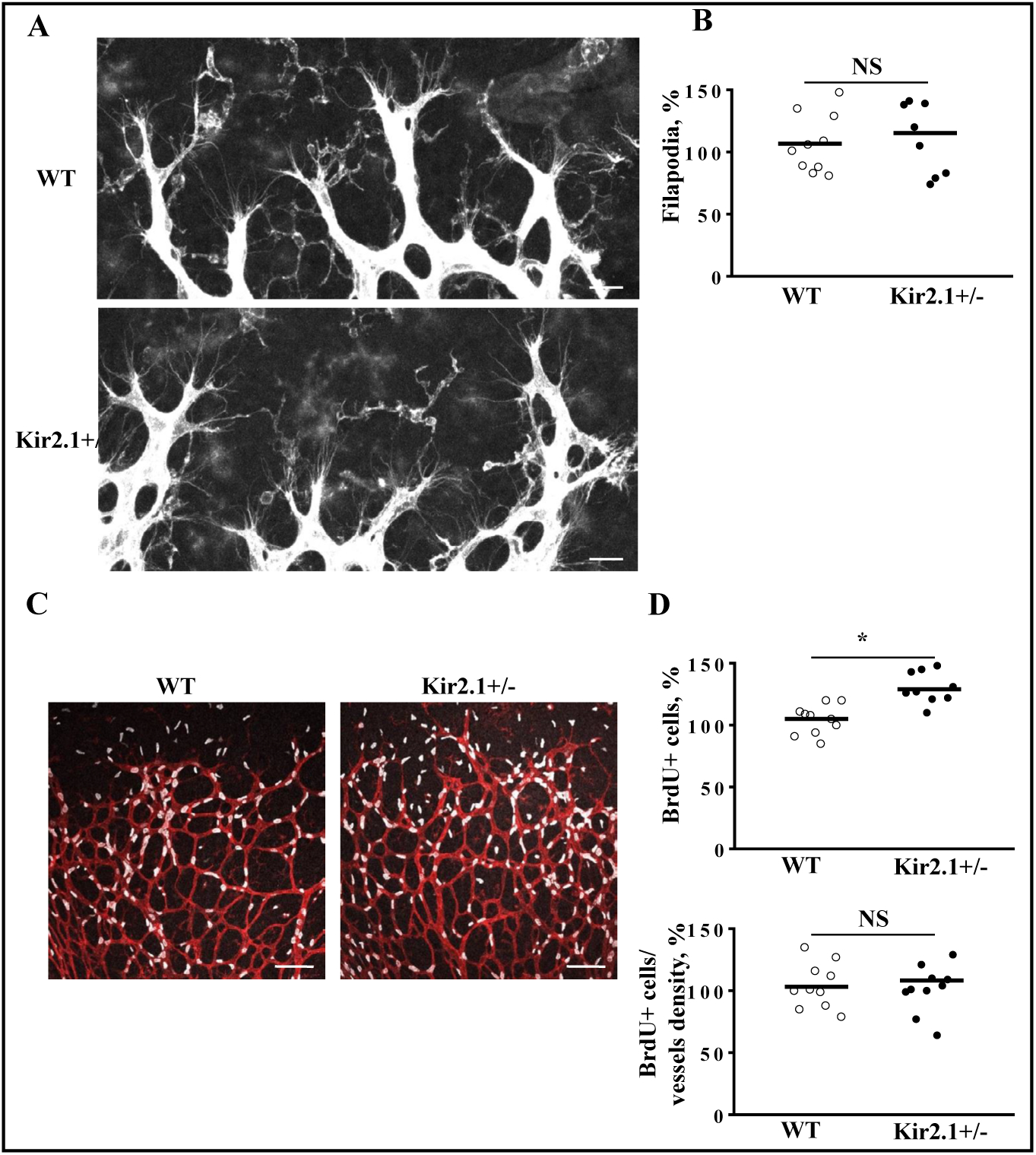
The retina of newly born Kir2.1 mice were used to investigate the sprouting angiogenesis and remodeling of newly formed branched vessels. The structure, blood density and mural cell coverage have been evaluated by immunohistochemistry of the whole-mount retina. Endothelial cell alignment was assessed using CD31 staining. The experiments with flow-induced vasodilation were used to study the cerebrovascular response to flow.
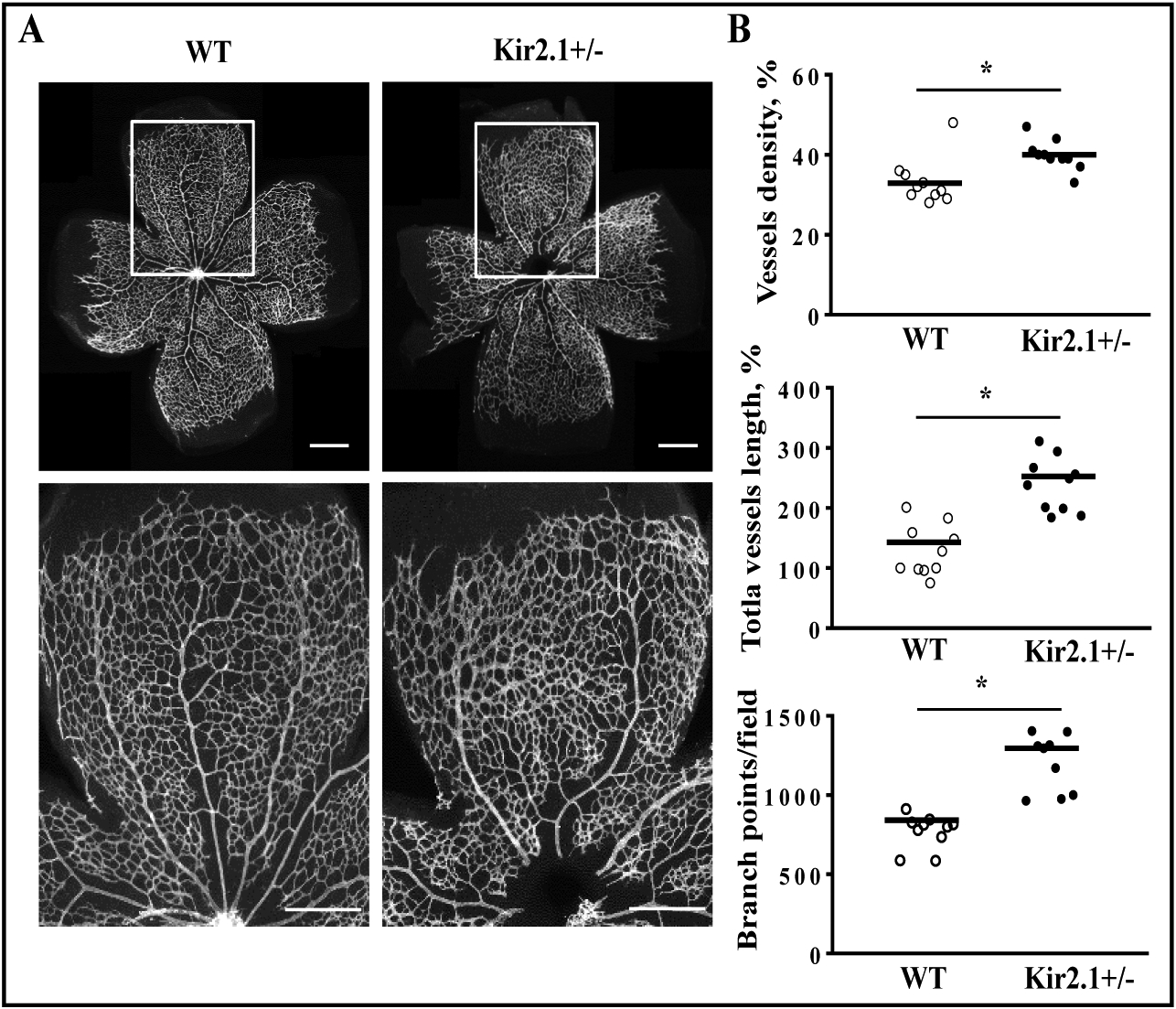
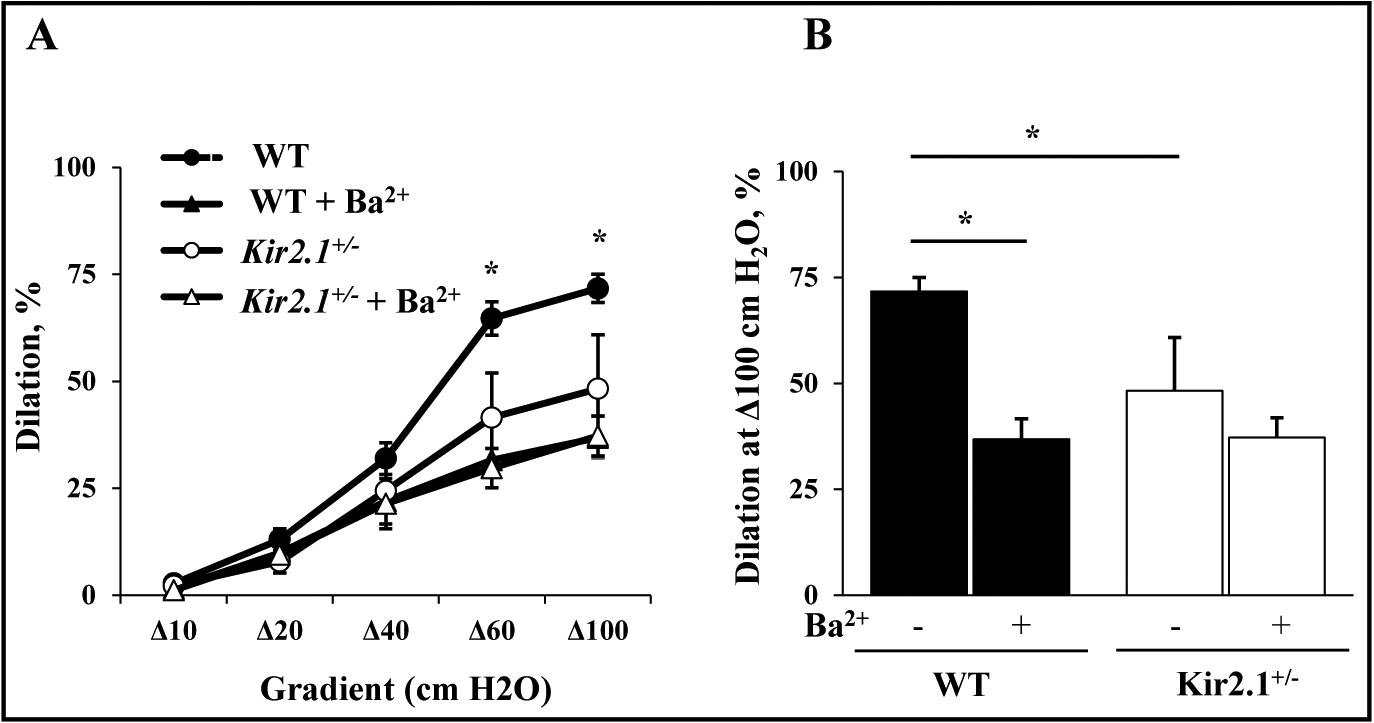
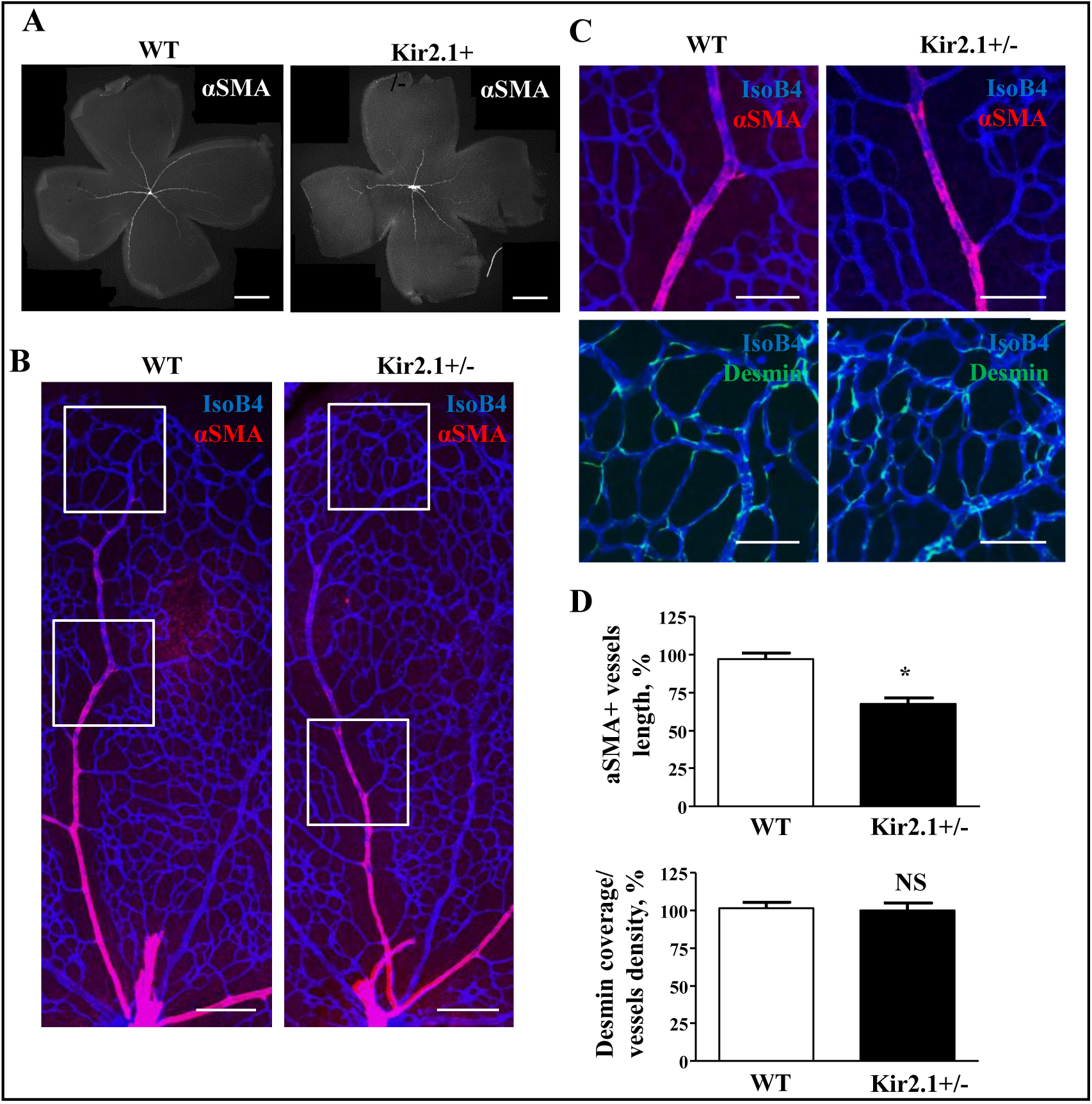
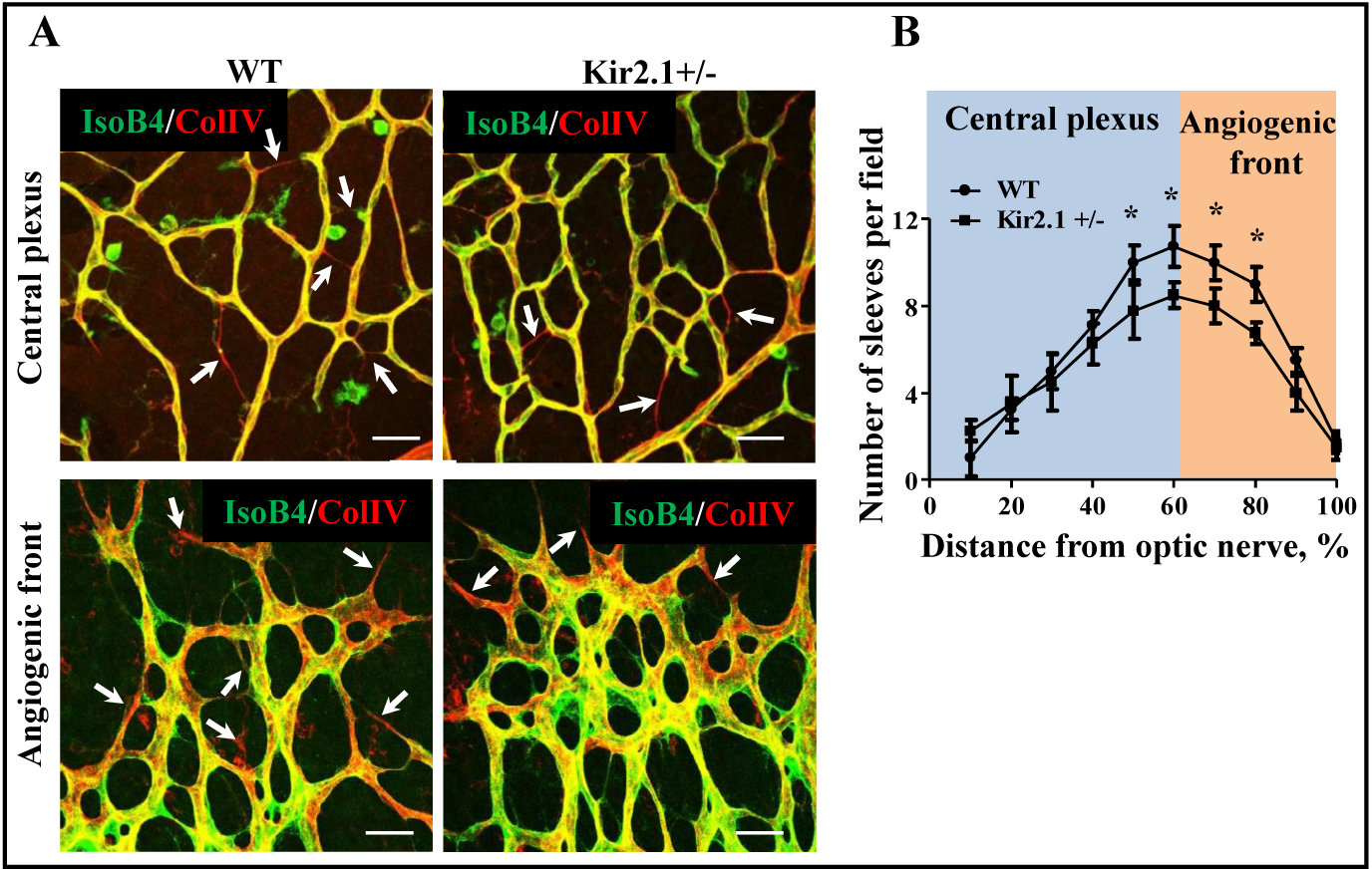
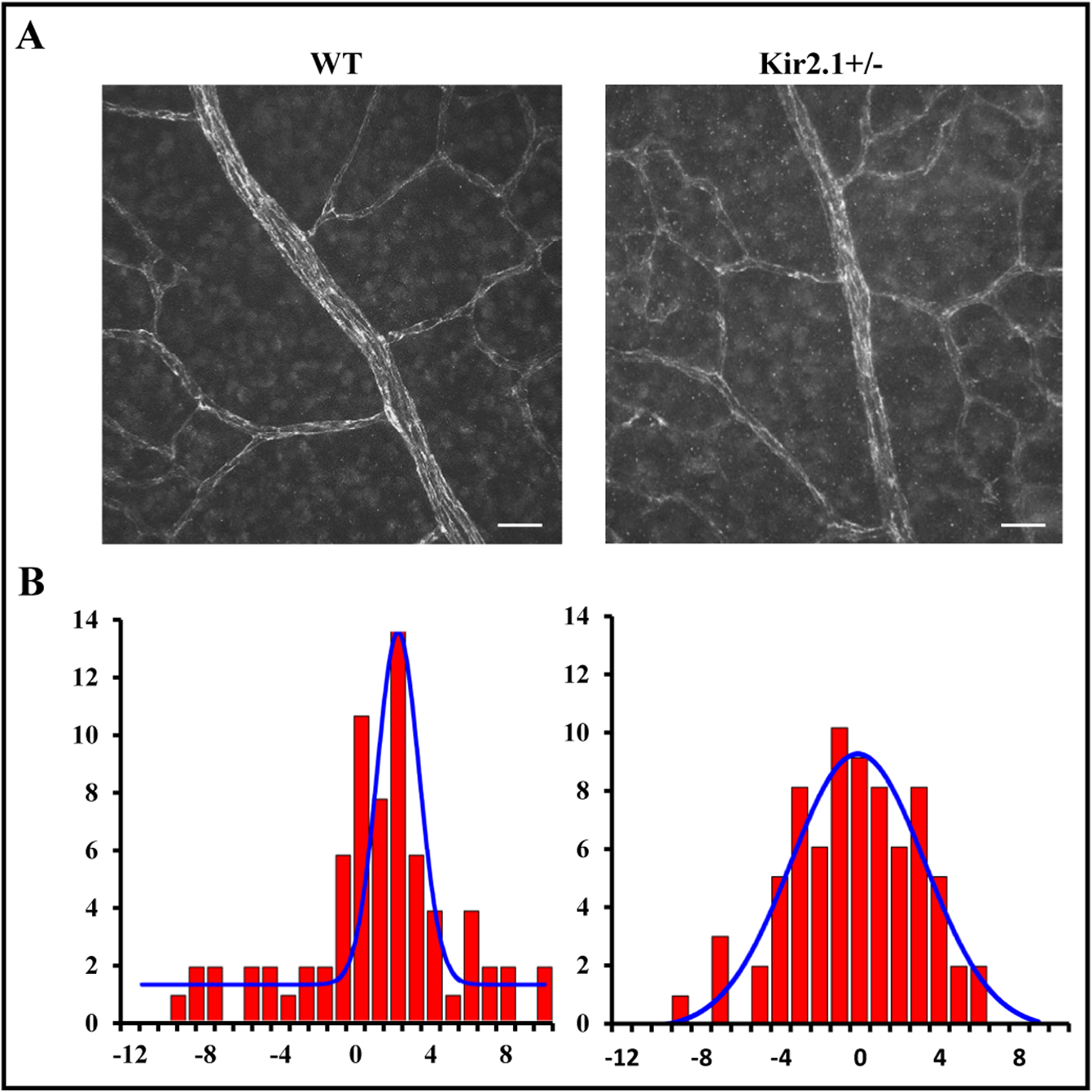
Using Kir2.1-deficient mice, we show that the retinas of Kir2.1 mice have higher vessel density, increased lengths and increased number of the branching points, as compared to WT littermates. In contrast, the coverage by αSMA is decreased in Kir2.1 mice while pericyte coverage does not change. Furthermore, to determine whether deficiency of Kir2.1 affects vessel pruning, we discriminated between intact and degraded vessels or "empty matrix sleeves" and found a significant reduction in the number of empty sleeves on the peripheral part of the retina or "angiogenic front" in Kir2.1 mice. We also show that Kir2.1 deficiency results in decreased endothelial alignment in retinal endothelium and impaired flow-induced vasodilation of cerebral arteries, verifying the involvement of Kir2.1 in shear-stress sensing in retina and cerebral circulation.
This study shows that shear-stress sensitive Kir2.1 channels play an important role in pruning of excess vessels and vascular remodeling during retinal angiogenesis. We propose that Kir2.1 mediates the effect of shear stress on vessel maturation.
背景/目的:剪切应力在发育性血管生成中起主要作用,尤其是在血管重塑和成熟过程中,但对于参与此过程的剪切应力传感器知之甚少。我们最近的研究确定内皮Kir2.1通道是血流诱导的血管舒张的主要贡献者,这是内皮血流反应的一个标志。本研究的目的是确定Kir2.1在视网膜血管生成调节中的作用。
使用新生Kir2.1小鼠的视网膜来研究新生分支血管的发芽血管生成和重塑。通过全层视网膜免疫组织化学评估结构、血液密度和壁细胞覆盖情况。使用CD31染色评估内皮细胞排列。采用血流诱导血管舒张实验研究脑血管对血流的反应。
使用Kir2.1基因缺陷小鼠,我们发现与野生型同窝小鼠相比,Kir2.1小鼠的视网膜具有更高的血管密度、更长的血管长度和更多的分支点。相反,Kir2.1小鼠中αSMA的覆盖减少,而周细胞覆盖没有变化。此外,为了确定Kir2.1的缺乏是否影响血管修剪,我们区分了完整和退化的血管或“空基质袖套”,并发现Kir2.1小鼠视网膜周边部分或“血管生成前沿”的空袖套数量显著减少。我们还表明,Kir2.1缺乏导致视网膜内皮细胞排列减少以及脑动脉血流诱导的血管舒张受损,证实了Kir2.1参与视网膜和脑循环中的剪切应力感知。
本研究表明,剪切应力敏感的Kir2.1通道在视网膜血管生成过程中多余血管的修剪和血管重塑中起重要作用。我们提出Kir2.1介导剪切应力对血管成熟的影响。