Kwee Robert M, Kwee Thomas C
Department of Radiology, Zuyderland Medical Center, Heerlen/Sittard/Geleen, The Netherlands.
Department of Radiology, Nuclear Medicine and Molecular Imaging, University Medical Center Groningen, Groningen, The Netherlands.
J Magn Reson Imaging. 2020 Feb;51(2):524-534. doi: 10.1002/jmri.26812. Epub 2019 May 31.
The diagnostic performance of dynamic susceptibility contrast (DSC) MR perfusion in discriminating treatment-related changes from recurrence in irradiated brain metastases is currently not completely clear.
To systematically review the accuracy of DSC MR perfusion in diagnosing recurrent brain metastases after radiotherapy.
Systematic review and meta-analysis.
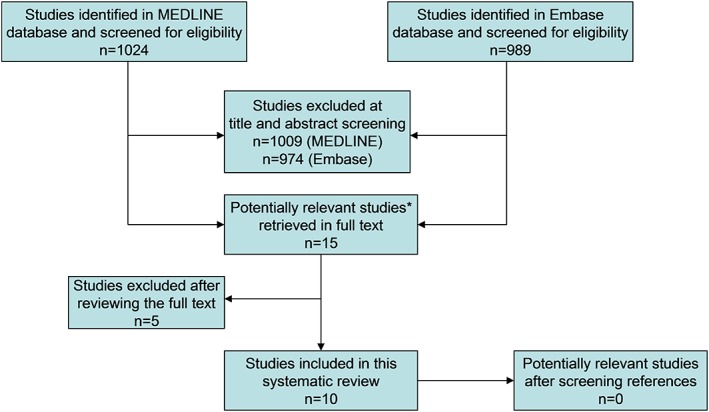
MEDLINE and Embase were searched for original studies investigating the accuracy of DSC MR perfusion in diagnosing recurrent brain metastases after radiotherapy. Ten studies, comprising a total of more than 271 metastases, were included.
FIELD STRENGTH/SEQUENCE: 1.5T or 3.0T, DSC MR perfusion.
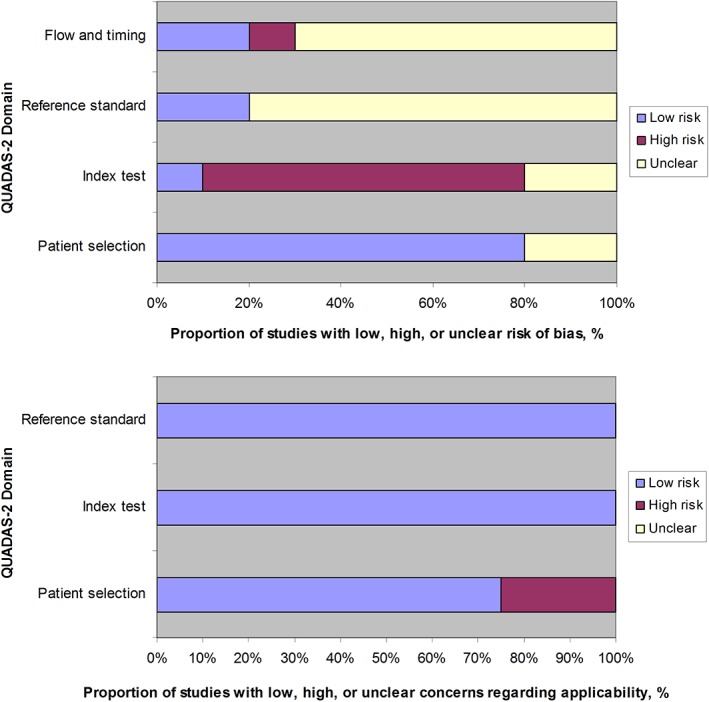
Quality assessment was performed according to the Quality Assessment of Diagnostic Accuracy Studies-2 tool.
Sensitivity and specificity were pooled with a bivariate random-effects model. Heterogeneity was assessed by a chi-squared test. Potential sources for heterogeneity were explored by subgroup analyses.
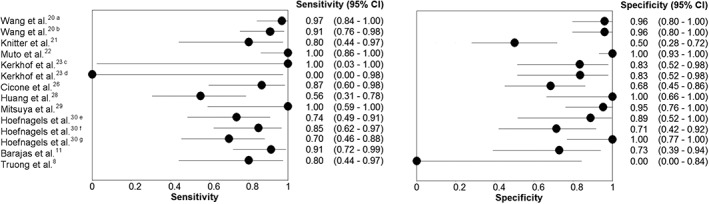
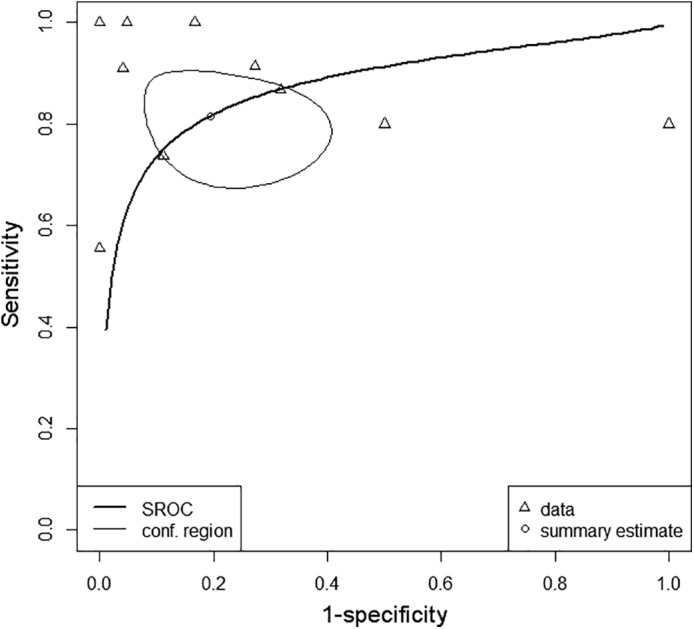
In seven studies the diagnostic criterion was not prespecified. In eight studies it was unclear whether the reference standard was interpreted blindly. In seven studies it was unclear whether DSC MR perfusion results influenced which reference standard was used. Pooled sensitivity and specificity were 81.6% (95% confidence interval [CI]: 70.6%, 89.1%) and 80.6% (95% CI: 64.2%, 90.6%), respectively. There was significant heterogeneity in both sensitivity (P = 0.005) and specificity (P < 0.001). There were no significant differences in relative diagnostic odds ratio according to publication year, country of origin, study size, and DSC MR perfusion interpretation method (visual analysis of cerebral blood volume [CBV] map vs. relative CBV measurement) (P > 0.2). Due to insufficiently detailed reporting, it was not possible to investigate the influence of primary tumor origin on accuracy.
Our results suggest that the accuracy of DSC MR perfusion in diagnosing recurrent brain metastases after radiotherapy is fairly high. However, these findings should be interpreted with caution because of methodological quality concerns and heterogeneity between studies.
3 Technical Efficacy: Stage 2 J. Magn. Reson. Imaging 2020;51:524-534.
动态磁敏感对比增强(DSC)磁共振灌注成像在鉴别放疗后脑转移瘤的治疗相关改变与复发方面的诊断效能目前尚不完全明确。
系统评价DSC磁共振灌注成像诊断放疗后脑转移瘤复发的准确性。
系统评价和荟萃分析。
检索MEDLINE和Embase数据库,查找关于DSC磁共振灌注成像诊断放疗后脑转移瘤复发准确性的原始研究。纳入10项研究,共涉及271个以上转移瘤。
场强/序列:1.5T或3.0T,DSC磁共振灌注成像。
根据诊断准确性研究质量评估-2工具进行质量评估。
采用双变量随机效应模型汇总敏感度和特异度。通过卡方检验评估异质性。通过亚组分析探索异质性的潜在来源。
7项研究未预先设定诊断标准。8项研究未明确参考标准是否采用盲法解读。7项研究未明确DSC磁共振灌注成像结果是否影响参考标准的选择。汇总敏感度和特异度分别为81.6%(95%置信区间[CI]:70.6%,89.1%)和80.6%(95%CI:64.2%,90.6%)。敏感度(P = 0.005)和特异度(P < 0.001)均存在显著异质性。根据发表年份、研究来源国、研究规模和DSC磁共振灌注成像解读方法(脑血容量[CBV]图视觉分析与相对CBV测量),相对诊断比值比无显著差异(P > 0.2)。由于报告不够详细,无法研究原发肿瘤来源对准确性的影响。
我们的结果表明,DSC磁共振灌注成像诊断放疗后脑转移瘤复发的准确性相当高。然而,由于方法学质量问题和研究间的异质性,这些结果应谨慎解读。
3 技术效能:2级 《磁共振成像杂志》2020年;51:524 - 534。