Hanley Brian, Brown Philip, O'Neill Shane, Osborn Michael
Department of Cellular Pathology, Imperial College London NHS Trust, London, UK.
Department of Surgery, Royal College of Surgeons, Dublin, Ireland.
BMJ Open. 2019 May 30;9(5):e023804. doi: 10.1136/bmjopen-2018-023804.
Hospital (consented) autopsy rates have dropped precipitously in recent decades. Online medical information is now a common resource used by the general public. Given clinician reluctance to request hospital postmortem examinations, we assessed whether healthcare users have access to high quality, readable autopsy information online.
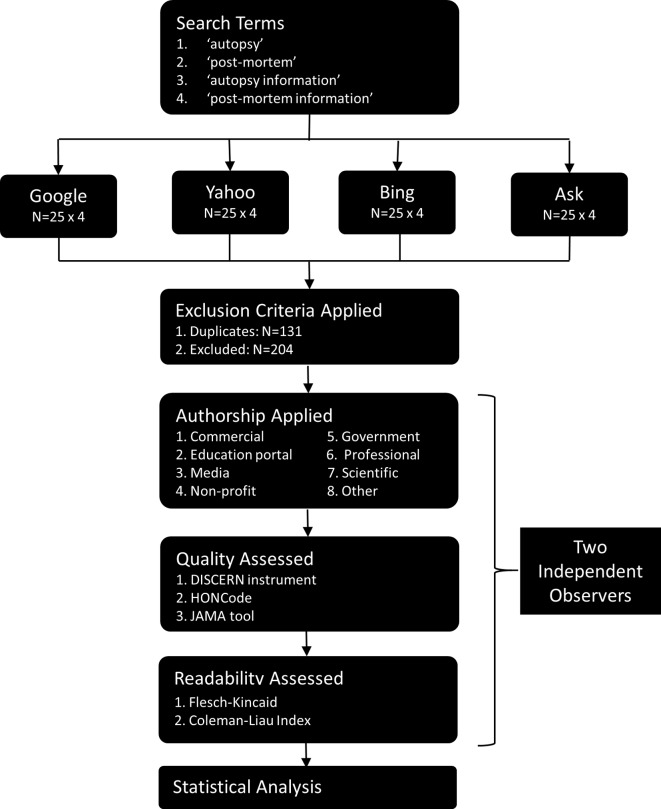
A cross-sectional analysis of 400 webpages. Readability was determined using the Flesch-Kincaid score, grade level and Coleman-Liau Index. Authorship, DISCERN score and criteria were applied by two independent observers. Health on the net code of conduct (HON-code) certification was also assessed. Sixty-five webpages were included in the final analysis.
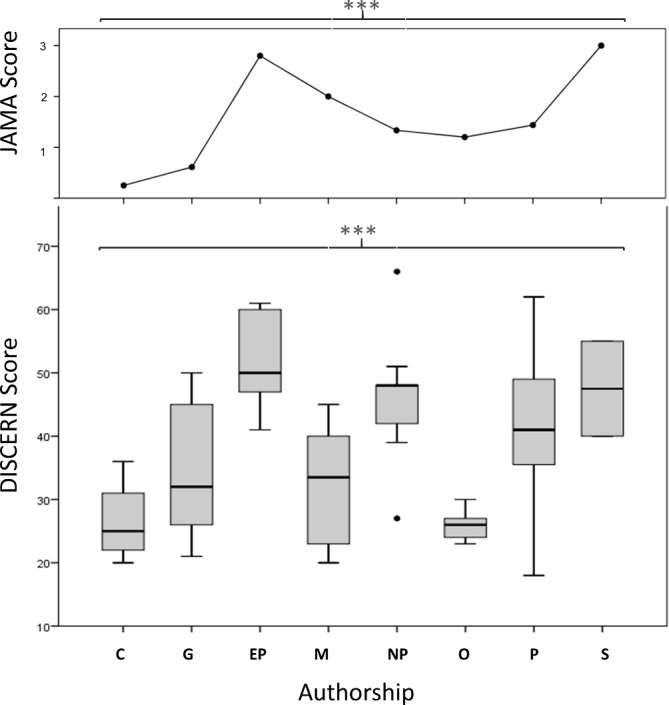
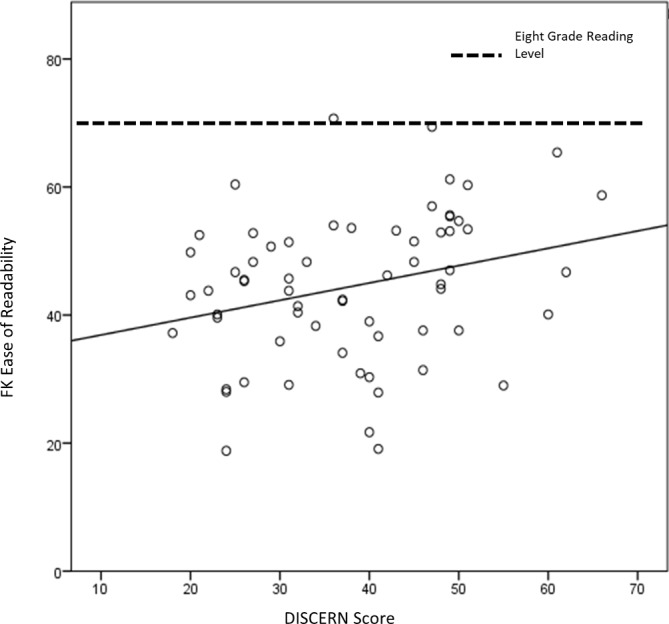
The overall quality was poor (mean DISCERN=38.1/80, 28.8% did not fulfil a single criterion and only 10.6% were HON-code certified). Quality scores were significantly different across author types, with scientific and health-portal websites scoring highest by DISCERN (analysis of variance (ANOVA), F=5.447, p<0.001) and (Kruskal-Wallis, p<0.001) criteria. HON-code certified sites were associated with higher (Mann-Whitney U, p<0.001) and DISCERN (t-test, t=3.5, p=0.001) scores. The most frequent author type was government (27.3%) which performed lower than average on DISCERN scores (ANOVA, F=5.447, p<0.001). Just 5% (3/65) were at or below the recommended eight grade reading level (aged 13-15 years).
Although there were occasional high quality web articles containing autopsy information, these were diluted by irrelevant and low quality sites, set at an inappropriately high reading level. Given the paucity of high quality articles, healthcare providers should familiarise themselves with the best resources and direct the public accordingly.
近几十年来,医院(同意进行的)尸检率急剧下降。在线医疗信息如今是普通大众常用的资源。鉴于临床医生不愿要求进行医院尸检,我们评估了医疗保健用户是否能够在线获取高质量、易读的尸检信息。
对400个网页进行横断面分析。使用弗莱什 - 金凯德分数、年级水平和科尔曼 - 廖指数来确定可读性。由两名独立观察者应用作者身份、DISCERN评分和标准。还评估了健康网络行为准则(HON - 准则)认证。最终分析纳入了65个网页。
总体质量较差(平均DISCERN评分为38.1/80,28.8%未满足任何一项标准,只有10.6%获得HON - 准则认证)。不同作者类型的质量得分存在显著差异,科学网站和健康门户网站在DISCERN评分(方差分析(ANOVA),F = 5.447,p < 0.001)和(克鲁斯卡尔 - 沃利斯检验,p < 0.00)标准方面得分最高。获得HON - 准则认证的网站与更高的(曼 - 惠特尼U检验,p < 0.001)和DISCERN(t检验,t = 3.5,p = 0.001)得分相关。最常见的作者类型是政府(27.3%),其在DISCERN评分上低于平均水平(方差分析,F = 5.447,p < 0.001)。只有5%(3/65)的网页达到或低于推荐的八年级阅读水平(13 - 15岁)。
尽管偶尔有包含尸检信息的高质量网络文章,但这些文章被无关且低质量的网站稀释,这些网站的阅读水平设置过高。鉴于高质量文章匮乏,医疗保健提供者应熟悉最佳资源并相应地引导公众。